


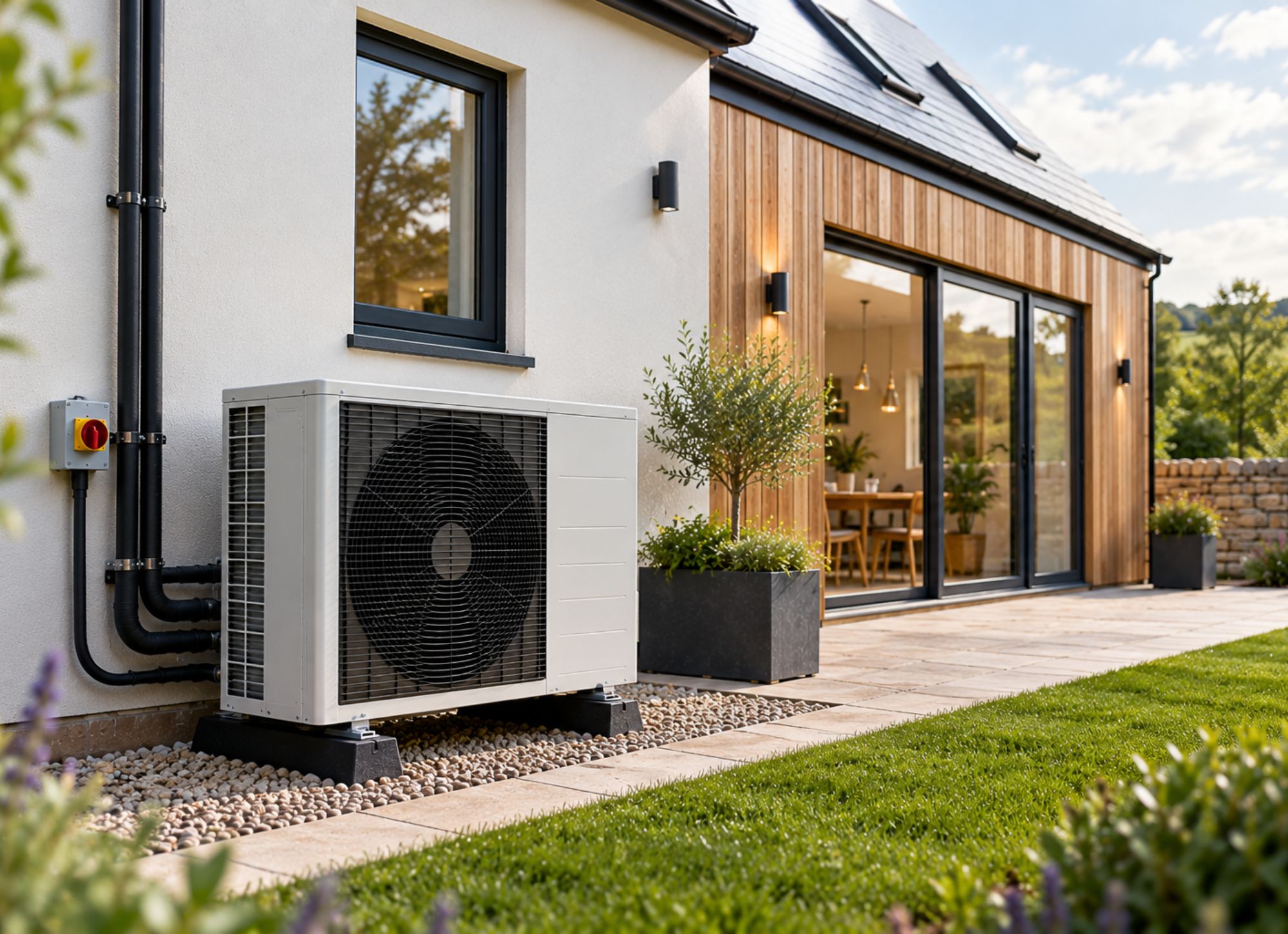
Can You Heat a House With a Heat Pump?
Yes, you can heat a house with a heat pump, and for most UK homes it can be the only heating system you need. A heat pump warms every room and supplies all your hot water by collecting natural heat from the outside air or ground, even in the middle of winter.
It works in new builds, semis, terraces, bungalows and many older properties, as long as the system is sized and designed properly for your home.
This guide explains how a heat pump heats your home, what affects its performance, what it costs to run and what help is available, so you can decide with confidence.
Can a Heat Pump Heat a Whole House on Its Own?
Yes. A heat pump can heat a whole house on its own, with no need for a backup boiler in the vast majority of UK homes. It connects to your central heating in the same way a boiler does, sending warm water to your radiators or underfloor heating and filling a hot water cylinder for your taps and showers.
The strongest evidence comes from the Government funded Electrification of Heat Demonstration project, run by the Energy Systems Catapult. It installed heat pumps in around 750 homes across Britain, from Victorian terraces to 1960s flats and modern semis. The project found that there was no type of property that could not have a heat pump fitted successfully.
Heat pumps are also proven technology. Countries with far colder winters than ours rely on them every day. In Norway, more than 60% of homes have a heat pump, and Sweden and Finland are not far behind. Here in the UK, around 98,000 heat pumps were sold in 2024 according to the Heat Pump Association, and that number keeps rising each year.
What matters most is good design. A heat pump that is the right size, with the right radiators and sensible controls, will keep your home comfortable all year round.
How Does a Heat Pump Heat a House?
A heat pump heats a house by moving warmth from outside to inside, rather than burning fuel to create it. It works a lot like your fridge, only in reverse. Instead of pulling heat out of a cold box, it pulls heat out of the outdoor air (or the ground) and delivers it into your home.
Here is the process in simple steps:
- A fan in the outdoor unit draws in air, and a special fluid called a refrigerant soaks up its warmth.
- An electric compressor squeezes the refrigerant, which pushes its temperature up.
- That heat is passed to the water in your heating system.
- The warm water flows to your radiators, underfloor heating and hot water cylinder.
- The refrigerant cools, goes back outside and the cycle starts again.
Because it moves heat instead of making it, a heat pump is incredibly efficient. A well installed air source heat pump typically produces 3 to 4 kWh of heat for every 1 kWh of electricity it uses. That is an efficiency of 300% to 400%, compared with around 90% for a modern gas boiler.
Why Heat Pumps Heat Your Home Differently to a Boiler
Heat pumps heat your home differently to a boiler because they run at lower temperatures for longer. A gas boiler blasts radiators at around 70°C in short bursts. A heat pump sends water at around 35°C to 50°C and keeps a steady, gentle warmth going throughout the day.
Your radiators will feel warm rather than scorching, but your rooms stay at an even, comfortable temperature with fewer cold spots.
Can a Heat Pump Heat an Older House?
Yes. A heat pump can heat an older house, including Victorian and Edwardian terraces, 1930s semis and period cottages. Older homes simply need a little more care at the design stage, because they tend to lose heat faster than modern ones.
This matters a great deal in our region. London, Brighton, Bristol, Bath and Cardiff all have large numbers of homes built before 1919, many with solid brick or stone walls. These homes can absolutely run on a heat pump, but the system needs to be sized to match how much heat the property loses.
Why Insulation Makes a Difference
Insulation makes a difference because the less heat your home loses, the smaller and cheaper your heat pump can be, and the less it costs to run. You do not need a perfectly insulated home, but a few simple upgrades can help a lot:
- Loft insulation topped up to around 270mm
- Cavity wall insulation, if your walls have a cavity
- Draught proofing around doors, windows and floorboards
- Double or secondary glazing where possible
To claim the Boiler Upgrade Scheme grant, your EPC must have no outstanding recommendations for loft or cavity wall insulation, so these are often the first jobs to tick off.
Why a Heat Loss Survey Matters
A heat loss survey matters because it tells your installer exactly how much heat each room needs on the coldest day of the year. This room by room calculation decides the size of heat pump you need and whether any radiators should be upgraded. Skipping it is the main reason some heat pumps underperform, so never accept a quote based on guesswork.
Want to know if a heat pump will suit your home? EE Renewables provides expert air source heat pump installation across Southern England, Greater London, South West England and South Wales, including London, Brighton, Oxford, Southampton, Bristol and Cardiff. Get in touch today for a free air source heat pump quote tailored to your location.
Can a Heat Pump Keep a House Warm in Winter?
A heat pump can keep a house warm in winter, even on the coldest days the UK experiences. Modern air source heat pumps keep working in outdoor temperatures down to minus 20°C or even minus 25°C. There is still plenty of usable heat in the air well below freezing.
Winters across Southern England, the South West and South Wales are among the mildest in the country. Average January temperatures in London, Southampton, Bristol and Cardiff usually sit around 4°C to 8°C, and prolonged hard frosts are rare. These conditions are ideal for an air source heat pump, which works most efficiently when the air outside is not too cold.
Efficiency does dip a little on very cold days, because the heat pump has to work harder to collect heat. A properly designed system allows for this. Installers size your heat pump using a local “design temperature”, typically around minus 2°C to minus 3°C for our region, so it can cope comfortably with a cold snap.
How Heat Pumps Handle Frosty Weather
Heat pumps handle frosty weather without any fuss. When it is frosty outside, ice can form on the outdoor unit. The heat pump deals with this automatically by running a short defrost cycle, which usually lasts just a few minutes. You may notice a little steam rising from the unit, which is completely normal. Your home stays warm throughout because the heating system holds plenty of stored heat.
Will a Heat Pump Work With My Existing Radiators?
A heat pump will often work with your existing radiators, although some rooms may need a larger radiator to deliver enough heat at lower water temperatures. Because heat pumps run cooler than boilers, a radiator gives out less heat, so it needs a bigger surface area to warm the same room.
In many homes, only two or three radiators need swapping, usually in the rooms that lose the most heat, such as a living room with large windows or a bedroom with an outside wall. Research by Nesta suggests that a large share of UK homes could run a heat pump effectively without replacing every radiator. Your heat loss survey will show exactly which ones, if any, need changing.
Upgrading Radiators for a Heat Pump
Upgrading radiators for a heat pump usually means fitting larger or double panel radiators, or low temperature radiators designed for heat pumps. These look just like normal radiators and fit on the same walls. Your installer may also check your pipework, as very narrow “microbore” pipes can sometimes limit water flow.
Heat Pumps With Underfloor Heating
Heat pumps with underfloor heating are a perfect match. Underfloor heating covers a large area and only needs warm water at around 35°C to 40°C, which is exactly where a heat pump works most efficiently. If you are planning an extension, new kitchen or ground floor renovation, it is well worth fitting underfloor heating at the same time.
How Much Does It Cost to Heat a House With a Heat Pump?
The cost to heat a house with a heat pump is often similar to, or lower than, heating with a gas boiler, and usually much lower than oil, LPG or electric storage heaters. Your exact bills depend on your home’s heat loss, how efficient your system is and which electricity tariff you choose.
Installation Costs
Installation costs for an air source heat pump typically range from £8,000 to £15,000 before grants. With the £7,500 Boiler Upgrade Scheme grant taken off, many households pay somewhere between £1,000 and £7,500. The final price depends on the size of the heat pump, whether you need a new hot water cylinder and how many radiators need upgrading.
Running Costs
Running costs are where good design really pays off. The table below shows an illustrative comparison for a typical home using around 11,500 kWh of gas a year, which is Ofgem’s typical figure for a medium UK household.
| Heating system | Energy used per year | Approximate unit price | Approximate yearly cost |
|---|---|---|---|
| Gas boiler (90% efficient) | 11,500 kWh gas | 6p per kWh, plus about £110 gas standing charge | £800 |
| Heat pump on a standard tariff (SCOP 3.5) | 2,960 kWh electricity | 25p per kWh | £740 |
| Heat pump on a heat pump tariff (SCOP 3.5) | 2,960 kWh electricity | 15p per kWh average | £445 |
These figures are approximate and for illustration only. Energy prices change every quarter under the Ofgem price cap, so check current rates before comparing.
Homes moving off oil or LPG, which is common in rural parts of Somerset, Dorset, Wiltshire and South Wales, often see the biggest savings. Switching away from old electric storage heaters can cut running costs by more than half.
Ways to Lower Your Running Costs
You can lower your running costs in a few simple ways:
- Choose a specialist heat pump or time of use electricity tariff
- Ask for a low flow temperature design, ideally 45°C or below
- Add solar panels and a battery to power your heat pump with your own electricity
- Close your gas account completely to stop paying the standing charge
Can a Heat Pump Provide Hot Water as Well as Heating?
Yes. A heat pump can provide hot water as well as heating, so it fully replaces your boiler. It heats water and stores it in an insulated hot water cylinder, ready for your showers, baths and kitchen taps whenever you need it.
If you have a combi boiler today, you will need space for a cylinder, which usually measures around 60cm wide and 1.5m to 2m tall. Many homeowners fit it in an airing cupboard, loft conversion eaves, utility room or under the stairs. A family of four typically needs a cylinder of around 200 to 250 litres.
Once a week or so, the system briefly heats the cylinder to around 60°C to protect against legionella bacteria. This is a standard safety step and is handled automatically by the controls.
The upside of a cylinder is strong, steady water pressure, so you can run a shower and a tap at the same time without the temperature jumping around.
What Grants Can Help You Heat Your Home With a Heat Pump?
The main grant that can help you heat your home with a heat pump is the Boiler Upgrade Scheme, which offers £7,500 off the cost of an air source or ground source heat pump in England and Wales. Your installer claims the grant for you and takes it straight off your quote.
To be eligible, you will generally need to:
- Own the property, as a homeowner or landlord
- Live in England or Wales
- Be replacing a fossil fuel system such as gas, oil or LPG, or certain electric heating
- Have a valid EPC with no outstanding loft or cavity wall insulation recommendations
- Use an MCS certified installer
You can also benefit from:
- 0% VAT on heat pump installations in Great Britain until 31 March 2027
- Warm Homes Nest scheme in Wales, which supports eligible low income households with free energy saving upgrades
- ECO4 and local authority schemes for some households on certain benefits or low incomes
Grant rules and budgets can change, so it is worth checking the latest guidance. EE Renewables handles the Boiler Upgrade Scheme paperwork for every eligible customer, so you do not have to.
Is a Heat Pump the Right Way to Heat Your Home?
A heat pump is the right way to heat your home if you want lower carbon heating, steady comfort and protection from rising gas prices, and you have a small outdoor space for the unit. For most homes across Southern England, London, the South West and South Wales, the answer is yes.
Pros and Cons of Heating a House With a Heat Pump
| Pros | Cons |
|---|---|
| 300% to 400% efficient, far more than any boiler | Higher upfront cost than a like for like boiler swap |
| £7,500 grant and 0% VAT available | May need a few larger radiators |
| Heating and hot water from one system | Needs space for a hot water cylinder |
| Cuts heating emissions by around 70% compared with gas | Works best with reasonable insulation |
| Lasts 15 to 20 years with low maintenance | Radiators feel warm rather than hot |
| No gas supply, flue or carbon monoxide risk | Needs a qualified, MCS certified installer |
How to Prepare Your Home for a Heat Pump
Preparing your home for a heat pump is simpler than most people expect. These steps will help you get the best results:
- Check your EPC and top up loft and cavity wall insulation if needed.
- Fix obvious draughts around doors and windows.
- Think about where the outdoor unit and hot water cylinder could go.
- Book a heat loss survey with an MCS certified installer.
- Review your energy tariff once your heat pump is up and running.
Ready to Heat Your Home With an Air Source Heat Pump From EE Renewables?
Wondering how well an air source heat pump could heat your home? EE Renewables Ltd offers free, no-obligation heat pump quotes to help you understand your property’s heating requirements, explore installation costs and find a system that delivers reliable, efficient heating throughout the year.
Request your free air source heat pump quote today and discover how a heat pump could keep your home warm, comfortable and energy efficient all year round.
Our team can assess your home’s needs, explain the available options and help you understand the potential savings compared with your existing heating system.
We provide expert air source heat pump installation across Southern England, Greater London, South West England and South Wales, including London, Brighton, Oxford, Southampton, Bristol, Cardiff and surrounding towns and villages.
Whether you live in a Victorian terrace, a modern family home or manage a rental property, our experienced team can help you find a heating solution suited to your property’s size, insulation and heating demands.
Frequently Asked Questions
Should You Leave a Heat Pump On All the Time?
You should usually leave a heat pump running all the time at a steady temperature, rather than switching it on and off like a boiler. Heat pumps are most efficient when they keep your home gently warm throughout the day. Letting the house go cold and then reheating it quickly makes the system work harder and can raise your bills.
Can a Heat Pump Heat a Flat?
A heat pump can heat a flat, but the right option depends on the building. Ground floor flats and those with a balcony or garden can often fit an air source unit. Upper floor flats may need permission from the freeholder, or could suit an exhaust air heat pump or a shared communal system instead.
Does a Heat Pump Work During a Power Cut?
A heat pump does not work during a power cut, because it needs electricity to run its compressor, fans and controls. However, a well insulated home holds its heat for several hours, and your hot water cylinder keeps water warm for some time. Most gas boilers also stop working in a power cut, so this is not a new drawback.
Can I Keep My Log Burner With a Heat Pump?
You can keep your log burner with a heat pump, and many homeowners enjoy using both. The log burner adds cosy warmth to one room on chilly evenings, while the heat pump heats the whole house. Your installer may place the main thermostat away from the stove so the rest of the home does not cool down.
Does a Heat Pump Add Value to Your Home?
A heat pump can add value to your home by improving its EPC rating, which buyers increasingly look at. Government research has found that homes with better EPC ratings tend to sell for more than similar homes with lower ratings. Lower running costs and modern, low carbon heating also make a property more appealing to future buyers and tenants.
