


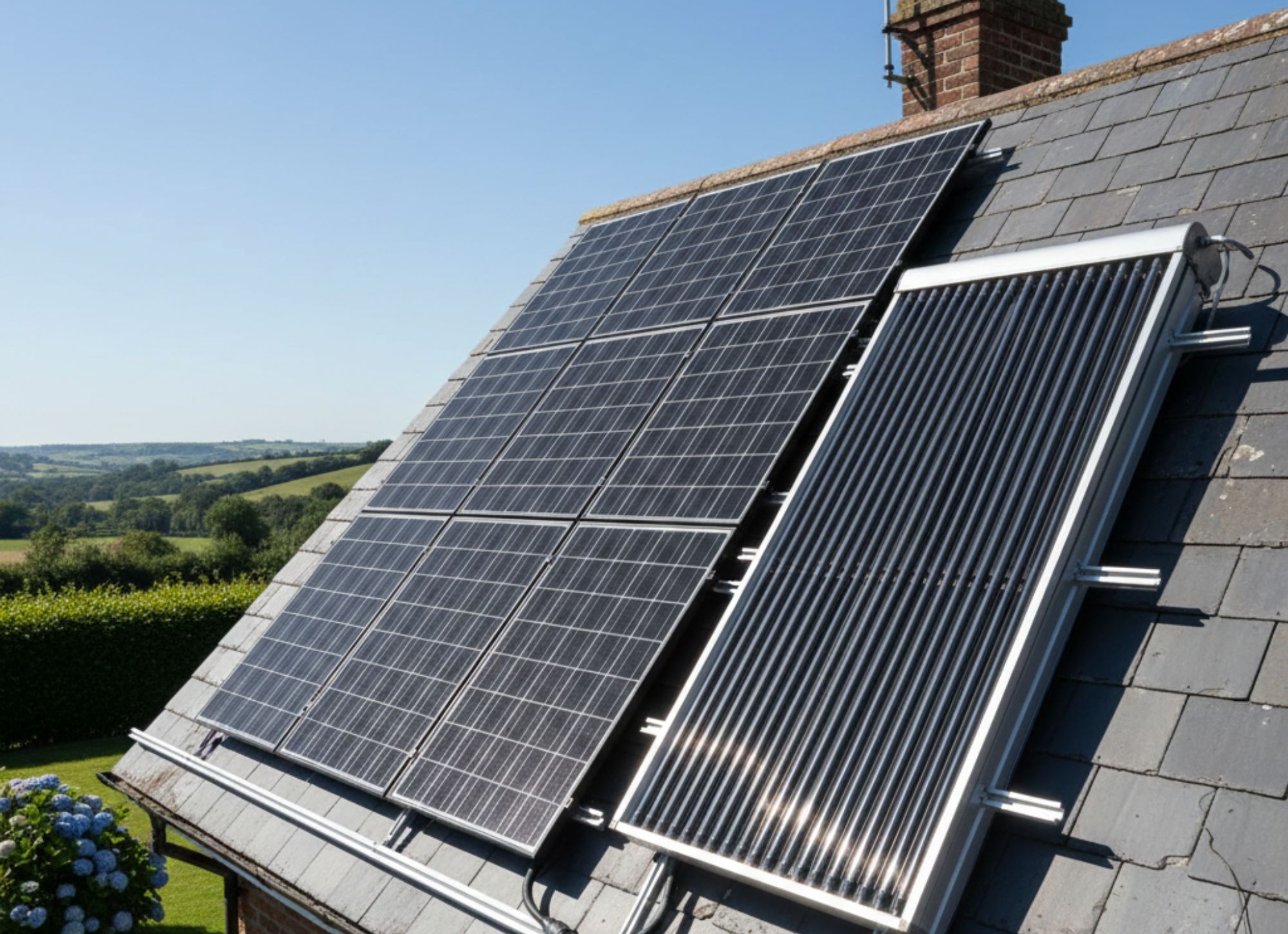
Solar PV Panels vs Solar Thermal Panels: Which Is Better?
Choosing between Solar PV Panels or Solar Thermal Panels is a crucial decision for UK homeowners, landlords, and commercial property owners looking to cut energy bills and transition to cleaner, more sustainable power.
Both systems harness solar energy, yet they work in very different ways, offer distinct benefits, and suit different types of properties. In this detailed guide, we break down everything you need to know—performance, costs, installation suitability, long-term savings, and more—to help you decide which system best fits your energy goals.
What Is the Difference Between Solar PV Panels vs Solar Thermal Panels?
The key difference between Solar PV Panels vs Solar Thermal Panels is that Solar PV generates electricity, while Solar Thermal generates hot water. Understanding this distinction is essential before exploring benefits, costs, and installation suitability across the UK.
Solar PV System Overview
- Converts sunlight into electricity through photovoltaic cells
- Works even on cloudy days
- Powers appliances, lighting, EV chargers, and can be stored in batteries
- Helps reduce reliance on the grid
- Can generate income or savings through Smart Export Guarantee (SEG)
Solar Thermal System Overview
- Uses the sun’s heat to warm water for domestic or commercial hot water use
- Typically paired with a hot water cylinder
- Highly efficient at heating water but limited to hot water needs only
- Best suited to properties with high hot water demand
How Do Solar PV Panels Work vs Solar Thermal Panels?
The way Solar PV Panels vs Solar Thermal Panels capture and convert solar energy differs significantly, which affects performance and suitability.
How Solar PV Works
- Sunlight hits PV cells → generates DC electricity
- Inverter converts DC → AC electricity
- Power is used instantly or stored in a battery
- Surplus exported to the grid under SEG
How Solar Thermal Works
- Evacuated tubes or flat-plate collectors absorb sunlight
- This heats fluid in the collector
- Heat transferred to hot water cylinder
- System provides 40–70% of a home’s annual hot water
Solar PV Panels vs Solar Thermal Panels: Which System Generates the Most Savings?
When comparing Solar PV Panels and Solar Thermal Panels, Solar PV typically generates greater long-term savings because electricity is more expensive than gas in the UK, and PV offers more flexibility and export earnings.
Savings Comparison Table
| Feature | Solar PV Panels | Solar Thermal Panels |
|---|---|---|
| Primary Output | Electricity | Hot Water |
| Annual Savings | £500–£1,000+ | £150–£300 |
| SEG Income | Yes | No |
| Energy Bill Offset | High | Moderate |
| Suitability | Most households | High hot-water-use homes |
| ROI Timeline | 5–10 years | 7–12 years |
Solar PV Panels vs Solar Thermal Panels: Which Is More Suitable for UK Homes?
For most households across Southern England, South West England, and South Wales, Solar PV is more versatile and offers broader benefits.
Solar PV Is Better Suited If You Want:
- To reduce your electricity bill significantly
- To charge an EV
- To power appliances during peak rates
- To future-proof your home with batteries
- To generate export income
Solar Thermal Is Better Suited If You Want:
- To reduce gas or oil usage for hot water
- To support high hot-water-demand properties (e.g., HMOs, commercial kitchens, small hotels)
- A system with very high efficiency for water heating
Solar PV Panels vs Solar Thermal Panels: Which Performs Better in the UK Climate?
Both Solar PV Panels vs Solar Thermal Panels work effectively in the UK, though solar PV performs slightly better overall due to improved cold-weather efficiency and low-light operation.
Performance Comparison Table
| Factor | Solar PV | Solar Thermal |
|---|---|---|
| Works in cloudy weather | Yes | Yes |
| Cold weather performance | High | Moderate |
| Peak performance season | Spring–Autumn | Spring–Summer |
| Annual output consistency | High | Moderate |
| Technology longevity | 25–40 years | 15–25 years |
Solar PV Panels vs Solar Thermal Panels: Costs
The cost for Solar PV Panels vs Solar Thermal Panels varies based on system size, property type, and installation complexity.
| System | Average Cost | Typical Property Type |
|---|---|---|
| Solar PV (3–6 kW) | £5,500–£10,000 | Homes & commercial |
| Solar PV + Battery | £9,500–£15,000 | Homes wanting max savings |
| Solar Thermal | £3,500–£6,000 | Homes with hot water cylinder |
Note: Prices vary depending on location—EE Renewables provides free quotes tailored to areas like London, Cardiff, Bristol, Brighton, and more.
Solar PV Panels vs Solar Thermal Panels: Which System Requires More Maintenance
Maintenance needs differ noticeably between Solar PV Panels vs Solar Thermal Panels, with PV requiring less attention.
Maintenance Comparison Table
| Maintenance Task | Solar PV Panels | Solar Thermal Panels |
|---|---|---|
| Annual servicing | Not required (optional check) | Required |
| Moving parts | None | Pump & valves |
| Glycol replacement | N/A | Every 3–5 years |
| Cleaning | Minimal | Moderate |
| System lifespan | 25–40 years | 15–25 years |
Which System Is Better for Future-Proofing Homes: Solar PV Panels or Solar Thermal Panels?
If future-proofing is your goal, Solar PV generally wins because:
- Electricity demand is rising (EVs, heat pumps, home offices)
- Export tariffs support additional income
- Battery storage enhances long-term energy independence
Solar thermal technology is mature and effective, but it doesn’t offer the same integration opportunities with modern smart home energy systems.
Who Should Choose Solar PV Panels vs Solar Thermal Panels in the UK?
Choosing between Solar PV Panels vs Solar Thermal Panels depends on your household or business energy profile and location. Both are popular across regions such as London, Brighton, Oxford, Bristol, Southampton, Cardiff, and surrounding areas—where EE Renewables provides fully tailored system designs and installations.
Get a free solar quote from EE Renewables today, and receive expert advice based on your roof type, energy usage, and postcode.
Request a Solar Panel Quote Today!
If you’re unsure which system fits your home or business best, EE Renewables can provide expert guidance tailored to your location in Southern England, Greater London, South West England, and South Wales—including London, Bristol, Cardiff, Brighton, Southampton, and Oxford.
Get in touch today for a free, no-obligation solar quote tailored to your property.
FAQs
1. Can I install both solar PV and solar thermal panels on the same roof?
Yes—many properties combine the two systems. The main requirement is sufficient roof space and shading analysis. A hybrid setup is ideal for properties with both high electricity and hot-water demand.
2. Do solar thermal panels work with combi boilers?
Solar thermal is not suited to most combi boilers because they lack hot water storage. Some specialist “solar-compatible combis” exist, but they are uncommon.
3. Will solar PV or solar thermal increase my property value more?
Solar PV typically adds more value because it reduces electricity bills, supports EV charging, and appeals to buyers seeking energy-efficient homes.
4. Can solar thermal panels heat my home as well as my water?
Some advanced systems can provide space heating support, but performance is limited in winter. They are most effective for domestic hot water.
5. Which system is better for commercial properties?
Solar PV is generally favoured due to higher power demands, greater roof space, and consistent year-round performance. Solar thermal only benefits businesses with high hot water usage.
Final Thoughts
Both systems offer meaningful benefits, but the choice between Solar PV Panels vs Solar Thermal Panels ultimately depends on your property’s energy profile. Solar PV provides electricity savings, export income, and future-proofing—making it the preferred system for most UK homes and commercial buildings. Solar thermal is ideal for properties with substantial hot-water demand and existing cylinder infrastructure.
