


Is your home ready for an air source heat pump?
Thinking about a greener, cleaner way to heat your home? An air source heat pump could help you take the next step towards lower-carbon heating, while keeping your home warm and your hot water ready when you need it.
At EE Renewables, we make switching to renewable energy straightforward. Our experts will conduct a free survey of your home, explain your options and help you understand whether an air source heat pump is right for you.
You don’t need a brand-new house or underfloor heating to get started. Here are the practical things to check before making the switch.
1. Are your existing radiators suitable?
Worried that switching means replacing every radiator? That isn’t always the case.
An air source heat pump may be able to work with your existing radiators. The important thing is making sure they can deliver enough heat to keep each room comfortable.
Heat pumps generally work most efficiently at lower flow temperatures than a traditional boiler. Depending on your home’s heat loss and the system chosen, some radiators may need to be larger to provide the warmth you need.
We’ll assess your existing heating system and explain any recommended changes before installation, so you know what’s involved.
2. Do you have space for the outdoor unit?
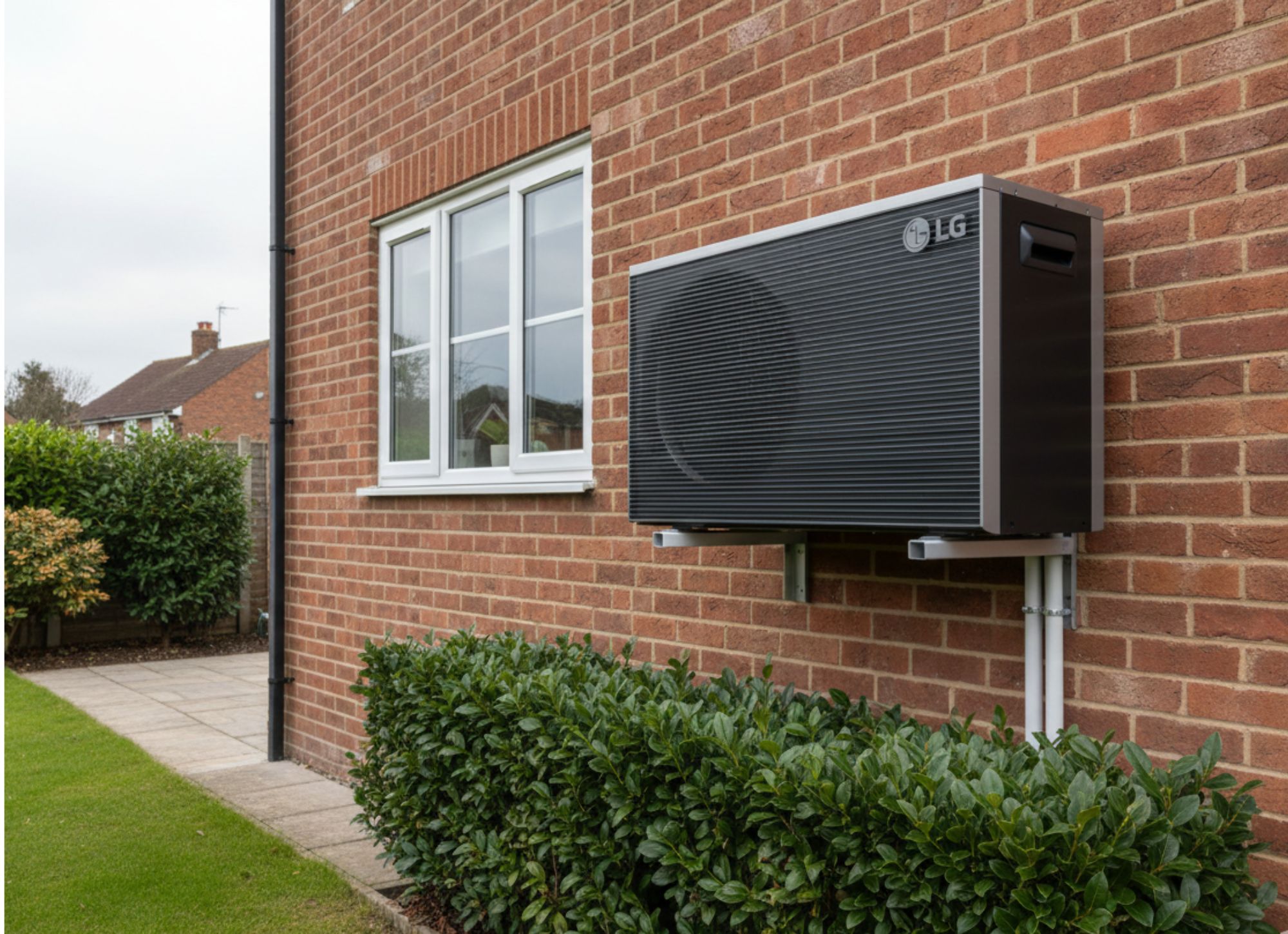
An air source heat pump takes warmth from the air outside and uses it to heat your home and hot water. That means it needs an outdoor unit with enough space around it for good airflow.
A suitable position might be alongside an outside wall or on a base in your garden. Access for maintenance, noise and neighbouring properties all need to be considered.
Our team will help you understand where the unit could go and how it will fit around your home.
You’ll usually need space indoors for a compatible hot water cylinder too. Unlike a combi boiler, most air source heat pump systems store hot water for use when you need it.
Already have a cylinder? We’ll check whether the space and equipment are suitable. If you don’t, we can talk you through the options.
3. What heating system do you have now?
Your current heating setup is an important part of planning the changeover.
If you have a gas or oil boiler connected to radiators, it may be possible to use much of your existing pipework. We’ll check what can stay and what needs changing, with the aim of keeping disruption to a minimum.
Moving from electric storage heaters or another system without water-filled radiators may involve more work, as the air source heat pumps discussed here supply heat through a water-based central heating system.
We’ll also look at how you currently heat your water and what your new system will need. From the home survey to the installation, our specialists will guide you through the details.
4. What will the installation involve?
As well as finding a home for the outdoor unit and hot water cylinder, we’ll consider access, your existing heating equipment and the route for any new pipework.
We’ll talk you through the proposed layout and any changes needed before work begins, so you can make an informed decision.
Can you install an air source heat pump in an older home?
You don’t have to live in a new-build to explore renewable heating. Older homes can be suitable for air source heat pumps too.
The starting point is understanding how well your home holds on to heat. Insulation, draughts, room sizes and radiator output all help determine the right approach.
A period property with high ceilings or solid walls may need a different design from a newer, well-insulated home. That doesn’t automatically rule out a heat pump; it makes a proper assessment all the more important.
The system needs to be sized for your home’s heating requirements. Bigger isn’t automatically better, and a system that’s too small may struggle to keep you comfortable.
Our team can help you understand what your property needs, including any improvements worth considering before installation.
Will an air source heat pump save you money?
An air source heat pump can be an efficient way to heat your home, but the difference to your bills will depend on your starting point.
Your existing heating system, insulation, electricity tariff and the design of your new installation all affect running costs. Replacing older electric heating, for example, is a different comparison from replacing a modern gas boiler.
Your electricity tariff is worth reviewing too. A tariff that suits the way you use your heat pump may help you manage costs.
Already have solar panels or battery storage? We can also discuss how an air source heat pump could fit into your wider home energy setup.
Could you get a grant towards your air source heat pump?
Switching to renewable heating could cost less than you think. The government’s Boiler Upgrade Scheme offers eligible property owners in England and Wales £7,500 towards an air source heat pump installation.
Until March 31 2027, a higher £9,000 grant is available for eligible properties replacing oil or LPG heating where there is no mains gas connection. Eligibility and scheme requirements apply.
We’re MCS-approved installers of Vaillant air source heat pumps and Octopus Cosy Accredited Installers. Our experts can advise on your eligibility and apply for the grant on your behalf.
The grant is deducted from your installation cost, so you don’t have to pay that amount upfront and wait to claim it back.
We’ll explain the support available as part of helping you plan your switch.
Make the switch with your local energy experts
As green home energy specialists for over a decade, we bring together expert advice and quality installation to make the process straightforward. From your initial survey and grant application to final commissioning, our team will guide you through the changeover.
If you already have solar panels or battery storage (or don’t) we can discuss how your heating could work alongside them too.
Ready to step into a cleaner, greener future? Contact your local energy experts to arrange a free home visit and find out what switching could look like for you.
Call us on 0800 802 1116 or email sales@eerenewables.co.uk to get started.
