


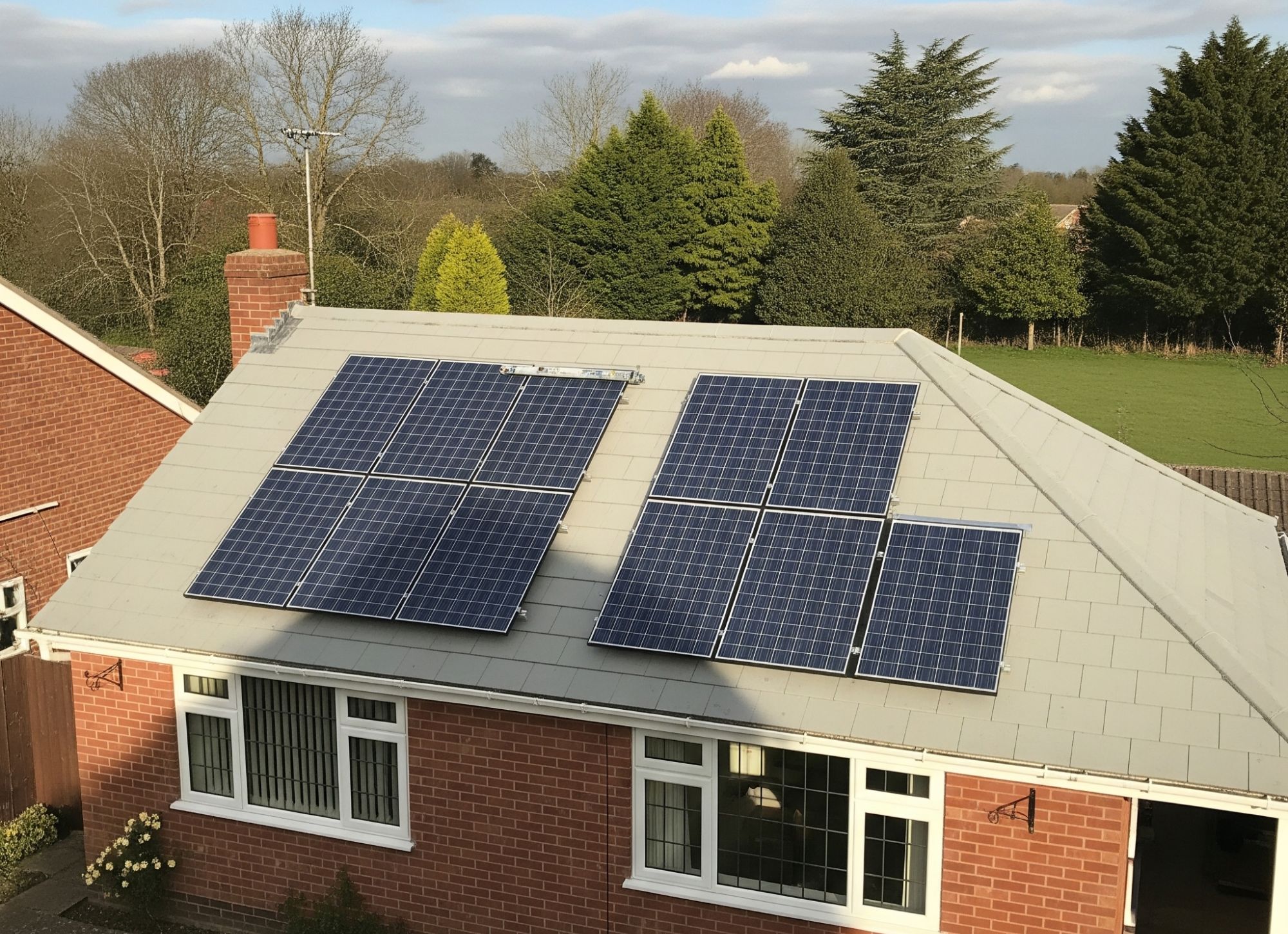
Can You Install Solar Panels On A Fibreglass Roof?
Yes, you can install solar panels on a fibreglass roof, with the right approach and professional guidance. Fibreglass roofs, often found on flat or low-slope structures like extensions, garages, or commercial buildings, can support photovoltaic systems effectively.
This guide explains the key factors to help you decide if this sustainable energy solution fits your property in Southern England, Greater London, South West England, or South Wales.
Is It Possible to Install Solar Panels on a Fibreglass Roof?
Yes, solar panels can be fitted on fibreglass roofs, also known as GRP (glass-reinforced plastic) roofs, provided the structure is sound and appropriate mounting methods are used.
Fibreglass surfaces require specialised techniques to avoid compromising the waterproofing layer, unlike more traditional roofing materials.
In the UK, building regulations permit such installations without planning permission in most cases, as long as they adhere to standards outlined by the government. A structural assessment is crucial to confirm the roof can bear the added weight, typically around 15-20kg per square metre for a standard array.
For properties in high-wind areas like coastal South Wales or Brighton, wind-resistant fixings are essential.
If your fibreglass roof is part of a larger setup, such as a conservatory or flat extension, non-penetrative mounting systems like ballasted frames or adhesive bonds are often recommended to maintain integrity.
For tailored advice, consider reaching out to specialists like EE Renewables. We offer expert residential and commercial solar installation across Southern England, Greater London, South West England, and South Wales. Get in touch today for a free quote tailored to your location.
What Are the Pros and Cons of Solar Panels on Fibreglass Roofs?
Installing a photovoltaic array on a GRP surface has unique advantages and challenges. Here’s a balanced overview to help UK homeowners and landlords weigh their options.
| Pros |
|---|
| Lightweight Compatibility: Fibreglass roofs are inherently light, and modern solar modules add minimal strain when using non-invasive mounts, making it suitable for older or lighter structures common in areas like Southampton or Cardiff. |
| Energy Bill Savings: A typical 4kW system can save £300-£500 annually on electricity costs, as per recent UK installation trends. This is especially beneficial in sunny spots like Brighton. |
| Environmental Impact: Reduces carbon emissions by about one tonne per year per system, equivalent to avoiding 3,600 miles of car travel, according to the Energy Saving Trust. |
| Longevity Boost: Panels can protect the underlying fibreglass from UV damage, potentially extending roof life. |
| Export Earnings: Under the Smart Export Guarantee (SEG), excess power can be sold back to the grid, adding to financial returns. |
| Cons |
|---|
| Mounting Challenges: Requires specialised non-penetrative systems to prevent leaks, which can increase setup complexity compared to metal or tile surfaces. |
| Weight Considerations: While lightweight, the roof must be assessed for load-bearing capacity, potentially needing reinforcements in windy regions like Bristol. |
| Higher Initial Adjustments: Adhesive or ballasted options might add 10-20% to costs if the surface needs preparation. |
| Maintenance Access: Flat fibreglass roofs may require more frequent cleaning in dusty urban areas like London to maintain efficiency. |
| Warranty Risks: Improper installation could void roof warranties, so MCS-certified installers are essential. |
What Are the Challenges of Installing Solar Panels on Fibreglass Roofs?
Installing solar panels on fibreglass roofs presents unique challenges that require careful consideration and expertise. While these roofs are durable and common in UK properties like extensions or commercial buildings in areas such as London, Brighton, or Cardiff, specific obstacles must be addressed to ensure a successful installation.
Below, we outline the key challenges faced by professional installers and how they mitigate them to deliver reliable solar solutions.
Maintaining Waterproof Integrity
Fibreglass roofs are prized for their seamless, waterproof surfaces. Drilling or penetrating the roof risks compromising this layer, potentially leading to leaks.
According to Solar Energy UK, installers must use non-penetrative mounting systems, such as ballasted frames or adhesive pads, which increases complexity compared to tiled or metal roofs. These systems require precise application to ensure long-term stability without damaging the GRP surface.
Structural Load Assessment
Fibreglass roofs may have limited load-bearing capacity. A typical 4kW solar array adds 15-20kg per square metre, necessitating a thorough structural survey to confirm the roof can support this weight, especially in high-wind areas like South Wales or coastal Brighton.
Reinforcements, if needed, can add £500-£1,500 to costs, as noted by industry standards.
Adhesion and Surface Compatibility
Achieving a secure bond for mounting systems on fibreglass requires a clean, smooth surface and compatible adhesives. Installers must carefully prepare the roof to remove debris or coatings, as improper adhesion could lead to panel instability.
The Energy Saving Trust highlights that specialised epoxy or GRP-specific bonding agents are often used, which can increase setup time and costs by 10-15% compared to standard rail systems on tiled roofs.
Wind Resistance in Exposed Areas
In regions like Bristol or Southampton, where wind exposure is higher, fibreglass roofs face greater uplift forces. Installers must incorporate aerodynamic designs and additional anchoring, such as weighted ballasts, to prevent panel displacement.
This can complicate the design phase and may require bespoke solutions, unlike the simpler clip-on systems used for metal roofs.
Warranty and Insurance Concerns
Incorrect installation risks voiding the fibreglass roof’s warranty, a concern for homeowners and landlords. According to UK government guidelines, only MCS-accredited installers should handle such projects to ensure compliance with building regulations and maintain warranty validity.
Additionally, insurers may require documentation of professional installation, adding an administrative layer to the process.
To navigate these challenges, working with experienced providers is crucial. EE Renewables offers tailored solutions to address fibreglass-specific issues.
How Much Does It Cost to Install Solar Panels on a Fibreglass Roof?
The cost of installing solar panels on a fibreglass roof for a standard 4kW setup, ideal for a three-bedroom home ranges from £6,000 to £8,000 in 2025, including VAT at 0% for energy-saving materials.
This aligns with general UK averages, but fibreglass-specific mounts like GRP-compatible rails can add £500-£1,000.
| System Size | Approximate Panels | Avg. Cost (Including Installation) | Potential Annual Savings | Payback Period |
|---|---|---|---|---|
| 3kW | 8-10 | £5,000-£6,500 | £250-£400 | 10-15 years |
| 4kW | 10-12 | £6,000-£8,000 | £300-£500 | 8-12 years |
| 5kW | 12-14 | £7,500-£9,500 | £400-£600 | 7-11 years |
According to Ofgem, these figures factor in falling panel prices, with 2025 seeing a continued drop due to market trends. In regions like Oxford or South Wales, additional factors like roof access or battery integration (adding £2,000-£4,000) could influence totals.
The Energy Saving Trust notes payback periods of 10-21 years, depending on usage and location, with southern areas like London seeing faster returns. For precise estimates, EE Renewables can provide a free, location-specific quote.
What Is the Installation Process for Solar Panels on Fibreglass Roofs?
Professional installers approach fitting solar modules on a GRP roof with meticulous care to preserve the waterproofing integrity. Here’s a step-by-step overview of how experts in the UK typically handle the process for properties in areas like Southern England or South Wales:
1. Site Survey
A certified MCS-accredited installer begins by thoroughly assessing the roof’s structural condition, optimal orientation, and any potential shading from nearby trees or buildings.
They prioritise south-facing alignments, which can boost energy yield by up to 20% in sunnier locales such as Southampton.
2. Design and Planning
Installers then design the system, selecting non-penetrative mounting options like ballasted trays or adhesive pads to eliminate the need for drilling and prevent any damage to the fibreglass.
Drawing from industry standards, they often incorporate specialised systems such as the ROOFTRAK IFP-GRP for reliable, secure fixation.
3. Preparation
The team prepares the site by cleaning the fibreglass surface meticulously and applying suitable bonding agents where required to ensure strong adhesion. For safety, they erect scaffolding around the work area to facilitate secure access during the installation.
4. Mounting
Using techniques like epoxy bonding or mechanical clamps, installers fix the rails or frames directly onto the prepared surface. Once in place, they attach the solar panels, connect the wiring, and integrate an inverter to convert the generated DC power to usable AC.
5. Connection and Testing
Professionals connect the system to the property’s electrical grid, install necessary metering devices, and conduct comprehensive testing to verify optimal output and safety. The entire hands-on installation phase usually spans 1-3 days, depending on the system’s scale.
6. Certification
Finally, the installers provide MCS certification, which is essential for qualifying for schemes like the Smart Export Guarantee to monetise excess energy fed back to the grid.
Ongoing solar maintenance is straightforward, as professionals note that natural rainfall often suffices for cleaning tilted panels, though they recommend annual inspections to maintain peak performance.
Choosing the Right Installation Method: In-Roof vs On-Roof
Fibreglass roofs can accommodate both in-roof and on-roof installations, but each has advantages and limitations:
- In-Roof Panels
- Installed flush with the roof, replacing part of the fibreglass sheeting
- Pros: Sleek, minimal wind resistance
- Cons: Cutting into the fibreglass may increase leak risk and requires professional expertise
- Recommendation: Suitable primarily for roof refurbishments or replacements
- Installed flush with the roof, replacing part of the fibreglass sheeting
- On-Roof Panels
- Mounted on top of the existing fibreglass roof using specialised brackets or rails
- Pros: Easier installation, minimal roof alterations, lower risk of leaks
- Cons: Slightly raised profile; may require reinforcement depending on roof age
- Recommendation: Most common and preferred method for fibreglass roofs, ensuring safety and longevity
- Mounted on top of the existing fibreglass roof using specialised brackets or rails
Check out our in-depth guide on in-roof vs. on-roof installations to gain a clearer understanding of their pros and cons.
How Does Solar Panel Installation on Fibreglass Roofs Compare to Other Types?
When evaluating fibreglass versus alternatives like metal, tile, or slate, factors such as ease of fitting, cost adjustments, and durability come into play. Fibreglass often requires non-invasive techniques, similar to rubber but differing from penetrative methods on tiles.
Metal Roofs
Installing solar panels on metal roofs, common in commercial buildings in Bristol, allows easy clip-on mounts without drilling, making installation quicker and cheaper, often 10-15% less than fibreglass. They handle weight well but may need corrosion checks in coastal areas like Cardiff.
Tile Roofs
Installing solar panels on tiled roofs, prevalent in residential Southern England, uses hooks under tiles for secure fixing. This is straightforward but can cost more if tiles break during work, unlike fibreglass’s surface bonding. Efficiency is high on sloped tiles, with minimal waterproofing risks.
Rubber Roofs
Installing solar panels on rubber (EPDM) roofs shares flat-profile similarities with fibreglass, often using ballasted systems to avoid punctures. Costs are comparable, but rubber’s flexibility may reduce vibration issues. For deeper insights, check our article on [solar panels on rubber roofs].
Concrete Roofs
Installing solar panels on concrete roofs supports heavy loads easily, allowing standard rail mounts. Installation is robust but might require drilling, contrasting fibreglass’s no-penetration preference. In urban London, concrete’s durability suits high-traffic areas. See our related post on [solar on concrete roofs] for more.
Slate Roofs
Installing solar panels on slate roofs, found in older Oxford properties, requires careful hook placements to avoid cracks, potentially adding 20% to costs versus fibreglass. They’re aesthetically pleasing but trickier than metal.
FAQs
Does wind affect solar panels on fibreglass roofs more than other types?
In windy regions like South West England, fibreglass setups use aerodynamic mounts to minimise uplift, but professional anchoring is key to prevent issues not as pronounced on heavier tile roofs.
What if my fibreglass roof is curved, can solar still work?
Flexible solar modules can conform to slight curves on fibreglass, offering options where rigid panels won’t fit, ideal for unique structures in areas like Brighton.
How does shading impact fibreglass roof solar efficiency in urban settings?
Urban shading from nearby buildings in London or Cardiff can reduce output by 10-30%, so micro-inverters help optimise individual panels on flat fibreglass surfaces.
Are there specific insurance considerations for fibreglass solar installs?
UK insurers may require proof of MCS installation for coverage, and fibreglass’s waterproofing focus could mean added premiums if not documented properly.
Can I add batteries later to a fibreglass roof solar system?
Yes, batteries integrate seamlessly post-installation, storing excess energy for evening use, enhancing self-consumption in homes across South Wales.
Our Verdict
Opting for solar on a fibreglass roof offers a practical path to energy independence, with careful mounting ensuring long-term benefits like reduced bills and lower emissions.
By considering structural suitability, costs, and comparisons to alternatives, you can confidently pursue this eco-friendly upgrade. For expert implementation in your area, contact EE Renewables for a personalised consultation.
