


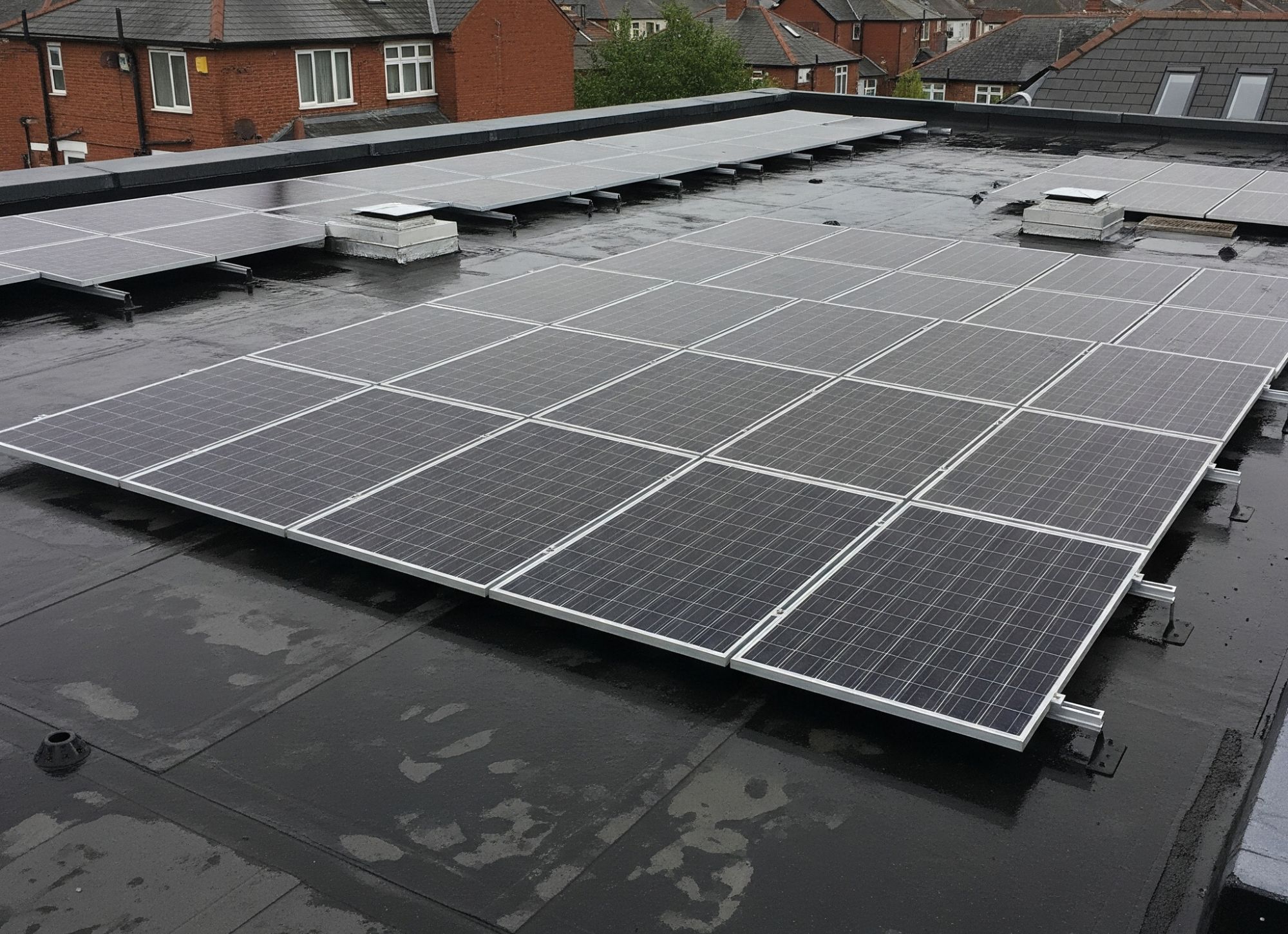
Can Solar Panels Be Installed On Rubber Roofs?
Installing solar panels on rubber roofs is a viable option for UK homeowners and landlords looking to invest in renewable energy. Rubber roofs, commonly found on flat-roofed properties such as extensions, commercial buildings, or modern homes, present unique opportunities for solar panel installation.
This guide covers the feasibility, benefits, challenges, and best practices for installing solar panels on rubber roofs.
Can You Install Solar Panels on a Rubber Roof?
Yes, solar panels can be installed on rubber roofs, particularly those made of materials like EPDM (ethylene propylene diene monomer), which is durable, flexible, and commonly used in the UK for flat roofs.
Solar panels are adaptable to various roof types, including flat and rubber-covered surfaces, provided proper installation techniques are used to ensure structural integrity and weatherproofing.
The key is to use mounting systems that avoid penetrating the rubber membrane, preserving its waterproofing properties.
How Are Solar Panels Mounted on Rubber Roofs?
Mounting solar panels on rubber roofs typically involves non-penetrative systems to protect the EPDM membrane. Common methods include:
- Ballasted Mounting Systems: These use weighted bases to secure panels without drilling into the roof. They are ideal for flat rubber roofs and reduce the risk of leaks.
- Adhesive Mounting: Special adhesives compatible with EPDM can secure mounting frames, though this requires professional application to ensure durability.
- Tilted Racks: For optimal sunlight capture, tilted racks can be installed, adjusting the panel angle to maximise efficiency, particularly in regions like South Wales or Bristol with variable sunlight.
| Mounting Method | Pros | Cons | Best Suited For |
|---|---|---|---|
| Ballasted | Non-penetrative, easy to install | Higher weight, wind sensitivity | Flat rubber roofs |
| Adhesive | Minimal roof impact, lightweight | Adhesive longevity concerns | Small-scale installations |
| Tilted Racks | Optimised sunlight capture | Complex installation | Properties with low sunlight |
What Are the Benefits of Installing Solar Panels on Rubber Roofs?
Rubber roofs, often found on flat or low-pitched structures, are ideal for solar installations due to their large, unobstructed surface area. Here are the primary benefits:
- Energy Savings: Solar panels can reduce electricity bills by up to 70% for households, depending on system size and energy consumption, as noted by Ofgem Ofgem.
- Environmental Impact: Solar energy reduces carbon emissions, aligning with the UK’s net-zero goals by 2050, as outlined by the UK Government.
- Property Value: Properties with solar panels can see an increase in value, with studies suggesting a 4% uplift in some UK markets.
- Suitability for Flat Roofs: Rubber roofs on flat surfaces allow flexible panel placement to optimise sunlight exposure, especially in sunny regions like Southern England.
What Are the Challenges of Installing Solar Panels on Rubber Roofs?
While feasible, installing solar panels on rubber roofs comes with challenges that require careful planning:
- Waterproofing Concerns: Penetrating the EPDM membrane for mounting can risk leaks. Non-penetrative mounting systems, such as ballasted racks, are recommended to maintain the roof’s integrity.
- Weight Considerations: Solar panels and mounting systems add weight. A typical solar panel weighs around 18–25 kg, and a structural survey is essential to ensure the roof can support the load.
- Wind Uplift: Flat roofs are more exposed to wind, which can affect panel stability. According to Solar Energy UK, wind load calculations are critical for safe installations.
- Maintenance Access: Rubber roofs require periodic inspections, and solar panel placement must allow access without compromising the system.
Are In-Roof and On-Roof Solar Installations Suitable for Rubber Roofs?
On-roof solar installations are indeed a suitable and commonly used option for rubber roofs in the UK, especially those with EPDM membranes on flat or low-pitched structures.
These systems involve mounting solar panels above the existing roof surface, utilising non-penetrative methods such as ballasted racks or adhesive fixings to avoid compromising the roof’s waterproof integrity.
In contrast, in-roof solar installations, where panels are embedded into the roof structure by replacing sections of roofing material like tiles, are typically not recommended for rubber roofs.
The seamless nature of rubber membranes makes integration challenging and increases the risk of leaks or structural issues.
Expert tips: On-roof systems offer a safer, more adaptable solution that complies with UK building regulations.
If you’d like to learn more read our guide on in-roof vs on-roof solar panels.
What About Horizontal and Vertical Solar Panel Orientations on Rubber Roofs?
Panel orientation significantly impacts energy efficiency on flat rubber roofs, where space and sunlight exposure vary. Horizontal (landscape) orientation, where panels are positioned wider than tall, is often favoured for larger, unobstructed rubber roof surfaces.
This setup maximises solar capture during peak midday hours, requires fewer mounting rails, and can lower installation costs by 10-15%.
On flat roofs, horizontal panels benefit from tilted frames (30-40 degrees optimal in the UK) to prevent water pooling and enhance self-cleaning from rain.
Vertical (portrait) orientation, with panels taller than wide, provides greater flexibility for rubber roofs with limited or irregular space, such as on commercial buildings or extensions in South West England.
It allows for more rows, improved airflow to reduce heat buildup, and better performance in east-west configurations by capturing morning and afternoon sunlight. However, it may incur slightly higher costs due to additional racking and could face shading issues if not planned carefully.
For fire safety considerations, Solar Energy UK advises installing panels horizontally rather than vertically to minimise risks on roofs.
| Orientation Type | Pros | Cons | Best for Rubber Roofs In |
|---|---|---|---|
| Horizontal (Landscape) | Maximises midday output, cost-effective with fewer rails, easier tilting for flat surfaces | Potential debris accumulation without tilt, less flexible in tight spaces | Large flat areas in sunny regions like Southern England |
| Vertical (Portrait) | Better airflow and maintenance access, suits east-west setups for consistent daily yield | Higher racking costs, possible shading in dense arrays | Constrained or irregular rubber roofs in areas like South Wales or Bristol |
Choosing between horizontal or vertical solar installation depends on your property’s specifics. For expert advice and a free quote on residential and commercial solar solutions for rubber roofs contact EE Renewables today.
What Are the Structural Requirements for Rubber Roof Solar Installations?
Before installation, a structural survey is essential to assess the roof’s capacity. Key considerations include:
- Load-Bearing Capacity: Rubber roofs must support 15–30 kg/m² for solar systems, including panels and mounting.
- Roof Condition: The EPDM membrane should be in good condition, with no cracks or wear, to avoid future leaks.
- Age of Roof: Roofs older than 15–20 years may need replacement before installation, as EPDM typically lasts 20–30 years.
How Does Installation Impact Rubber Roof Longevity?
Proper installation ensures minimal impact on a rubber roof’s lifespan. Non-penetrative mounting systems protect the EPDM membrane, which can last up to 30 years with proper care.
Regular maintenance, such as clearing debris and checking for wear, is crucial. The Energy Saving Trust recommends annual inspections to ensure both the solar system and roof remain in optimal condition.
What Are the Costs of Installing Solar Panels on Rubber Roofs?
Costs vary depending on system size, mounting type, and location. According to Ofgem, a typical 4 kW solar system for a UK home costs £6,000–£8,000, including installation. For rubber roofs, additional costs may include:
| Cost Item | Est. Cost | Description |
|---|---|---|
| Structural Surveys | £200–£500 | To assess roof suitability for solar installation |
| Non-Penetrative Mounts | £500–£1,000 extra | For ballasted or adhesive systems on flat rubber roofs |
| Maintenance | £100–£200 annually | For checks, cleaning, and inspections |
- Structural Surveys: £300–£600 to assess roof suitability.
- Non-Penetrative Mounts: £500–£1,000 extra for ballasted or adhesive systems.
- Maintenance: Annual checks costing £100–£200.
EE Renewables offer free quotes tailored to your property and energy needs.
Are There Incentives for Solar Panels on Rubber Roofs in the UK?
The UK offers incentives to offset installation costs:
- Smart Export Guarantee (SEG): Homeowners can earn payments for exporting excess electricity to the grid. Rates vary, but typical tariffs are 3–15 p/kWh.
- VAT Relief: Solar panel installations qualify for a 0% VAT rate, reducing costs.
- Local Grants: Some councils in Southern England and South Wales offer grants for renewable energy projects. Check with your local authority for availability.
How to Choose a Solar Installer for Rubber Roofs?
Selecting a reputable installer is critical. Look for:
- MCS Certification: Installers must be certified by the Microgeneration Certification Scheme to ensure quality.
- Experience with Rubber Roofs: Choose installers familiar with EPDM and non-penetrative mounting systems.
- Local Expertise: EE Renewables offers expert residential and commercial solar installations across Southern England, Greater London, South West England, and South Wales, ensuring compliance with local regulations.
FAQs
What Type of Rubber Roof Is Best for Solar Panels?
EPDM is the most suitable due to its durability and flexibility, lasting up to 30 years with minimal maintenance Energy Saving Trust.
Can Solar Panels Be Installed on Older Rubber Roofs?
Yes, but a structural survey is needed to confirm the roof’s condition. Roofs over 15 years old may require reinforcement or replacement Solar Energy UK.
How Do I Maintain Solar Panels on a Rubber Roof?
Clean panels annually with water and a soft cloth, and inspect the roof for debris or membrane damage. Professional maintenance is recommended.
Are There Specific Solar Panels for Rubber Roofs?
Standard solar panels work, but lightweight or flexible panels may reduce roof stress.
Do Rubber Roof Solar Installations Qualify for Insurance?
Most UK insurers cover solar panels, but confirm that your policy includes non-penetrative installations to avoid disputes.
Our Verdict
Installing solar panels on rubber roofs is a practical and eco-friendly option for UK homeowners, landlords, and commercial property owners. By using non-penetrative mounting systems and ensuring proper structural assessments, you can harness solar energy without compromising your roof’s integrity. With incentives like the Smart Export Guarantee and VAT relief, now is an ideal time to invest in solar power. For expert guidance and a free quote, contact EE Renewables to explore renewable energy solutions tailored to your property.
