


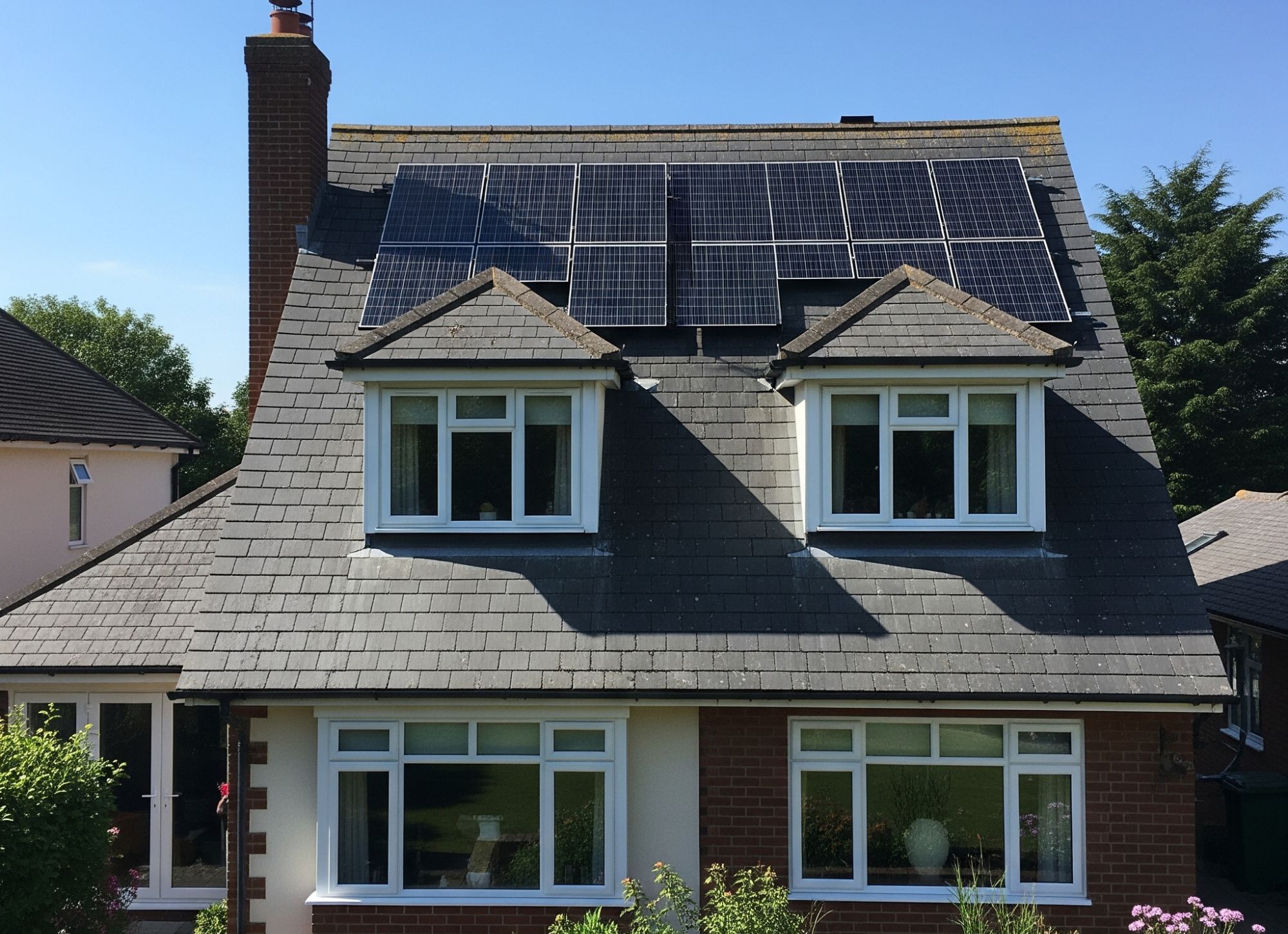
Can It Get Too Hot For Solar Panels?
As UK homeowners and landlords increasingly turn to solar photovoltaic (PV) systems for sustainable energy solutions, questions about environmental factors like heat arise.
Can it get too hot for solar panels? While high temperatures can influence PV efficiency, the UK’s temperate climate means significant impacts are uncommon, allowing reliable performance year-round.
This guide explains the relationship between heat and solar output, drawing on expert insights to help you decide if investing in a PV installation suits your property in regions like Southern England, Greater London, South West England, or South Wales.
Does extreme heat affect solar panel performance?
Yes, extreme heat can reduce solar panel performance by increasing internal resistance within the photovoltaic cells, leading to lower electricity generation. According to Solar Energy UK, high temperatures only marginally affect overall output, as sunlight intensity remains the primary driver of energy production.
In practical terms, this means panels continue functioning effectively even during warmer spells, though efficiency dips slightly.
For UK residents in areas such as London or Brighton, where summers are milder compared to hotter climates, this effect is minimal. Statistics from the UK Government indicate that silicon solar panels’ efficiency drops when air temperatures exceed 23°C, but actual panel surface temperatures can be 20-30°C higher due to direct sunlight absorption.
This underscores the importance of site-specific assessments for optimal PV system design.
EE Renewables offers expert consultations across Southern England, Greater London, South West England, and South Wales. Contact us today for a free, tailored quote to ensure your setup maximises output in local conditions.
How does temperature impact solar efficiency?
Temperature impacts solar efficiency by altering the semiconductor properties in PV cells; as heat rises, voltage output decreases while current slightly increases, resulting in net power loss.
According to the UK Government’s climate adaptation reports, extreme heat events could potentially vulnerable solar assets, with efficiency reductions tied to temperatures above standard ratings.
In the UK context, where average summer highs hover around 20-25°C in Southern England, impacts are limited.
However, with climate projections from the Met Office indicating more frequent heatwaves, such as the record 40.3°C in 2022, homeowners in Greater London might see temporary dips of 10-15% during peaks.
What is the optimal operating temperature for solar panels?
The optimal operating temperature for solar panels is typically 25°C, the standard test condition (STC) used by manufacturers to rate performance. At this level, photovoltaic cells achieve peak conversion of sunlight into electricity, balancing electron excitation without excessive thermal interference.
In the UK’s variable weather, panels often operate near this range, supporting consistent yields. Data from the Energy Saving Trust shows that UK solar installations generate substantial energy even in moderate summers, with average annual outputs of 850-1,200 kWh per kWp installed, depending on location.
| Temperature (°C) | Typical Efficiency Relative to 25°C |
|---|---|
| 15 | +2-3% (improved due to lower resistance) |
| 25 | 100% (optimal) |
| 35 | -3-5% (minor loss) |
| 45 | -6-10% (noticeable in prolonged heat) |
This table illustrates how deviations from 25°C affect output, based on common monocrystalline and polycrystalline PV types prevalent in UK setups.
Can solar panels overheat in the UK climate?
Solar panels can overheat if surface temperatures exceed 65°C, but in the UK’s climate, this is rare, occurring mainly during exceptional heatwaves. Overheating leads to temporary efficiency drops rather than damage, with panels designed to withstand up to 85°C.
Government reports note that UK solar farms experience minimal vulnerability from heatwaves, rated as ‘potentially vulnerable’ but not critical.
What is the temperature coefficient and why does it matter?
The temperature coefficient measures how much a solar panel’s power output decreases for each degree Celsius above 25°C, typically ranging from -0.3% to -0.5% per °C for standard UK-installed panels. This metric is crucial for predicting long-term performance in varying weather.
High-quality panels, like those with coefficients around -0.32%, lose less efficiency in heat, according to industry data.
For homeowners and landlords in Southampton or Oxford, selecting low-coefficient PV systems ensures better returns, especially as Energy Saving Trust statistics show UK solar contributing to 4-5% of national electricity, with heat effects accounting for under 5% annual variance.
Why it matters: In South Wales or South West England, where occasional warm spells occur, a better coefficient supports informed investments, aligning with entities like solar energy optimisation and PV thermal management.
Which solar panels perform best in hot weather?
Selecting solar panels with superior heat resistance is key for maintaining efficiency during warmer UK summers, particularly in regions like Southern England or Greater London.
Panels with low temperature coefficients and advanced technologies like N-type or back-contact cells excel in hot conditions. Below are top-performing models for 2025, based on UK-specific data:
| Solar Panel Model | Temperature Coefficient (%/°C) | Efficiency (%) | Warranty (Years) | Best for UK Region |
|---|---|---|---|---|
| Qcells Q.Peak DUO BLK ML-G9 | -0.25 | 20.8 | 25 (product/performance) | Southampton, Bristol |
| SunPower Maxeon 7 | -0.27 | 22.6 | 40 (product/performance) | London, Oxford |
| AIKO Neostar 3N+78 | -0.26 | 24.1-25.0 | 15/30 | Cardiff, Brighton |
| REC Alpha Pure-RX 470W | -0.29 | 22.5 | 25 (product/performance) | South Wales, South West England |
- Qcells Q.Peak DUO BLK ML-G9: Boasts a temperature coefficient of -0.25%/°C, losing only 0.25% efficiency per degree above 25°C, well below the industry average of 0.34-0.38%. Its robust design suits areas like Southampton or Bristol, where occasional heat spikes occur.
- SunPower Maxeon 7: Features a low coefficient of -0.27%/°C and a 40-year warranty, ensuring durability in warmer climates. Its compact size is ideal for space-limited roofs in London or Oxford.
- AIKO Neostar 3N+78: Offers a -0.26%/°C coefficient and 24.1-25% efficiency, making it a top choice for high-energy homes in Cardiff or Brighton, where heatwaves may temporarily elevate panel temperatures.
- REC Alpha Pure-RX 470W: With a low temperature coefficient and excellent performance in high temperatures, this panel is suited for South Wales, maintaining high output even on hot days.
These panels leverage advanced technologies like TOPCon and back-contact designs, which enhance heat dissipation and maintain output.
Does mounting type affect how heat impacts solar panels?
Yes. The type of mounting system used for solar panels directly influences their operating temperature by affecting airflow and heat dissipation. Proper ventilation is critical to minimising heat-related efficiency losses, as trapped heat can elevate panel temperatures, reducing output.
According to Solar Energy UK, well-ventilated mounting systems can lower panel temperatures by up to 10°C, preserving efficiency during warmer UK summers.
- Flush-Mounted (Horizontal): Panels lie flat against the roof, common for residential setups in London or Southampton. Limited airflow underneath can increase temperatures by 5-10°C compared to tilted systems, leading to a 3-5% efficiency drop in hot weather.
You can learn more about the pros and cons in our guide on horizontal vs vertical solar panel installation. - Tilted (Angled): Raised at an angle (typically 15-30° in the UK), these allow better airflow, reducing surface temperatures. Ideal for homes in Cardiff or Bristol, tilted mounts can improve efficiency by 5-8% during heatwaves.
- Vertical: Often used in space-constrained urban areas like Greater London, vertical mounts benefit from side airflow but may receive less direct sunlight, balancing heat gains with slight output trade-offs.
- Ground-Mounted: Common in rural South Wales or South West England, these systems offer optimal ventilation, keeping panels 5-10°C cooler than roof-mounted options. They’re ideal for larger properties with open space.
- Pole-Mounted: These elevate panels higher, maximising airflow and minimising heat buildup, suitable for high-energy setups in Oxford or Brighton.
- In-Roof vs On-Roof Systems: While not strictly a mounting angle, your choice between in-roof and on-roof installation also affects ventilation. In-roof systems tend to trap more heat, while on-roof systems allow better airflow. For a detailed comparison, see our guide on in-roof vs on-roof solar panels.
| Mounting Type | Ventilation Level | Temperature Reduction (°C) | Efficiency Gain in Heat |
|---|---|---|---|
| Flush-Mounted | Low | 0-2 | Minimal |
| Tilted | Moderate | 5-8 | 5-8% |
| Vertical | Moderate | 3-6 | 2-4% |
| Ground-Mounted | High | 5-10 | 5-10% |
| Pole-Mounted | High | 8-12 | 6-10% |
For optimal heat management, EE Renewables will assess your property to recommend the best mounting solution. Our expert installation ensures maximum efficiency, even during warmer spells. Request a free quote to explore options tailored to your home or rental property.
Do roof types influence how heat affects solar panels?
Yes. The type of roof material and structure significantly impacts how much heat solar panels retain, as it affects heat absorption and airflow beneath the panels. Different roofs, such as rubber, metal, or tiled, have unique thermal properties that can either trap or dissipate heat, influencing PV efficiency during warm UK weather.
According to the Energy Saving Trust, proper roof assessment ensures optimal solar performance by mitigating heat buildup.
- Rubber Roofs (EPDM): Common on flat-roofed buildings in urban areas like London or Brighton, rubber roofs absorb and retain heat, potentially raising panel temperatures by 5-8°C compared to lighter materials. This can lead to a 3-6% efficiency loss in hot weather. Read our detailed guide on installing solar panels on rubber roofs.
. - Metal Roofs: Prevalent in industrial or modern homes in South Wales or Southampton, metal roofs reflect more sunlight, reducing heat absorption. They can keep panels 3-5°C cooler than rubber roofs, preserving efficiency by 2-4% during warm spells.
- Tiled Roofs (Clay/Concrete): Standard in residential properties across Oxford or Cardiff, tiled roofs offer moderate heat dissipation. Pitched designs enhance airflow, lowering panel temperatures by 4-7°C compared to flat rubber roofs, supporting better performance.
- Flat Roofs: Often found in commercial or modern homes in Greater London, flat roofs (often rubber or bitumen) trap heat due to limited natural ventilation, increasing panel temperatures unless paired with tilted or raised mounts.
- Slate Roofs: Common in older homes in South West England, slate retains moderate heat but supports good airflow when paired with tilted mounts, maintaining efficiency similar to tiled roofs.
| Roof Type | Heat Retention | Panel Temperature Impact (°C) | Efficiency Impact in Heat |
|---|---|---|---|
| Rubber (EPDM) | High | +5-8 | -3-6% |
| Metal | Low | -3-5 | +2-4% |
| Tiled (Pitched) | Moderate | -4-7 | +2-5% |
| Flat (Bitumen) | High | +5-8 | -3-6% |
| Slate | Moderate | -3-6 | +2-4% |
How to mitigate heat effects on solar panels?
To mitigate heat effects, ensure proper ventilation by mounting panels with airflow gaps, typically 10-15 cm above roofs, which can reduce temperatures by 5-10°C. Opt for light-coloured mounting surfaces and panels with advanced cooling features.
In the UK, Solar Energy UK recommends site-specific designs to counter marginal heat losses, such as tilting for better air circulation.
| Mitigation Strategy | Efficiency Gain | Suitability in UK |
|---|---|---|
| Ventilation Gaps | 5-10% | All regions |
| Low-Coefficient Panels | 2-3% in heat | Southern areas |
| Hybrid Systems | 10-15% overall | Homes with hot water needs |
Key takeaways:
- Professional installation — ensuring panels are elevated for ventilation.
- Choosing high-quality panels — some modern PV panels have lower temperature coefficients.
- Regular maintenance — removing debris and ensuring airflow under panels.
FAQs
Are thin-film solar panels more heat-resistant than crystalline types?
Thin-film solar panels generally exhibit better heat tolerance with lower temperature coefficients around -0.2% per °C, making them suitable for warmer UK microclimates, though they have lower baseline efficiency.
How does humidity interact with heat to affect solar panels?
High humidity can exacerbate heat retention in panels by reducing evaporative cooling, but in the UK, it often moderates temperatures, leading to stable outputs despite occasional muggy conditions.
What role do inverters play in managing heat-related efficiency losses?
Inverters convert DC to AC and include thermal management features; advanced models shut down temporarily in extreme heat to prevent damage, preserving long-term PV system integrity.
Can ground-mounted solar panels handle heat better than roof-mounted ones?
Ground-mounted panels benefit from superior airflow, potentially running 5-10°C cooler than roof-mounted equivalents, ideal for larger UK properties in open areas like rural South Wales.
Our Verdict
While heat can influence solar panel efficiency through mechanisms like the temperature coefficient, the UK’s mild climate ensures minimal disruptions, supporting strong performance for PV investments.
By prioritising ventilation, quality components, and expert installation, homeowners and landlords can optimise outputs amid changing weather patterns.
For tailored advice in Southern England, Greater London, South West England, or South Wales, reach out to EE Renewables for a free quote and embrace renewable energy confidently.
