


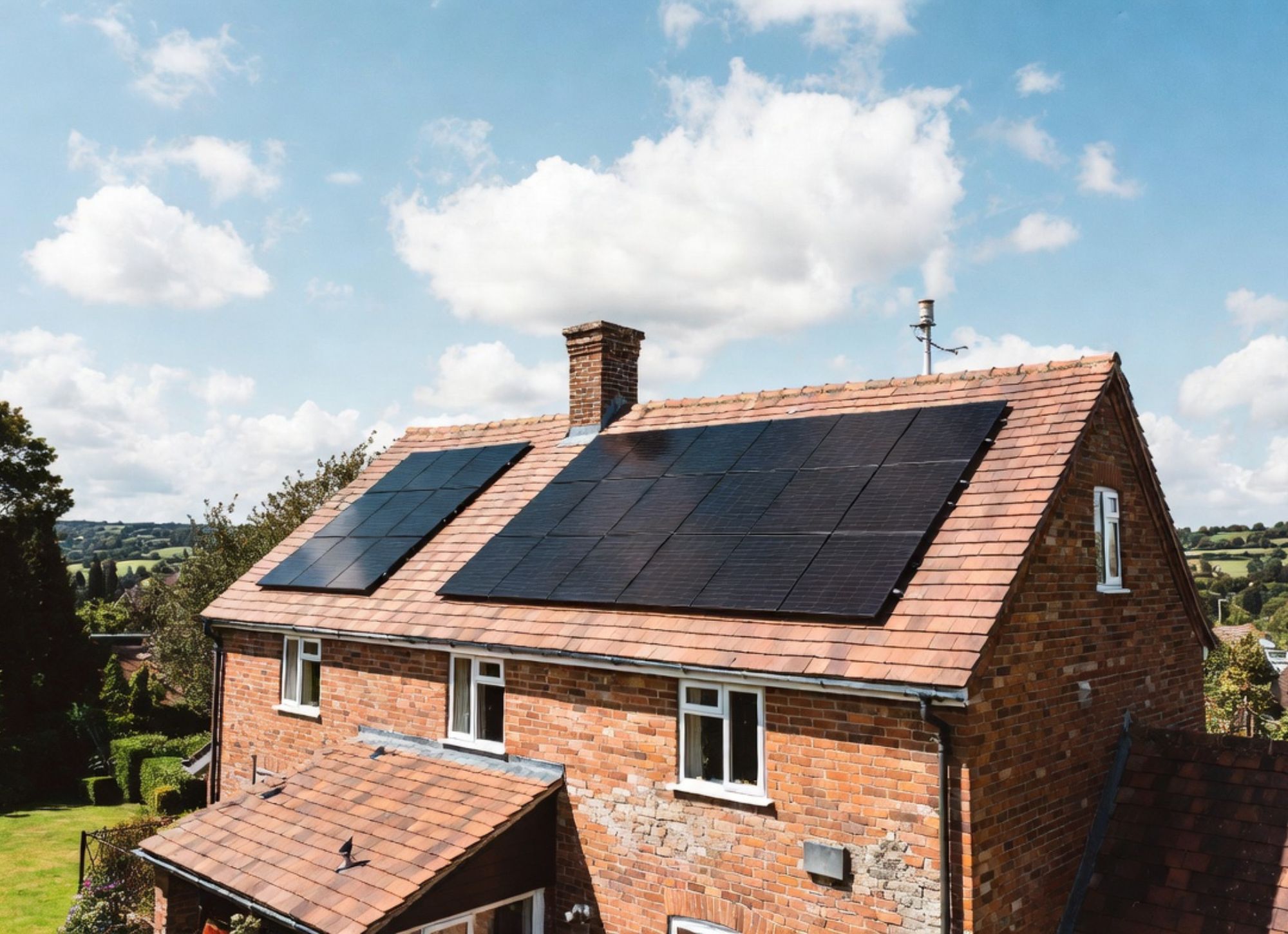
Questions to Ask Your Solar Installer Before You Commit
When it comes to going solar, asking the right questions to ask your solar installer can be the difference between a smooth, cost-effective installation and an expensive headache.
This guide covers every important question UK homeowners and landlords should be raising before a single panel goes on the roof.
Questions to Ask About Your Roof and Home Suitability
Before signing anything, you need to know whether your roof and home is suitable.
1. Is my roof suitable for solar panels?
Roof suitability for solar panels depends on several factors, including orientation, pitch, age, and shading. South-facing roofs at a pitch of around 30 to 40 degrees are ideal in the UK, but southeast and southwest-facing roofs still perform well.
Your installer should carry out a proper site survey, not just a quick look from the ground. They should check for shading from chimneys, nearby trees, or neighbouring buildings, particularly in urban areas like London or Bristol where buildings are close together.
2. What condition does my roof need to be in before installation?
Your roof condition matters more than most homeowners realise. Solar panels are typically guaranteed for 25 years, so if your roof tiles are in poor condition or the felt underneath is deteriorating, it makes sense to address this before installation.
A good installer will flag any roofing concerns during the survey rather than pressing ahead with the job regardless. Ask directly: “Do you foresee any roofing issues, and what would you recommend?”
3. Do I need planning permission?
In most cases in England and Wales, solar panels fall under permitted development rights, meaning you do not need planning permission. There are exceptions, however, including listed buildings, properties in conservation areas, and some flats.
If you live in parts of Cardiff, Bath, or certain London boroughs, your installer should be familiar with the local authority guidance. Always ask them to confirm the planning position for your specific property in writing.
Questions to Ask About the Solar System Design
Before any panels go on your roof, the design of your system is where the real work happens. These questions will help you make sure it is built around your home and your lifestyle, not just whatever your installer finds easiest to fit.
1. How many solar panels do I actually need?
The number of solar panels you need depends on your household’s electricity consumption, the size and orientation of your roof, and whether you plan to add a battery or electric vehicle charger in the future.
A trustworthy installer will review your electricity bills and model your system around your actual usage rather than just fitting the maximum number of panels possible. For most UK homes, a system of between 6 and 12 panels is common, but this varies significantly.
2. What solar panel brands do you install, and why?
The solar panel brands your installer uses tells you a lot about their approach to quality. Leading manufacturers include names like Jinko Solar, LONGi, SunPower, and REC, but the most important thing is that the panels carry a solid product warranty (typically 12 to 15 years) and a performance warranty guaranteeing output levels for 25 years.
Ask your installer why they have chosen their preferred brand and whether they have access to alternatives if supply is an issue.
3. What inverter will you use, and what are my options?
The inverter converts the DC electricity your panels generate into AC electricity your home can actually use, making it one of the most important components in your system. There are three main types: string inverters (one unit for all panels), microinverters (one per panel), and hybrid inverters (which can also manage battery storage).
Your installer should explain the pros and cons of each for your specific roof setup. For example, if part of your roof is shaded at certain times of day, microinverters or a system with optimisers may generate noticeably more electricity.
4. Should I get a solar battery at the same time?
Adding a solar battery at the same time as your panels is worth discussing even if you are not ready to commit to one yet. The reason is simple: fitting a battery later is more expensive than installing it alongside your panels because the labour costs are largely duplicated.
Ask your installer to quote for both options simultaneously so you can make an informed comparison. Battery brands like Tesla Powerwall, GivEnergy, and SolarEdge are popular in the UK market, each with different capacities and price points.
Questions to Ask About Costs, Savings, and Returns
Understanding the full financial picture before you sign anything is just as important as the technical details. These are the money questions every homeowner should be asking upfront.
1. What is the total cost, and what does it include?
The total cost of a solar panel installation should be presented as a full, itemised quote covering panels, inverter, mounting equipment, cabling, battery (if applicable), scaffolding, and installation labour.
Watch out for quotes that look attractively low but then add scaffolding costs separately, as this can add several hundred pounds to the final bill. VAT on residential solar installations is currently zero-rated in the UK, so the price you see should not have VAT added on top.
2. How much could I realistically save on my electricity bills?
Realistic savings on electricity bills vary depending on your consumption patterns, how much you are at home during the day, your tariff, and your system size. A well-designed system for a typical family home in Southern England might generate between 3,000 and 4,500 kWh per year.
Your installer should provide a savings estimate based on your actual usage data, not a generic figure. Ask them to model different scenarios, such as using a battery, shifting dishwasher and washing machine use to daytime hours, and exporting surplus electricity under the Smart Export Guarantee.
3. What is the payback period for my system?
The payback period for a solar panel system in the UK typically ranges from 8 to 14 years depending on system size, usage habits, and whether a battery is included. That said, with energy prices remaining elevated, many homeowners are finding payback periods at the shorter end of that range.
Ask your installer to show their working clearly and to explain any assumptions they have built into the projection, such as future energy price increases.
4. Can I earn money by exporting solar electricity to the grid?
You can earn money by exporting surplus solar electricity to the grid through the Smart Export Guarantee, which requires your installer to be MCS certified. Several energy suppliers offer SEG tariffs, and rates vary, so it is worth shopping around once your system is live.
Your installer should register your system for the SEG as part of the handover process, and you should ask them to confirm this is included in their service.
Questions to Ask About the Installation Process
Knowing what to expect on installation day, and in the weeks leading up to it, helps avoid surprises and ensures everything runs smoothly from start to finish.
1. How long will the installation take, and what disruption should I expect?
A standard solar panel installation typically takes one to two days for a straightforward domestic property. Larger systems or those with battery storage may take longer. You should expect some noise from drilling and roof work, and you will likely need to be home for at least part of the process.
Your installer should give you a clear timeline and let you know in advance if scaffolding needs to go up the day before.
2. How will you handle the grid connection and DNO notification?
Your installer must notify the Distribution Network Operator (DNO) before your system is commissioned. This is a legal requirement, not optional. For most systems under 3.68kW (single phase), this is a simple notification process.
Larger systems or properties in certain grid areas may require formal approval, which can add a few weeks. Ask your installer to confirm who handles this and whether any additional costs might arise if the DNO requires grid reinforcement work.
3. What happens if there is damage to my roof during installation?
Reputable installers carry public liability insurance, and any damage caused during the installation should be covered. Ask to see their insurance details before work starts and confirm what the claims process looks like. A company that is reluctant to share this information is a red flag.
Questions to Ask About Warranties and Aftercare
A solar system is a long-term investment, so the protection and support you receive after installation day matters just as much as the quality of the equipment itself.
1. What warranties come with the system?
Solar system warranties typically cover three separate things: the panel product itself (usually 12 to 15 years), panel performance (usually 25 years guaranteeing a minimum output level), and the inverter (usually 5 to 12 years, sometimes extendable).
In addition, your installer should provide a workmanship warranty covering the installation itself, typically for at least two years. Ask for all warranties in writing and check whether they are backed by the manufacturer or just the installer, since a small installer going out of business does not affect a manufacturer-backed warranty.
2. What monitoring system will I have access to?
Most modern solar installations come with an app or online portal that lets you track how much electricity your panels are generating, how much you are using from the grid, and how much you are exporting.
Ask your installer which monitoring platform they use and whether it includes alerts if your system underperforms or develops a fault. Being able to see your system’s output in real time helps you catch problems early and maximise your savings.
3. What ongoing maintenance does the system need?
Solar panels require very little ongoing maintenance, which is one of their most appealing qualities. Rain generally keeps the panels clean in the UK, but if you live in a particularly dusty area or near farmland, an occasional clean every year or two can help maintain output.
Ask your installer whether they offer a maintenance or health-check service and what this would cost. Inverters are the component most likely to need attention over the system’s lifetime, so ask about typical inverter lifespan and replacement costs.
Is MCS certification a requirement for solar installers in the UK?
MCS (Microgeneration Certification Scheme) certification is the industry-recognised standard for solar installers in the UK, and working with an MCS-certified company is essential for several reasons. Without it, you cannot access the Smart Export Guarantee (SEG), which pays you for surplus electricity you export back to the grid.
Your installation may also not be covered by certain warranties, and some home insurers may raise concerns about non-certified work. Always verify certification before agreeing to anything.
What qualifications should a reputable solar installer have?
A reputable solar installer should hold MCS certification, and their engineers should be qualified to work on electrical systems in line with Part P of the Building Regulations. Look for membership of industry bodies such as the Renewable Energy Consumer Code (RECC), which provides an extra layer of consumer protection.
Installers operating across Southern England and South Wales, like EE Renewables, should also be familiar with local planning rules, which vary slightly between councils in areas like Brighton, Oxford, and Cardiff.
Get a Free Solar Installation Quote from EE Renewables
If you are ready to take the next step, EE Renewables is here to help. We provide expert solar panel installation and solar battery storage solutions for homeowners and landlords across Southern England, Greater London, South West England, and South Wales, covering areas including London, Brighton, Oxford, Southampton, Bristol, and Cardiff.
Our team will carry out a thorough survey of your property, design a system tailored to your energy use and roof layout, and walk you through every cost and saving estimate in plain, straightforward language before you commit to anything.
Request your free, no-obligation solar quote from EE Renewables today.
Frequently Asked Questions
Can I ask for references or case studies from my solar installer?
Absolutely, and you should. A reputable installer will be happy to share photos of completed projects and may be able to put you in touch with previous customers. If an installer is reluctant to provide references, treat that with caution.
Online reviews on platforms like Trustpilot and Google are also worth checking, and for MCS-certified installers you can verify their certification status on the official MCS installer database.
What should I do if I get very different quotes from different solar installers?
Price differences between quotes are normal, but large discrepancies are worth investigating. Check what is and is not included in each quote, particularly scaffolding, monitoring equipment, and grid connection costs. Also compare the panel and inverter brands being proposed, as well as the warranty terms.
The cheapest quote is not always the best value, and an unusually low price can sometimes indicate corners being cut on equipment quality or installation standards.
Does my home insurance need to be updated after solar panels are installed?
Yes, you should inform your home insurer once solar panels have been installed on your property. In most cases, panels are covered under buildings insurance as a permanent fixture, but your insurer may want to note the addition and adjust your sum insured.
Failing to notify them could affect a future claim, so it is a straightforward step worth taking promptly after installation.
Will solar panels affect my ability to sell my home?
Solar panels generally have a positive effect on property saleability and value. An Energy Performance Certificate (EPC) rating improvement, combined with lower running costs, is attractive to buyers. However, if your panels are on a lease agreement or were installed under a rent-a-roof scheme rather than owned outright, this can complicate the conveyancing process.
For this reason, purchasing your system outright is usually preferable to lease arrangements.
What happens to my solar system if I move house?
Solar panels are fixed to the roof and are generally considered part of the property, so they are typically left in place when you sell. If you are renting and installed panels with landlord permission, the arrangement should be documented clearly in your tenancy agreement.
If you own the property and want to take the system with you, it is technically possible but rarely cost-effective given the labour involved and the risk of roof damage during removal. In most cases, the panels add value to the sale and are best left as part of the property.
