


Mini Split Heat Pumps: Costs, Types & Benefits
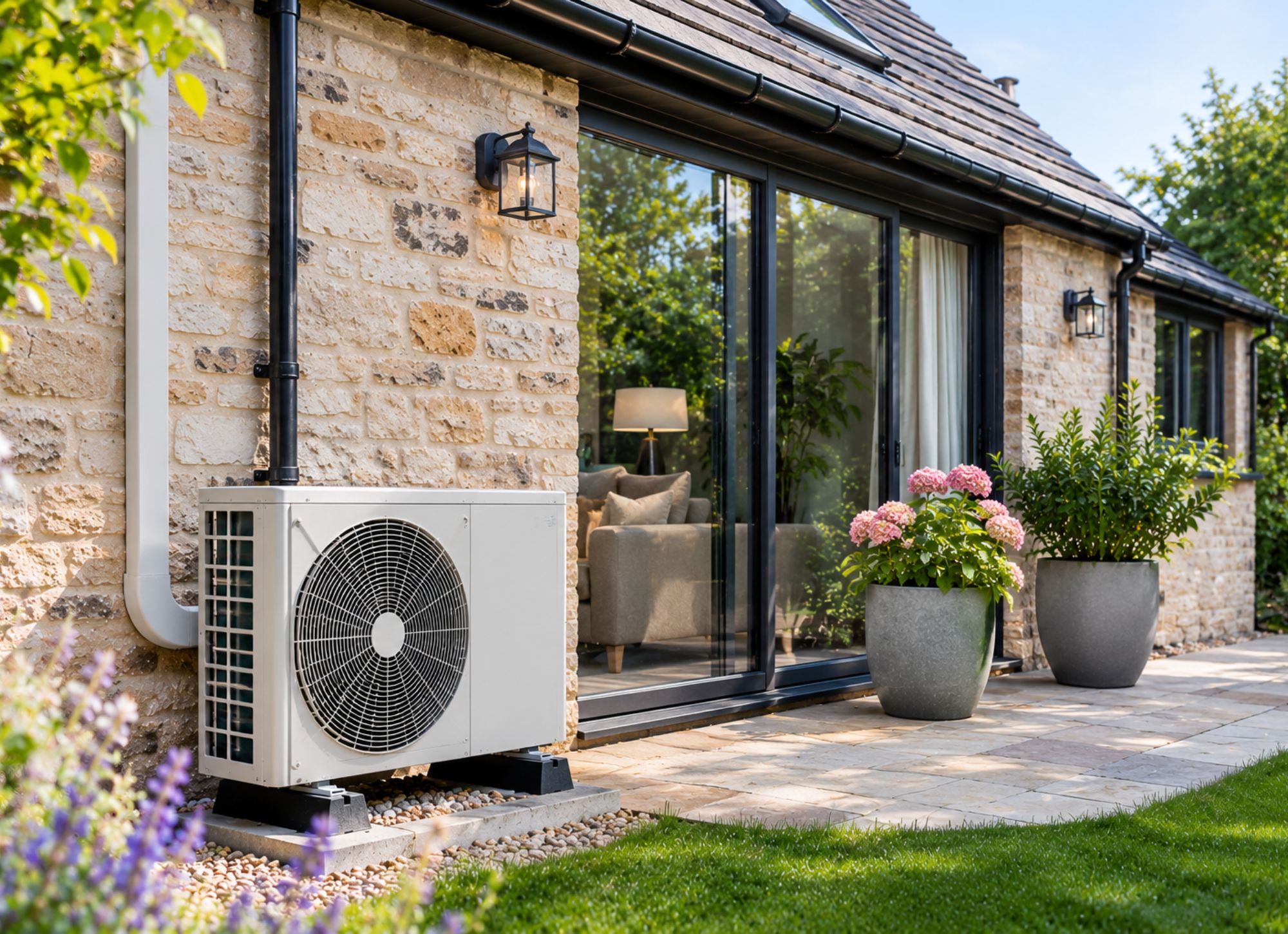
A mini split heat pump is a compact air to air heat pump that heats and cools individual rooms. It has a small outdoor unit connected by thin refrigerant pipes to one or more slim indoor units, usually mounted high on a wall. Because there is no ductwork, it is often called a ductless heat pump, and many people know it simply as air conditioning that also heats.
Mini splits have long been popular in Japan, Australia and the US, and they are becoming more common in UK homes as summers get hotter and people look for efficient alternatives to gas. They can be an excellent choice for extensions, garden offices, loft conversions and flats. They are not the same as the air to water heat pumps that replace a boiler, and they cannot heat radiators or hot water.
In this guide, I’ll explain how mini split heat pumps work, the different types, what they cost in the UK, their benefits and drawbacks, and when a whole home air source heat pump might be the better choice for homeowners and landlords in London, Southern England, the South West and South Wales.
What Is a Mini Split Heat Pump and How Does It Work?
A mini split heat pump is a two part heating and cooling system that moves heat between the outside air and the inside of your home. In winter, it pulls warmth from the outdoor air, even when it is cold, and releases it indoors as warm air. In summer, it runs in reverse, taking heat out of your rooms and releasing it outside to cool them down.
The system has three main parts:
- The outdoor unit, which contains the compressor and fan, and sits on a wall bracket or the ground outside.
- The indoor unit or units, which blow warm or cool air into each room and are controlled by a remote, wall controller or app.
- Refrigerant pipes and cables, which run through a small hole in the wall to connect the indoor and outdoor units.
Mini splits are very efficient. Many modern units achieve a seasonal heating efficiency (SCOP) of around 4 to 5, meaning they deliver 4 to 5 units of heat for every unit of electricity. That is far more efficient than electric heaters, which produce just 1 unit of heat per unit of electricity.
Pros and Cons of Mini Split Heat Pumps
| Pros | Cons |
|---|---|
| Heats in winter and cools in summer | Heats air only, no hot water |
| Very efficient, delivering 4 to 5 units of heat per unit of electricity | Needs an indoor unit in each room you want to heat |
| Only a small hole in the wall is needed for pipes | Outdoor unit needs space on a wall or the ground |
| Easy control by remote, wall controller or app | Refrigerant work requires an F gas certified engineer |
Want expert advice on heat pumps for your home? EE Renewables provides expert air source heat pump installation across Southern England, Greater London, South West England and South Wales, including areas like London, Brighton, Oxford, Southampton, Bristol and Cardiff. Get in touch today for a free air source heat pump quote tailored to your location.
What Types of Mini Split Heat Pumps Are There?
The types of mini split heat pumps fall into two groups: how many rooms the system serves, and what style of indoor unit it uses. Most UK homes choose between single zone and multi zone systems, then pick the indoor unit style that suits each room.
Single Zone Mini Splits
Single zone mini splits connect one outdoor unit to one indoor unit. They are the simplest and cheapest option, ideal for heating and cooling a single space such as a home office, extension, conservatory or bedroom.
Single Zone Mini Splits Pros and Cons
| Pros | Cons |
|---|---|
| Simplest and cheapest mini split option | Heats and cools one room only |
| Quick to install, often in a day | Each extra room needs its own outdoor unit |
| Ideal for offices, extensions and bedrooms | Not a whole home heating solution |
| Easy to size correctly for one space | Several separate systems can clutter outside walls |
Multi Zone Mini Splits
Multi zone mini splits connect one outdoor unit to several indoor units, typically two to five. Each room can be set to its own temperature. They suit flats and smaller homes where you want to heat and cool several rooms without fitting a separate outdoor unit for each.
Multi Zone Mini Splits Pros and Cons
| Pros | Cons |
|---|---|
| One outdoor unit serves two to five rooms | Higher upfront cost than a single zone system |
| Each room can be set to its own temperature | Longer, more involved installation |
| Fewer outdoor units on the outside of your home | A fault in the outdoor unit affects every room |
| Good for flats and smaller homes | Pipe runs to each room need careful planning |
Wall Mounted Units
Wall mounted units are the most common indoor style. They sit high on the wall, are easy to install and are the most affordable choice. Leading manufacturers such as Mitsubishi Electric, Daikin, Fujitsu, Panasonic, LG, Samsung and Toshiba all offer slim, quiet wall units.
Pros and Cons of Wall Mounted Units
| Pros | Cons |
|---|---|
| Most affordable indoor unit style | Visible high on the wall |
| Easy and quick to install | Air blows from one direction |
| Wide choice from leading brands | Some people dislike the look |
| Slim and quiet designs available | Can be harder to place in rooms with sloping ceilings |
Floor Console Units
Floor console units sit low on the wall, about the size of a radiator. They are useful in rooms with sloping ceilings, such as loft conversions, or where a high wall unit would look out of place.
Pros and Cons Floor Console Units
| Pros | Cons |
|---|---|
| Works well in rooms with sloping ceilings | Takes up some floor level wall space |
| Low position helps warm air reach the floor | Furniture cannot block the unit |
| Similar size to a radiator, so it looks familiar | Usually costs more than a wall mounted unit |
| Good option for loft conversions | Fewer models to choose from |
Ceiling Cassette Units
Ceiling cassette units are fitted into the ceiling, with only a flat panel visible. They spread air in several directions and suit open plan spaces, kitchens and commercial style interiors, but need space above the ceiling.
Pros and Cons Ceiling Cassette Units
| Pros | Cons |
|---|---|
| Only a flat panel is visible | Needs space above the ceiling |
| Spreads air in several directions | More expensive to buy and install |
| Suits open plan spaces and kitchens | Harder to reach for cleaning and servicing |
| Keeps walls and floors free | Installation is more disruptive |
Slim Ducted Units
Slim ducted units are hidden in a ceiling void or loft, with short ducts delivering air through discreet grilles. They are the most invisible option, but cost more and need more space to install.
Pros and Cons Slim Ducted Units
| Pros | Cons |
|---|---|
| The most hidden option, with only grilles visible | Usually the most expensive indoor unit style |
| One unit can serve more than one room | Needs space in a ceiling void or loft |
| Keeps walls and ceilings clear | More complex installation |
| Quiet, as the unit sits out of sight | Ducts and filters can be harder to access for maintenance |
How Much Does a Mini Split Heat Pump Cost in the UK?
A mini split heat pump costs around £1,500 to £3,000 fitted for a single room in the UK, and roughly £4,000 to £10,000 for a multi zone system covering several rooms. The final price depends on the brand, the number and style of indoor units, pipe lengths and how easy the installation is.
| System | Typical installed cost |
|---|---|
| Single zone, wall mounted (1 room) | £1,500 to £3,000 |
| Multi zone, 2 to 3 rooms | £4,000 to £7,000 |
| Multi zone, 4 to 5 rooms | £6,000 to £10,000 |
| Floor console, cassette or slim ducted units | Add around £300 to £1,500 per unit |
These are typical ranges for professional installation by an F gas certified engineer. Prices vary across London, Southern England and South Wales depending on access, wall construction and how far the pipes need to run.
Running Costs for Heating
Running costs for heating with a mini split are low because of its high efficiency. Take a room needing about 3,000 kWh of heat a year:
- Mini split heat pump (SCOP of 4.5): around 670 kWh of electricity, costing roughly £175 a year at about 26p per kWh.
- Plug in electric heater: around 3,000 kWh, costing roughly £780 a year.
- Gas boiler (90% efficient): around 3,300 kWh of gas, costing roughly £215 a year at about 6.5p per kWh.
That makes a mini split dramatically cheaper than electric heating and broadly comparable with gas for heating a single room.
Running Costs for Cooling
Running costs for cooling are modest too. A typical 2.5 kW unit cooling a bedroom for four hours a day through a hot month might use around 50 kWh of electricity, costing roughly £13. With the UK recording its first ever 40°C temperature in July 2022, cooling is becoming a bigger priority, particularly in London and the South East.
What Are the Benefits of a Mini Split Heat Pump?
The benefits of a mini split heat pump are efficient heating, built in summer cooling, quick installation, room by room control and a much lower cost than a whole home system.
Heating and Cooling in One
Heating and cooling in one unit is the standout benefit. You get efficient warmth in winter and air conditioning in summer, which is increasingly valuable in top floor flats, loft rooms and south facing extensions that overheat.
High Efficiency
High efficiency keeps running costs down. Delivering 4 to 5 units of heat per unit of electricity, a mini split uses a fraction of the power of electric heaters, storage heaters or oil filled radiators.
Quick, Low Disruption Installation
Quick, low disruption installation makes mini splits easy to add. A single room system can often be fitted in a day, needing only a small hole through the wall and no changes to floors, radiators or pipework.
Room by Room Control
Room by room control means you only heat or cool the spaces you are using. Each indoor unit has its own settings, and many can be controlled from a smartphone app.
Lower Upfront Cost
Lower upfront cost than a whole home heat pump makes mini splits accessible for smaller projects, such as a single room or a garden office.
What Are the Drawbacks of a Mini Split Heat Pump?
The drawbacks of a mini split heat pump are that it cannot provide hot water or heat radiators, each room needs its own indoor unit, and it has not traditionally qualified for the main heat pump grant.
No Hot Water
No hot water is the biggest limitation. A mini split only heats air, so you still need another way to heat water, such as a boiler, immersion heater or a separate hot water heat pump.
Indoor Units in Every Room
Indoor units in every room you want to heat can add up in cost and affect the look of a space. Some people do not like a unit high on the wall.
Air Movement
Air movement is noticeable compared with radiators or underfloor heating. Modern units are very quiet and can direct air away from people, but some find a gentle draught less comfortable.
Regular Filter Cleaning
Regular filter cleaning is needed to keep the system efficient and the air clean. It is a simple job, but it is easy to forget.
Limited Grant Support
Limited grant support is a drawback for many households. Unlike air to water heat pumps, air to air systems have historically not been eligible for the £7,500 Boiler Upgrade Scheme grant.
Should You Choose a Mini Split or an Air to Water Heat Pump?
You should choose a mini split if you want to heat and cool a few individual rooms, and an air to water heat pump if you want to replace your boiler and heat your whole home and hot water. They solve different problems, and some homes use both.
| Factor | Mini Split (Air to Air) | Air to Water Heat Pump |
|---|---|---|
| What it heats | Air in individual rooms | Radiators, underfloor heating and hot water |
| Hot water | No | Yes, via a hot water cylinder |
| Cooling | Yes, built in | Limited, only with suitable emitters |
| Replaces a boiler | No | Yes |
| Typical installed cost | £1,500 to £10,000 | £10,000 to £15,000 before grants |
| Boiler Upgrade Scheme | Historically not eligible | £7,500 grant in England and Wales |
| Best for | Single rooms, extensions, offices, flats | Whole home heating in houses and many flats |
Choose a mini split if…
- You want to heat and cool one or a few rooms, such as an extension, loft room or garden office.
- You live in a flat with no space for a hot water cylinder and already have another way to heat water.
- Summer overheating is a real problem in your home.
Choose an air to water heat pump if…
- You want to replace a gas, oil, LPG or electric boiler for the whole home.
- You need hot water as well as heating.
- You want to claim the £7,500 Boiler Upgrade Scheme grant.
- You want to improve your EPC rating across the whole property.
Can You Get a Grant for a Mini Split Heat Pump?
You usually cannot get the main government grant for a mini split heat pump. The Boiler Upgrade Scheme gives £7,500 towards air to water and ground source heat pumps in England and Wales, but air to air systems have historically been excluded because they do not provide hot water or replace a central heating system. The government has looked at whether air to air heat pumps should get support in future, so check the latest rules before buying.
If you want grant support for low carbon heating, an air to water heat pump is currently the better route. Some local council schemes and energy company programmes may help eligible households, so it is worth checking what is available in your area.
Where Do Mini Split Heat Pumps Work Best?
Mini split heat pumps work best in individual spaces that need flexible heating and cooling, where installing or extending central heating would be expensive or disruptive.
Extensions and Conservatories
Extensions and conservatories often get too hot in summer and too cold in winter. A mini split handles both without extending your central heating pipework.
Garden Offices and Studios
Garden offices and studios are a perfect fit. With more people working from home across London, Oxford, Bristol and Brighton, a mini split keeps an outbuilding comfortable all year.
Flats and Apartments
Flats and apartments, especially top floor and south facing ones in London, benefit from compact heating and cooling. Check with your freeholder or management company before fitting an outdoor unit.
Loft Conversions
Loft conversions can be hard to keep at a comfortable temperature. A floor console or wall unit offers efficient heat in winter and relief from summer heat.
Rental Properties
Rental properties, such as flats and HMOs with old electric heaters, can benefit from much lower running costs. Landlords should still check how a mini split affects the EPC, and consider whether hot water will need upgrading separately.
Ready to Find the Right Heat Pump for Your Home?
Finding the right heat pump for your home starts with a free, no obligation conversation with EE Renewables. As an independent air source heat pump installer, we will give you honest advice on whether a whole home air source heat pump is the right fit, and how it compares with other options such as a mini split.
When you get in touch, our team will:
- Talk through what you want to heat, and whether you need hot water and cooling too.
- Survey your home and carry out a room by room heat loss assessment.
- Give you a clear, fixed price quote with realistic running cost estimates.
- Explain how the £7,500 Boiler Upgrade Scheme grant can reduce the cost of a whole home system.
Request your free air source heat pump quote today and find out which heat pump will keep your home comfortable for less.
EE Renewables provides air source heat pump installation across Greater London, Southern England, South West England and South Wales, including London, Brighton, Oxford, Southampton, Bristol, Cardiff and the surrounding areas. Whether you are a homeowner or a landlord, we are here to help.
Frequently Asked Questions
Do Mini Split Heat Pumps Need Planning Permission?
Mini split heat pumps often do not need planning permission, as recent changes in England have extended permitted development rights to cover air to air units, subject to conditions on size, position and noise. Rules in Wales differ. Listed buildings, conservation areas and flats may need permission or freeholder consent, so always check before installing.
How Often Should a Mini Split Heat Pump Be Serviced?
A mini split heat pump should be professionally serviced once a year. Between services, clean or vacuum the indoor unit’s filters every two to four weeks during heavy use. Regular cleaning keeps efficiency high, improves air quality and helps prevent odours, while the annual service checks refrigerant levels, drainage and electrical connections.
Can I Install a Mini Split Heat Pump Myself?
You should not install a mini split heat pump yourself in the UK. Connecting the refrigerant pipes involves handling fluorinated gases, which by law must be done by an F gas certified engineer. DIY installation can also void the manufacturer’s warranty and create electrical safety risks.
Do Mini Split Heat Pumps Work in Cold Weather?
Yes, mini split heat pumps work in cold weather. Many modern models keep heating in outdoor temperatures down to around minus 15°C to minus 25°C. Efficiency drops a little in very cold conditions, and the outdoor unit will pause occasionally to defrost, but winters in Southern England and South Wales are well within their range.
Is a Mini Split Better Than a Portable Air Conditioner?
Yes, a mini split is better than a portable air conditioner for most homes. It is far more efficient, much quieter because the noisy compressor sits outside, and provides efficient heating in winter as well as cooling. Portable units are cheaper and need no installation, but they cost more to run and are less effective.
