


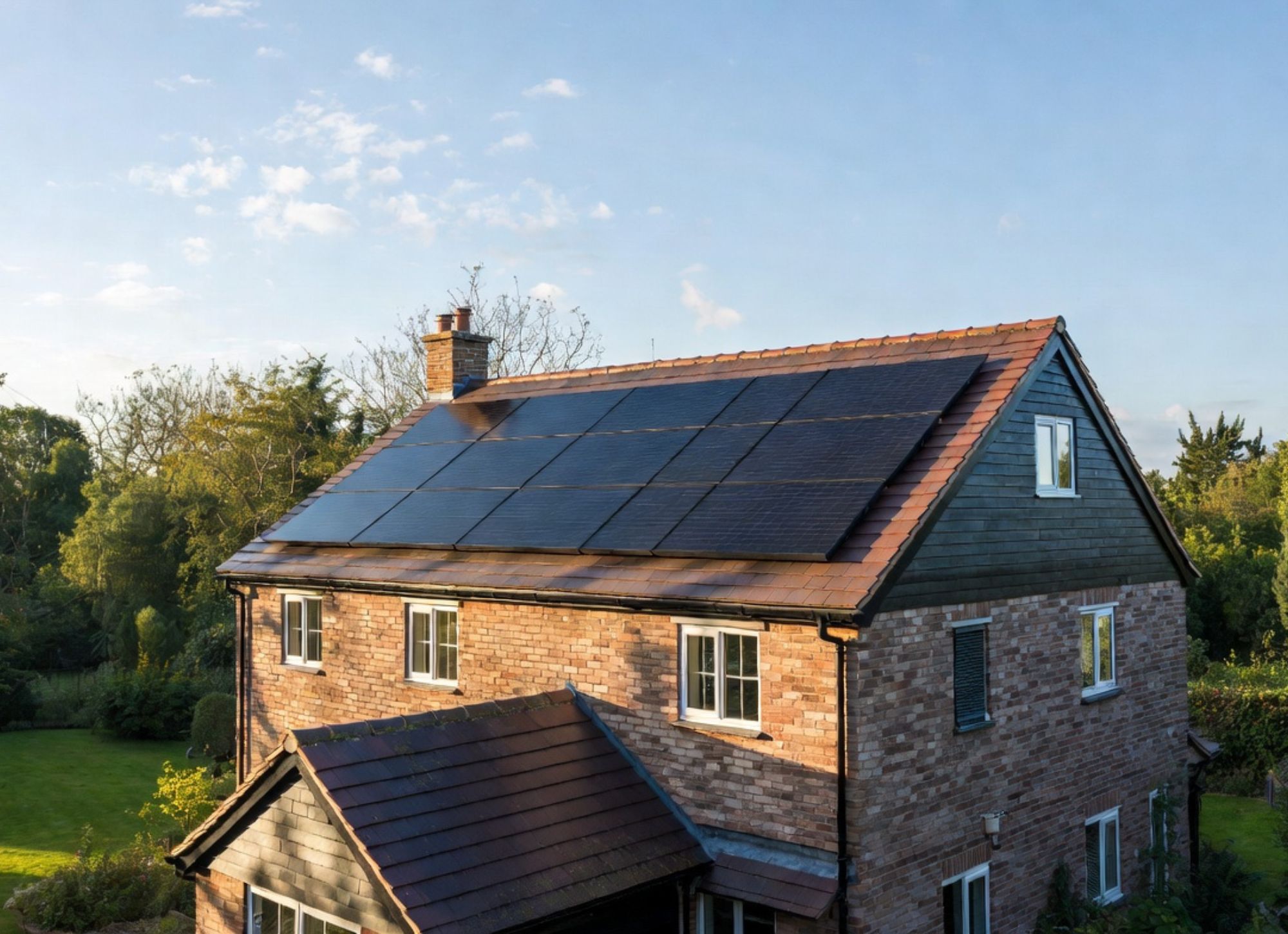
Are Second Hand Solar Panels Worth It: Pros & Cons
Second hand solar panels are not worth it for most UK homeowners and landlords. While the lower upfront price is appealing, used panels typically come without a manufacturer’s warranty, cannot receive MCS certification, and are ineligible for Smart Export Guarantee (SEG) payments.
When you factor in reduced efficiency, hidden damage, and ongoing repair costs, the savings rarely add up. New panels installed by a certified professional nearly always deliver a far better long-term return on your investment.
Are Second Hand Solar Panels Really a Good Deal?
No, second hand solar panels are generally not a good deal for most UK homeowners, and here is why. On the surface, you can find used photovoltaic (PV) panels on sites like eBay or Facebook Marketplace for a fraction of the price of new ones, sometimes 50% to 70% cheaper per watt.
That sounds attractive, especially when energy bills across London, Bristol, Southampton, and Cardiff have been climbing steadily.
But here is the thing: the panels themselves are only a small part of the overall installation cost. You still need to pay for an inverter, mounting brackets, wiring, scaffolding, and a qualified installer. These labour and equipment costs are exactly the same whether your panels are brand new or five years old.
So the actual saving on a typical 10-panel system might only be £300 to £500, and that modest saving quickly gets eaten up by the risks and hidden costs that come with used panels.
If you are a homeowner in Southern England, Greater London, the South West, or South Wales thinking about solar, the smarter question is not how cheap you can get the panels, but what gives you the best return over 20 to 25 years.
Are Used Solar Panels Less Efficient?
Used solar panels are indeed less efficient than new ones, and this efficiency loss compounds over time in a way that directly impacts how much electricity your system generates and how much money you save.
How Much Efficiency Do Solar Panels Lose Over Time?
Solar panels degrade naturally, losing roughly 0.5% to 1% of their output capacity every year. That might not sound like much, but if you buy a panel that is already five years old, it has already lost around 2.5% to 5% of its original performance before it even touches your roof.
An older panel that is ten years old could be operating at 90% to 95% of its rated output at best, and potentially far less if it has not been well maintained.
There is also the issue of technology. A used 300W panel from a decade ago compared side by side with a modern 450W panel shows a significant gap in power output. Older panels are simply built to lower wattage specifications.
You might end up needing more panels to generate the same electricity a smaller number of new panels could produce, which can make the whole exercise counterproductive.
What Is Solar Panel Degradation?
Solar panel degradation is the gradual reduction in a panel’s ability to convert sunlight into electricity. Impurities slowly build up in the photovoltaic material, and some of the electrons generated are attracted to these impurities instead of flowing into the electrical circuit.
Over a 30-year lifespan, a quality panel operating at a 0.5% degradation rate still produces around 86% of its original output, but a used panel that has been exposed to harsh conditions, or one that has not been maintained properly, can degrade much faster than this.
What Are the Risks of Buying Second Hand Solar Panels?
The risks of buying second hand solar panels go well beyond just reduced efficiency, and some of them could end up costing you significantly more than you saved in the first place.
Hidden Damage and Micro-Cracks
Second hand panels are far more likely to have hidden damage that you simply cannot see by looking at them. Micro-cracks in the photovoltaic cells, delamination of the panel layers, and internal moisture are all faults that do not show up to the naked eye but seriously affect performance and longevity.
If a panel has cracked or broken glass, water can leak into the electrical components, which creates a genuine fire and electrocution risk.
No Manufacturer’s Warranty
When you buy a new solar panel system from a certified UK installer, you typically receive a product warranty of 10 to 25 years and a performance warranty of 25 to 30 years. Second hand panels rarely come with any of this warranty coverage.
If something goes wrong, and with older panels, something eventually will, the repair cost falls entirely on you. A single panel replacement, including scaffolding and labour, can cost £300 to £500 or more.
Incompatibility With Modern Inverters
Solar panels need to be compatible with the inverter that converts the electricity they generate into usable power for your home. Older panels may not integrate cleanly with modern inverter technology, which can reduce overall system performance.
In some cases, you may need to purchase a specific older inverter model to match the used panels, adding further cost and complexity to what was supposed to be a budget-friendly project.
Difficulty Finding an Installer
Not every MCS-accredited installer will agree to work with used panels, and with good reason. A reputable installer puts their certification and reputation on the line with every installation. Many professionals will understandably decline to take responsibility for the performance or safety of equipment whose history they cannot verify.
Can You Get MCS Certification With Second Hand Solar Panels?
You cannot get MCS (Microgeneration Certification Scheme) certification with second hand solar panels, and this is arguably the biggest deal-breaker for UK homeowners.
Why Does MCS Certification Matter?
MCS certification matters enormously because it is the gateway to the Smart Export Guarantee. The Smart Export Guarantee (SEG) is the government-backed scheme that lets you sell any surplus electricity your solar panels generate back to the national grid.
Energy suppliers pay you for every unit of electricity you export. Without MCS certification, you are locked out of this scheme entirely.
Over the lifetime of a properly certified solar panel system, SEG payments can add up to thousands of pounds in additional savings. Losing access to this scheme is a significant financial penalty that makes the upfront saving on used panels look very thin indeed.
MCS certification also has implications for your home insurance. Some insurers may have reservations about covering a system installed with uncertified equipment, which is another complication worth considering before you buy.
Are Second Hand Solar Panels a Problem for Home Insurance?
Second hand solar panels can be a problem for home insurance, and it is a risk that many buyers do not think about until it is too late.
If you install a solar system using uncertified second hand panels, your insurer may question whether the system meets UK electrical safety standards. In the event of a fault or fire, you could find that your claim is reduced or even refused.
Even if the panels are installed by a qualified electrician, the lack of manufacturer certification and traceable product history creates potential gaps in your coverage that a standard home buildings insurance policy may not be designed to handle.
If you are a landlord in London, Brighton, Oxford, Southampton, Bristol, or Cardiff, this risk is even more significant. Rental properties come with strict electrical safety obligations, and any equipment that creates doubt around compliance could expose you to serious legal and financial liability.
How Do Second Hand Solar Panels Compare to New Ones?
Second hand solar panels compare poorly to new ones across almost every meaningful measure for UK homeowners — here is a clear picture of the key differences:
| Factor | New Solar Panels | Second Hand Solar Panels |
| Upfront Cost | Higher (but financed options available) | Lower (50–70% cheaper per watt) |
| Efficiency | Peak rated output | Already degraded, 80–95% or less |
| Warranty | 10–25 year product warranty | Typically none |
| MCS Certification | Yes, fully eligible | No, not eligible |
| SEG Payments | Fully eligible | Not eligible |
| Lifespan | 25–40 years | Uncertain, shorter remaining life |
| Insurance | No complications | Potential complications |
| Installer Availability | All MCS installers | Limited availability |
The table above makes it clear that while second hand panels cost less to buy, new panels are the only option that delivers the full financial and practical benefits of going solar in the UK.
Are There Any Situations Where Second Hand Solar Panels Make Sense?
Second hand solar panels can make sense in very specific, limited situations, though these rarely apply to the average UK homeowner or landlord.
Off-grid applications, such as powering a garden shed, an allotment shed, a canal boat, or a remote cabin, are probably the most practical use case for used panels. In these scenarios, you are not connected to the national grid anyway, so MCS certification and SEG payments are irrelevant.
The lower cost makes sense when you simply need a modest amount of power for lighting, charging tools, or running a small appliance.
For most people living in London, Brighton, Oxford, Southampton, Bristol, Cardiff, or anywhere else across Southern England, the South West, or South Wales, however, these off-grid scenarios simply do not apply.
If you want solar panels to reduce your home energy bills, earn SEG payments, and add value to your property, second hand panels are the wrong tool for the job.
How Much Do New Solar Panels Cost in the UK?
New solar panel systems in the UK cost, on average, between £5,000 and £9,000 for a typical home installation, depending on the system size, roof type, and whether you add a battery storage unit. While this is a meaningful investment, it is important to look at the full picture rather than just the upfront number.
What Is the Payback Period for New Solar Panels?
The payback period for new solar panels in the UK is typically between 6 and 10 years for most households. After that, you are generating electricity at essentially no cost for the remaining 15 to 20+ years of the system’s life. Some households save an average of £891 in year one alone, and with rising energy prices, these savings only grow over time.
When you compare that long-term return against the modest upfront saving of buying second hand panels (while sacrificing warranties, SEG income, and peace of mind), new panels represent far better value for money.
Does the 0% VAT Rate Apply to Solar Panels?
Yes, solar panel installations in the UK currently benefit from a 0% VAT rate, which makes a new system more affordable than it has historically been. This government incentive further reduces the effective cost of going with new, certified equipment and makes the already slim financial argument for second hand panels even weaker.
What to Look for If You Are Considering Second Hand Solar Panels?
If you are still considering second hand solar panels for an off-grid project, there are a few things worth checking before you hand over any money.
- Age of the panels: Anything over 10 years old is likely to have lost significant output capacity
- Brand and model number: Research the original specifications so you know what rated wattage and efficiency you are starting from
- Visual inspection: Look for cracks, discolouration, yellowing, delamination, or any signs of moisture ingress. Reject anything with broken glass
- Test the output if possible: If the seller can demonstrate the panels producing measurable power, that is a positive sign
- Check whether any warranty remains: Some panels from reputable manufacturers may still have some performance warranty left, though this is rare for used panels sold privately
- Get an electrician to assess compatibility: Before buying, check that the panels will work with your intended inverter setup
Even with all of these checks, the risks remain substantial. For any grid-connected home installation, the only sensible path is a new, certified system.
Get a Free Solar Panel Installation Quote From EE Renewables
If this article has helped you understand why new, certified solar panels are the smarter long-term investment, EE Renewables is here to help you take the next step.
We provide expert solar panel installation and solar battery storage solutions across Southern England, Greater London, South West England, and South Wales — serving homeowners and landlords in London, Brighton, Oxford, Southampton, Bristol, Cardiff, and the surrounding areas.
Get your free solar panel installation quote today and find out how much you could save with professionally installed solar panels from EE Renewables.
Every system we install is MCS-certified, meaning you get full access to Smart Export Guarantee payments, your home insurance is protected, and your installation is backed by manufacturer warranties and our professional workmanship guarantee.
Whether you own a terraced house in Brighton, a period property in Oxford, a family home in Bristol, or a rental portfolio in Cardiff, we will design a solar system that fits your roof, your energy usage, and your budget.
Frequently Asked Questions
Can I install second hand solar panels myself to save even more money?
It is strongly advised not to install solar panels yourself, regardless of whether they are new or second hand. Solar panel installation involves working with high-voltage DC electricity, roof structures, and grid connection points, all of which carry serious safety risks. In the UK, a DIY installation is also unlikely to be covered by your home insurance, and without a qualified MCS-accredited installer, you will not be eligible for SEG payments.
The money you might save by going DIY is far outweighed by the safety, legal, and financial risks involved.
Do second hand solar panels affect my property’s EPC rating?
A solar panel system can positively impact your property’s Energy Performance Certificate (EPC) rating, but only when the system is properly certified and documented. Second hand panels installed without MCS certification may not be recognised in an official EPC assessment in the same way a certified installation would be.
For landlords in particular, who face increasing pressure to achieve higher EPC ratings across their rental portfolio, this is an important consideration.
Can I add second hand panels to an existing certified solar system?
Adding uncertified second hand panels to an existing MCS-certified system is not recommended. Mixing panel types and ages can create electrical imbalances that reduce the performance of your entire system. It can also void the warranty on your existing certified panels and potentially affect your eligibility for SEG payments if the new additions are not properly certified.
If you want to expand your solar capacity, speak to a qualified installer about adding compatible, certified panels.
Where do most second hand solar panels in the UK come from?
Most second hand solar panels in the UK come from a few different sources: commercial or industrial buildings that have undergone roof replacements or demolition, older residential systems that are being upgraded to higher-efficiency modern panels, and panels removed from properties during renovation work. Some also come from overseas. The mixed and often unknown history of these panels is a key reason why quality and condition can vary so widely.
Will second hand solar panels add value to my home?
A certified, professionally installed solar panel system is well-documented as a feature that can increase a property’s market value in the UK, particularly as energy efficiency becomes a bigger factor for buyers. However, an uncertified system using second hand panels is unlikely to have the same positive effect.
Buyers and their surveyors may flag the lack of MCS certification as a concern, and in some cases, it could actually complicate a property sale rather than support it.
