


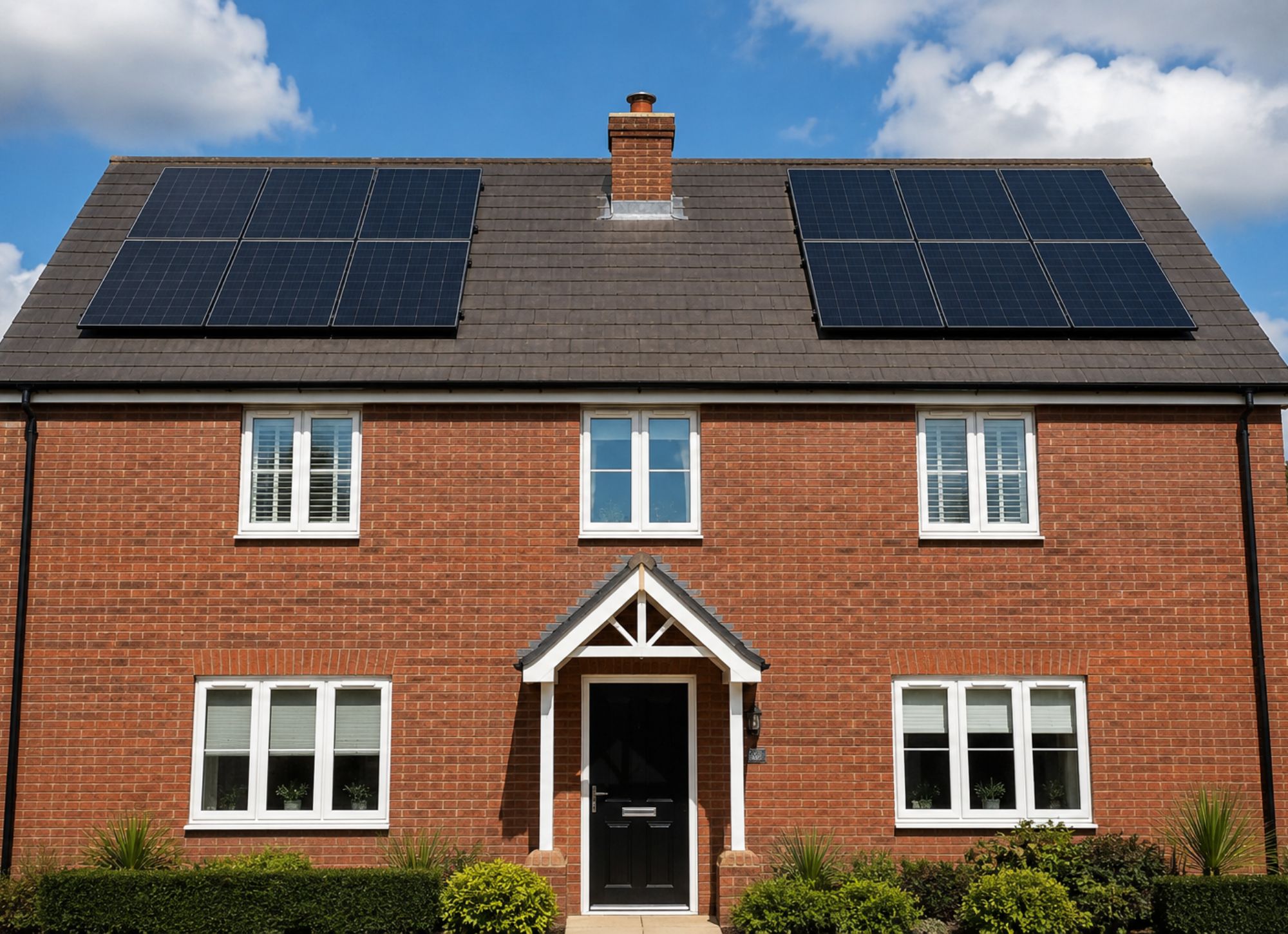
Can You Put Solar Panels on Both Sides of Roof?
Yes. Installers can fit solar PV systems on both sides of a roof, often creating an east-west configuration that captures morning and afternoon sunlight.
This approach works well for properties without a large south-facing roof or for those who want more consistent power production across the day rather than a single midday peak. At EE Renewables, we regularly assess homes in London, Brighton, Oxford, Southampton, Bristol and Cardiff to see if dual-side solar panel installation makes sense for maximising energy output and cutting electricity bills.
Can you install solar panels on both sides of the roof?
You can install solar panels on both sides of the roof in most cases, as long as the roof structure is sound and each side receives reasonable sunlight. Many UK homes have double-pitched roofs, and placing panels on opposing sides, typically east and west facing, allows the system to generate electricity from sunrise through to sunset.
This dual orientation differs from the traditional south-facing setup that many people picture. East-facing panels start producing power early in the morning, while west-facing ones continue later into the afternoon and early evening. The result is a flatter generation curve that often matches the daily routines of families, remote workers or households with electric vehicles.
Pros of installing solar panels on both sides of the roof:
- More even electricity production throughout the day, which can increase the amount of power you use yourself instead of exporting to the grid at lower rates.
- Better match for typical home energy use patterns, such as morning breakfast routines and evening cooking or charging.
- Opportunity to fit more panels overall if one side alone does not have enough space.
- Reduced reliance on the grid during peak tariff times when combined with a solar battery.
- Potential to balance the physical load on the roof structure in some cases.
Cons of installing solar panels on both sides of the roof:
- Slightly lower total annual energy output compared with an equivalent south-facing system, often around 10 to 20 percent less depending on location and pitch.
- Higher upfront installation costs due to extra panels, mounting equipment, cabling and potentially more complex inverter setups.
- Greater chance of shading issues if trees, chimneys or neighbouring buildings affect one side more than the other.
- More wiring and possibly separate strings or MPPT inputs on the inverter, which adds a small amount of complexity.
- Not ideal if one side faces significantly north or suffers heavy shade for large parts of the day.
For homeowners in places like Bristol or Brighton, where roof orientations vary widely, a professional survey helps determine whether both sides deliver worthwhile returns.
Factors that affect installing solar panels on both sides of your roof
Several practical elements determine whether putting solar panels on both sides of your roof will work well for your home. Understanding these helps you make an informed decision before contacting an installer.
Roof orientation and direction
Roof orientation plays a major role in performance. East-west setups are the most common when using both sides. East panels catch the morning sun while west panels handle the later part of the day. True south remains ideal for maximum total output, but many properties in Greater London or South Wales do not have a perfect south pitch available. An east-west split can still deliver strong results, especially when paired with battery storage to store excess power.
Shading from trees, buildings or chimneys
Shading can reduce output dramatically on one or both sides. Even partial shade from a neighbour’s tree or a chimney stack affects performance more than many people expect. Installers use tools to map the sun’s path across your roof throughout the year. If one side experiences significant shading, it may be better to focus panels on the clearer side or use optimisers to minimise losses.
Roof pitch and angle
The angle of your roof influences how efficiently panels capture sunlight. Most UK pitched roofs fall within a workable range, though very steep or very shallow pitches can reduce performance slightly. When installing on both sides, the two pitches are often similar on a standard house, but any difference gets assessed during the survey.
In areas like Oxford or Southampton, roof pitch rarely rules out a dual-side system but it does affect expected generation figures.
Structural condition and weight considerations
Your roof must be strong enough to support the additional weight of the panels and mounting system on both sides. Older roofs or those needing repairs first may require strengthening work. Balancing panels on both sides can sometimes help distribute weight more evenly compared with loading everything onto one pitch.
A structural check forms part of any reputable installer’s assessment.
Available roof space and system sizing
The physical size of each roof plane limits how many panels you can fit. Some homeowners install on both sides to reach a larger overall system size when a single pitch does not provide enough space. This approach can make sense if you have high electricity use or plan to add an electric vehicle or heat pump in the future.
Local planning rules and permitted development
In most cases across Southern England and South Wales, solar panels count as permitted development and do not need planning permission. However, listed buildings, conservation areas or properties in certain parts of Cardiff or Brighton may require approval, particularly if panels are visible from the road. Checking early avoids delays.
How do installers fit solar panels on both sides of the roof?
Installers follow a clear, safe process when fitting solar panels on both sides of the roof. Here is what typically happens from start to finish.
- They begin with a detailed site survey to measure the roof, check its condition, assess shading and confirm orientations.
- The team designs the system layout, deciding how many panels go on each side and how to connect them to the inverter.
- Scaffolding goes up to provide safe access to both pitches of the roof.
- Mounting brackets are fixed securely to the roof structure on each side, following the existing pitch.
- Solar panels are lifted into place and attached to the brackets, usually working on one side before moving to the other.
- Cabling is run from the panels on both sides down to the inverter, which is normally located in a loft, garage or utility area.
- The inverter and any battery storage components are connected to your home’s electrical system.
- The whole system is tested and commissioned to make sure everything works safely and efficiently.
- Finally, the scaffolding comes down and the installer provides you with all the documentation and guidance you need.
The process usually takes one to three days depending on system size and roof access. Experienced teams like those at EE Renewables handle both sides efficiently while minimising disruption to your household.
Benefits of east west solar panel systems for UK homes
East-west solar panel systems, created by installing on both sides of the roof, offer particular advantages for homes in the UK. Generation starts earlier and finishes later compared with a south-only setup. This spread can improve self-consumption rates, meaning you use more of the free electricity yourself rather than sending it back to the grid.
Many families in London or Southampton find this pattern matches their lifestyle better, especially when they add solar battery storage. Excess morning power can be stored for evening use, further reducing bills. In regions with time-of-use tariffs, the flatter generation profile often delivers better financial returns than peak-heavy south-facing systems.
Is putting solar panels on both sides of the roof right for your home?
Every property is different. Roof layout, energy usage patterns, budget and future plans all influence whether a dual-side installation is the best route. For many homeowners in Oxford, Cardiff and across the regions we serve, it provides a practical way to generate more clean energy without needing a perfect south-facing roof.
Ready to install solar panels on your roof?
If you are considering solar panels for your home in Southern England, Greater London, South West England or South Wales, EE Renewables can help. We provide expert solar panel installation tailored to your property and energy needs, including locations like London, Brighton, Oxford, Southampton, Bristol and Cardiff.
Get in touch today for a free quote tailored to your location. Our experienced team will visit your home, assess both sides of your roof and design a system that maximises your savings and energy independence.
Frequently Asked Questions
Do I need planning permission to put solar panels on both sides of my roof?
In most residential properties across the UK, solar panel installations fall under permitted development rights and do not require planning permission. However, if your home is listed, in a conservation area, or in certain parts of cities like Brighton or Cardiff, you should check with your local authority first. Our team at EE Renewables can advise you during the initial survey.
Will solar panels on both sides of the roof affect my home insurance?
Most standard home insurance policies cover solar panel installations without issue, but it is wise to inform your insurer after the work is completed. The added value of the system and any minor changes to roof loading are usually straightforward to declare. We provide all necessary documentation to make this process simple.
How much more expensive is installing solar panels on both sides compared with one side?
Costs rise because you need more panels, additional mounting hardware and extra cabling. The exact difference depends on system size, but expect a noticeable increase. Many homeowners find the extra generation and improved self-consumption justify the investment, particularly when combined with a battery and current incentive schemes.
Can I add solar panels to the second side of my roof later if I start with only one side?
Yes, it is usually possible to expand the system later, although it may involve some additional work to integrate the new panels properly with the existing inverter or to add a second inverter. Planning the possibility of future expansion during the first installation can save time and money down the line.
Does putting panels on both sides of the roof make my system more resilient to cloudy weather?
East-west configurations can help slightly because the panels face different directions and may catch light at different times even under partial cloud. However, all solar systems produce less on very overcast days. Pairing the setup with a good quality battery helps smooth out daily variations regardless of orientation.
