


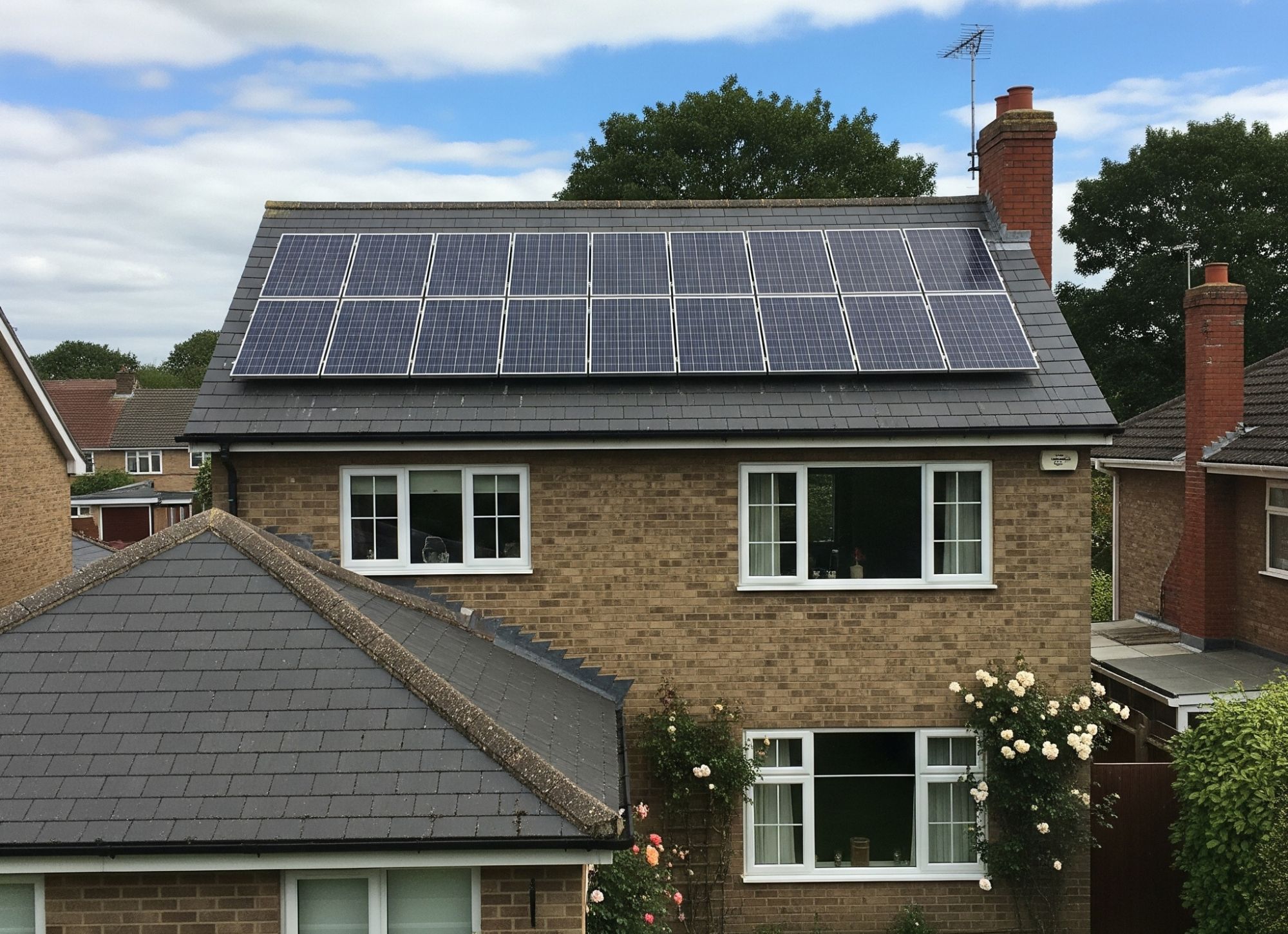
What Appliances Can Be Powered By Solar Panels?
When considering solar power for your home or business, knowing what appliances can be powered by solar panels is essential to making an informed investment.
This detailed guide breaks down which household and commercial devices can run effectively on solar energy, how to size your solar panel system to meet your needs, the costs involved, and the potential savings you can achieve by switching to solar.
Whether you’re a UK homeowner, landlord, or commercial property owner, understanding these factors will help you confidently take the next step towards sustainable, cost-effective energy.
What Household Appliances Can Be Powered By Solar Panels?
Solar panels can power a wide variety of household appliances, from low-energy devices like LED lighting and laptops to higher-consumption appliances such as refrigerators, washing machines, and electric ovens.
The exact appliances you can run depend on the size of your solar panel system, your daily energy use, and whether you have battery storage to store surplus energy for use when the sun isn’t shining.
Common Household Appliances Powered by Solar Panels & Costs
| Appliance | Approximate Daily Energy Use (kWh) | Est. Solar Panels Needed (400W panels) | Est. Cost Without Installation (£) | Est. Cost With Installation (£) | Notes |
|---|---|---|---|---|---|
| LED Lighting | 0.05 – 0.15 | 1-2 panels | £160 – £320 | £1,200 – £1,800 | Very low consumption; easy to power |
| Refrigerator | 1 – 2 | 3-5 panels | £480 – £800 | £3,000 – £4,500 | Runs continuously; moderate power |
| Washing Machine | 0.5 – 2 (per wash cycle) | 2-5 panels | £320 – £800 | £2,000 – £4,500 | High power bursts but short duration |
| Dishwasher | 1.5 – 2 | 4-5 panels | £640 – £800 | £3,200 – £4,500 | Used occasionally; best during daylight |
| Electric Oven | 2 – 4 (per use) | 5-8 panels | £800 – £1,280 | £4,500 – £7,200 | High power; benefits from battery backup |
| Television | 0.1 – 0.4 | 1-2 panels | £160 – £320 | £1,200 – £1,800 | Low power consumption |
| Laptop / Computer | 0.03 – 0.1 | 1 panel | £160 | £1,200 | Very low power |
| Electric Kettle | 0.1 – 0.3 (per use) | 1-2 panels | £160 – £320 | £1,200 – £1,800 | High power but short duration |
| EV Charging (Home) | 10 – 30 (per full charge) | 25-75 panels | £10,000 – £30,000 | £15,000 – £45,000 | Requires large system; often supported by grid or battery |
Please note that the figures above are estimates based on average energy consumption and typical UK solar panel costs. Actual costs and the number of panels required will vary depending on your property’s specific energy needs, location, and installation conditions.
For a precise assessment tailored to your home or business, we encourage you to request a free, no-obligation solar panel quote from EE Renewables.
Our expert team provides customised residential and commercial solar panel installation across Southern England, Greater London, South West England, and South Wales to ensure your solar system perfectly matches your property and energy requirements.
What Size Solar System Is Needed to Power All Appliances in a Typical UK Home?
The average UK household consumes roughly 8-12 kWh per day, including all essential appliances like lighting, refrigeration, washing machines, cooking appliances, and electronics.
To meet this demand, a solar system sized between 3.5 kW and 5 kW is typically required, which translates to approximately 9 to 13 solar panels rated at 400W each.
| House Size (Bedrooms) | Typical Daily Energy Use (kWh) | Recommended Solar System Size (kW) | Approximate Number of 400W Panels | Est. Cost Without Installation (£) | Est. Cost With Installation (£) | Notes |
|---|---|---|---|---|---|---|
| 1-2 Bedrooms | 6 – 8 kWh | 3.0 – 3.5 kW | 8 – 9 | £3,200 – £3,600 | £5,000 – £7,500 | Ideal for small flats or starter homes |
| 3 Bedrooms | 8 – 10 kWh | 3.5 – 4.0 kW | 9 – 10 | £3,600 – £4,000 | £6,000 – £8,000 | Typical family home |
| 4 Bedrooms | 10 – 12 kWh | 4.5 – 5.0 kW | 11 – 13 | £4,800 – £5,200 | £7,500 – £10,000 | Larger family homes with higher usage |
| 5+ Bedrooms | 12+ kWh | 5.5 – 6.0 kW | 14 – 15 | £6,400 – £6,800 | £9,000 – £12,000 | Large homes or homes with EV charging |
- Typical daily energy use includes all major household appliances such as lighting, refrigeration, washing machines, dishwashers, cooking devices, electronics, and small electric heating or EV charging (where applicable).
- System size recommendations ensure you can comfortably run your essential appliances primarily from solar energy, maximising savings.
- Cost estimates are based on an average panel price of around £400 per 400W panel, with installation costs averaging £1,500 per kW installed. Prices vary depending on installer, location, and system complexity.
Can Solar Panels Power My Heating Systems?
When it comes to home heating, whether solar panels can power your system depends on the type of heating you have installed and how it operates.
Boilers
Solar panels cannot directly power gas boilers. If you have a system boiler or traditional boiler, solar panels can be used to power the immersion heater in the hot water tank, reducing reliance on the boiler for hot water production.
However, gas combi boilers cannot be powered by solar electricity, as they rely solely on gas to generate both heating and hot water on demand.
Only electric combi boilers can be powered by solar panels, but these require a substantial solar array and possibly a solar battery to run efficiently, especially in winter.
Radiators
If your radiators are connected to a central heating system powered by a gas boiler, solar panels will not directly run them. However, if you have electric radiators, these can be powered by solar energy, provided your solar system generates enough electricity.
In practice, this works best with highly insulated homes to minimise heat loss and reduce the amount of power needed.
Underfloor Heating:
Electric underfloor heating systems can be powered by solar panels, but they are energy-intensive and may require a large solar system with battery storage to meet demand, especially during cold months.
Water-based underfloor heating linked to a gas or oil boiler cannot be powered directly by solar electricity, although solar thermal panels (a different technology from photovoltaic panels) can help preheat water for the system.
Bottom line: Solar panels can complement certain heating systems, particularly electric-based ones, but they are rarely a complete substitute for high-demand heating needs without additional infrastructure like batteries or solar thermal systems.
What Commercial Appliances Can Be Powered By Solar Panels?
Commercial properties often have higher energy demands but also larger roof spaces suitable for bigger solar arrays.
Examples of Commercial Appliances & Equipment Powered by Solar
| Commercial Appliance | Typical Power Usage (Watts) | Solar System Considerations | Comments |
|---|---|---|---|
| Office Lighting | 10-50 per fixture | Large systems (10 kW+) | LED lighting reduces demand |
| Computers & Servers | 50-300 per unit | Medium to large systems | Servers may run 24/7, needs battery backup |
| HVAC Systems | 2000-5000+ | Large systems (15 kW+) | High power consumption, usually grid supplemented |
| Refrigeration Units | 1000-4000 | Medium to large systems | Often run continuously |
| Commercial Kitchen Appliances | 2000-10,000+ | Very large systems or hybrid | High power, best for partial offset |
| EV Charging Stations | 3.6-7 kW per charger | Large system plus battery storage | Growing in popularity |
Businesses adopting solar PV benefit from significant energy cost savings and can reduce reliance on grid electricity, especially in commercial hubs across Southern England and South Wales.
How Does Solar Panel Capacity Affect Appliance Use?
The size of your solar panel system directly impacts how many and which appliances you can power. Smaller systems (1-2 kW) are ideal for powering low-consumption devices such as LED lighting, laptops, and TVs.
Medium-sized systems (3-5 kW) can comfortably support kitchen appliances and refrigerators.
Larger systems (6 kW+) are better suited for homes or commercial properties with high energy needs, such as electric ovens or EV chargers.
Battery Storage and Appliance Use
Integrating battery storage allows excess solar energy to be saved and used when sunlight is unavailable. This enables you to run high-demand appliances in the evening or during cloudy days.
The Energy Saving Trust highlights that battery storage can increase solar system efficiency by up to 30%, maximising self-consumption and reducing grid dependence.
What Factors Should Homeowners, Landlords, and Commercial Properties Consider?
1. Location & Sunlight Availability
The performance of solar panels is strongly influenced by your geographical location and the number of sunlight hours you receive annually. Areas in Southern England and South Wales benefit from higher solar irradiation, often resulting in more electricity generation compared to the North.
For example, Greater London and Bristol receive around 1,100–1,200 kWh of solar energy per square metre per year, making them prime locations for PV installations. That said, even in cloudier northern areas, solar can still be viable, especially with modern, high-efficiency panels that perform well in diffuse light conditions.
Factors such as altitude, local weather patterns, and seasonal shading from nearby buildings or trees should also be considered.
2. Roof Space and Orientation
The size, angle, and orientation of your roof directly affect how much solar energy you can generate. A south-facing roof is typically ideal in the UK as it captures the most sunlight throughout the day, but east- or west-facing roofs can also be productive with a slight efficiency trade-off.
The pitch of the roof matters too, between 30°–40° is considered optimal for most locations. Shading from chimneys, tall trees, or nearby structures can significantly reduce output, so a professional shading analysis is crucial.
Professional installers like EE Renewables offer tailored site assessments to determine optimal panel positioning and the best mounting solutions. For properties with limited roof space, higher-wattage panels or ground-mounted systems can help maximise output.
3. Energy Consumption Patterns
Sizing your solar system correctly depends on how and when you use electricity. For example, households that consume most of their energy during daylight hours, such as those with home offices or electric vehicle charging during the day can use a higher proportion of their solar power directly, increasing savings.
Landlords and commercial property owners may also need to account for tenant usage patterns or operational hours.
Smart meters and energy monitoring tools can help identify peaks in demand, enabling you to pair your solar system with battery storage to store excess daytime energy for evening use. This is especially beneficial for businesses running late shifts or for properties with high overnight heating or cooling demands.
4. Grid Connection and Export Tariffs
Most UK solar PV systems remain grid-tied, ensuring a consistent power supply when solar generation is low. This connection also allows you to export surplus electricity back to the grid under the Smart Export Guarantee (SEG), where energy suppliers pay you for every kWh exported.
Rates vary between providers, so it’s worth shopping around to maximise your return. For landlords and commercial property owners, export tariffs can offer a steady additional revenue stream, while for homeowners, they help offset the cost of the system over time.
If your property is in a rural location with limited grid capacity, a hybrid system combining solar, battery storage, and possibly a backup generator may be a more resilient option.
How Much Can You Save With Powering Appliances With Solar Panels?
The exact savings depend on factors such as the appliance’s energy consumption, your local electricity rates, and the proportion of your energy needs met by solar generation.
In the UK, electricity prices have risen steadily in recent years, making self-generated solar energy more financially attractive than ever. By offsetting grid electricity with solar energy, you can cut costs on high-consumption appliances such as washing machines, dishwashers, and refrigerators.
Below is a breakdown of typical annual energy usage for common appliances, along with potential monthly and annual savings based on the current UK average electricity price of £0.34 per kWh.
| Appliance | Typical Energy Usage Per Year (kWh) | Monthly Savings (£) | Annual Savings (£) |
|---|---|---|---|
| Fridge-Freezer | 300 kWh | £8.50 | £102 |
| Washing Machine | 200 kWh | £5.67 | £68 |
| Dishwasher | 250 kWh | £7.08 | £85 |
| Electric Oven | 500 kWh | £14.17 | £170 |
| Tumble Dryer | 700 kWh | £19.83 | £238 |
| Television (LED, 40”) | 120 kWh | £3.40 | £40 |
| Laptop (used daily) | 60 kWh | £1.70 | £20 |
| Kettle | 150 kWh | £4.25 | £51 |
Key Takeaways:
- High-energy appliances such as tumble dryers and ovens offer the largest savings potential when powered by solar panels.
- Shifting energy-intensive tasks to daylight hours maximises your solar usage and reduces reliance on the grid.
- Pairing solar panels with battery storage can allow you to run these appliances even at night using stored solar energy, boosting your annual savings.
How Can You Maximise Appliance Use With Solar Power?
Getting the most out of your solar panels isn’t just about installing them, it’s about adjusting how and when you use your appliances so you’re using as much solar-generated electricity as possible.
By making small changes to your habits and equipment, you can significantly reduce reliance on the grid and boost your energy savings.
Use energy-efficient appliances
Energy-efficient appliances draw less power, meaning you can run more devices simultaneously without tapping into grid electricity. Switching to LED bulbs can reduce lighting costs by up to 80% compared to traditional bulbs.
Opt for A++ or higher-rated fridges, freezers, and washing machines, these models consume far less electricity over their lifetime, maximising the benefits of your solar investment.
Time your high-energy appliance use
Solar panels generate the most electricity between late morning and early afternoon. Scheduling heavy-use appliances like dishwashers, tumble dryers, and washing machines during these peak sunlight hours ensures you’re running them mostly on free solar power rather than expensive grid electricity.
This is especially important if you don’t have battery storage.
Consider solar battery storage
Batteries let you store surplus electricity produced during the day for use in the evening or on cloudy days. This means you can run appliances like televisions, microwaves, and lighting after sunset without paying for grid power. Although batteries are an upfront investment, they can greatly increase your self-consumption and long-term savings.
Install smart home energy management systems
Smart energy management systems monitor both your solar generation and household energy use in real time. They can automatically start or delay appliances to make the most of your solar output. For example, they can turn on your immersion heater when surplus solar power is available or pause your dishwasher until midday when generation peaks.
Request Your Free Solar Panel Quote from EE Renewables
We offer bespoke solar panel installations designed to power your home or business efficiently.
Request a free, no-obligation quote tailored to your location and energy needs. Make the switch to cleaner energy and start powering your appliances with the sun.
FAQs
How many solar panels are needed to power a refrigerator continuously?
Typically, 2-4 solar panels (around 1-1.5 kW system) can cover the energy used by a modern fridge, depending on its size and efficiency.
Are there specific appliances better suited to solar power?
Low to medium consumption devices like LED lighting, laptops, TVs, and refrigerators are ideal. High-demand devices like ovens and electric showers require larger setups.
Does solar panel efficiency decrease with appliance usage?
No, solar panels produce electricity independently of appliance type; however, your system size and battery capacity determine how many appliances can run simultaneously.
Our Verdict
Solar panels can power a wide range of household and commercial appliances, making them a valuable investment for UK homeowners, landlords, and businesses aiming to reduce energy bills and carbon emissions.
By understanding the power requirements of your appliances and choosing an appropriately sized solar system, potentially with battery storage, you can maximise your renewable energy use efficiently.
Regions such as Southern England, Greater London, South West England, and South Wales provide excellent conditions for solar energy generation.
Partnering with an expert installer like EE Renewables ensures a tailored solar solution that meets your energy needs and local conditions. Take the first step today and request your free solar panel quote to start powering your appliances with clean, sustainable solar energy.
