


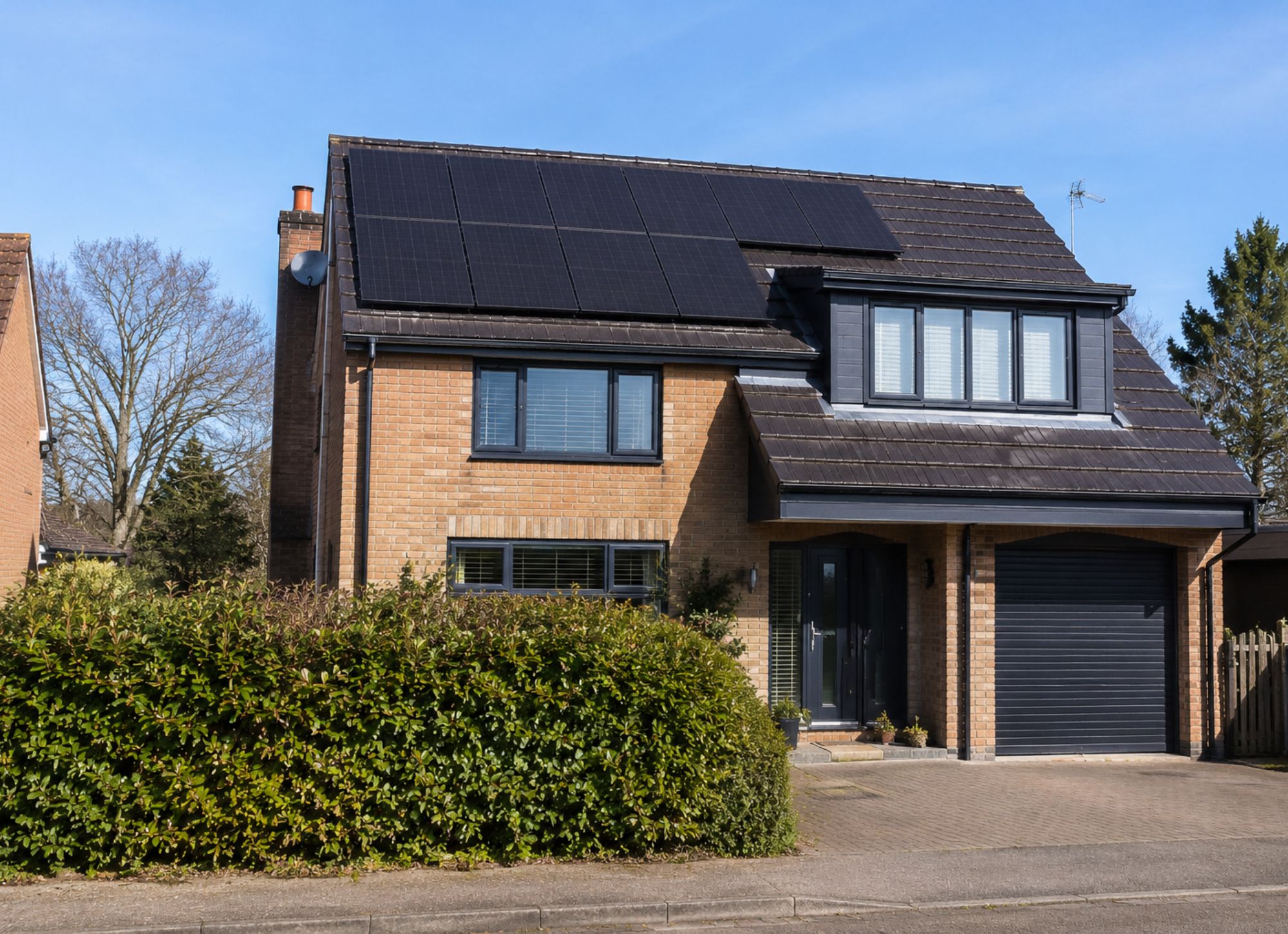
Is My Roof Suitable for Solar Panels?
Many homeowners across Southern England, Greater London, South West England and South Wales wonder whether their roof can support a solar panel system. The good news is that most properties in areas like London, Brighton, Oxford, Southampton, Bristol and Cardiff have roofs that work well for solar. A professional assessment considers several practical factors, from the way your roof faces the sun to its overall condition.
How to determine if your roof is suitable for solar panels
You can get a good initial idea of roof suitability for solar panels by checking a few visible and measurable factors yourself, but a professional site survey gives the most accurate picture. Experienced installers combine on-site measurements with specialist software to model real-world performance for your specific home in Southern England or South Wales.
Here are the main aspects that determine whether your roof is suitable.
Roof orientation and direction
Roof orientation plays one of the biggest roles in how much electricity your solar panels can produce. In the UK, a south facing roof captures the most sunlight throughout the day and delivers the highest energy output. Southeast or southwest facing roofs come a close second and usually lose only a small percentage of performance compared with due south.
East or west facing roofs still generate useful amounts of power, often matching morning or evening household energy use particularly well. North facing roofs generally produce much less electricity, so they rarely make financial sense unless combined with other technologies or specific site conditions.
For homes in Greater London or coastal spots like Brighton and Southampton, even slightly off south orientations can perform strongly thanks to good levels of daylight. Our team at EE Renewables regularly assesses properties across these regions and can model expected output based on your exact roof direction.
Roof pitch and angle
Roof pitch, or the angle of your roof slope, influences how effectively panels catch sunlight. An angle between 30 and 40 degrees tends to give the best year round performance in the UK, balancing summer and winter sun. Many homes across Southern England already sit comfortably in this range.
Steeper or shallower pitches can still work. Installers simply adjust the mounting system to bring panels closer to the ideal angle. Flat roofs, common on some extensions or modern buildings in Bristol or Cardiff, suit solar panels too when fitted with tilted mounting frames that angle the panels properly.
The key point is flexibility. Modern mounting solutions mean your roof does not need a textbook angle to make solar worthwhile. A site visit from EE Renewables helps confirm the right setup for your specific pitch.
Shading and obstructions
Shading from trees, chimneys, neighbouring buildings or even dormer windows can reduce the electricity your system generates. Even partial shade on one or two panels affects the whole string unless you use optimisers or micro inverters to minimise losses.
In urban areas like London or Oxford, nearby structures often create some shading, especially in the morning or late afternoon. Rural or suburban homes in South West England might face issues from tall trees that grow over time. Checking shade patterns at different times of year gives a clearer picture.
Experienced installers use tools to map shade throughout the day and across seasons. At EE Renewables we factor shading into every design so you understand realistic performance before committing. Many systems still deliver strong savings even with minor obstructions when properly configured.
Structural strength and load capacity
Most UK roofs built in the last 50 years or so can easily handle the additional weight of solar panels, mounting rails and fixings. Panels themselves are relatively light, and installers fix them to the main rafters or trusses for secure support.
Older properties, particularly in historic parts of Brighton, Oxford or Cardiff, sometimes need a closer look. Signs like sagging, cracked tiles or visible water damage suggest the roof may benefit from repairs before adding solar. A structural check, sometimes involving a simple calculation or survey, confirms load bearing capacity.
For peace of mind, reputable installers like EE Renewables work with qualified professionals where needed and ensure the entire system meets current safety and building standards. In the vast majority of cases across Southern England and South Wales, roofs prove more than capable.
Roof materials and overall condition
Common UK roof coverings such as concrete tiles, clay tiles and slate generally accommodate solar panels without difficulty. Installers use specialist fixings and sometimes replace a few tiles to create a secure, weather tight fit. Concrete tiles tend to be the most straightforward because they are uniform and robust.
Slate roofs require extra care during installation to avoid cracking fragile pieces, but they work well with experienced teams. Metal roofs often accept solar mounting systems particularly easily. Flat roofs use ballast or mechanical fixings rather than penetrating the surface in many cases.
Materials that usually rule out standard installations include thatch, because of fire risk and fixing challenges, and asbestos, due to health and safety rules. A roof in good repair gives the best foundation for solar. If your roof covering is nearing the end of its life, it often makes sense to replace or repair it before or alongside the solar installation. This avoids the cost and disruption of removing and refitting panels later.
Homes built or re roofed in the last 20 to 30 years across South West England and Greater London usually have plenty of remaining lifespan. Visible issues like missing tiles, moss buildup or leaks deserve attention first. Professional installers inspect the roof closely during the survey stage.
Available roof space
Available roof space determines how many panels you can fit and therefore the size of your system. A typical domestic setup might need around 15 to 25 square metres depending on panel wattage and your energy needs. Even smaller roofs can support worthwhile systems, especially when paired with solar battery storage to capture and use more of the power generated.
Complex roof shapes with multiple hips, valleys or dormers can reduce usable area. Simple gable or hipped roofs in many London or Southampton homes often allow straightforward layouts. Our designers maximise every available square metre while keeping the installation neat and compliant.
Planning permission considerations
Most domestic solar installations in England and Wales fall under permitted development rights and need no planning permission, provided they meet certain size and positioning rules such as panels not protruding more than 200mm from the roof surface. However, properties in conservation areas, national parks or listed buildings often require approval.
Local rules can vary between boroughs in London or cities like Bristol and Cardiff. Early discussion with your installer helps identify any hurdles. EE Renewables has extensive experience navigating these requirements across our service regions and can guide you through the process smoothly.
Does roof condition and age matter for solar panels?
A roof in good repair gives the best foundation for solar. If your roof covering is nearing the end of its life, it often makes sense to replace or repair it before or alongside the solar installation. This avoids the cost and disruption of removing and refitting panels later.
Homes built or re-roofed in the last 20 to 30 years across South West England and Greater London usually have plenty of remaining lifespan. Visible issues like missing tiles, moss buildup or leaks deserve attention first. Professional installers inspect the roof closely during the survey stage.
Ready to find out if your roof is suitable for solar panels?
If you live in Southern England, Greater London, South West England or South Wales and want clear answers about your roof, the next step is straightforward. EE Renewables provides expert solar panel installation tailored to local conditions in areas including London, Brighton, Oxford, Southampton, Bristol and Cardiff.
Our team carries out thorough, no obligation site surveys to assess orientation, pitch, shading, structure and overall suitability. We explain realistic energy production, potential savings and payback periods in plain terms so you can make an informed decision.
Get in touch today for a free quote tailored to your location. Whether your roof looks ideal or has a few challenges, we will explore practical options to help you generate clean, affordable electricity at home.
Frequently Asked Questions
Can solar panels be installed on a north facing roof in the UK?
North facing roofs produce significantly less electricity than south, east or west orientations. While modern technology and optimisers can improve output slightly, the lower generation often makes the investment less attractive for most homeowners. A professional assessment can confirm whether any viable options exist for your specific property.
Do I need a structural engineer survey before installing solar panels?
Not every home requires a full structural engineer report, but older properties or those showing signs of wear often benefit from one. Experienced installers like EE Renewables can advise during the initial survey whether additional checks are recommended to ensure your roof safely supports the system.
Will installing solar panels damage my roof or invalidate my warranty?
When carried out by qualified MCS accredited installers using appropriate fixings, solar installations are designed to keep your roof weather tight. Proper mounting rarely causes damage and many roofing warranties remain unaffected, but it is wise to check your specific policy and use reputable contractors.
How does solar battery storage affect roof suitability requirements?
Solar battery storage units are usually installed inside the home or in a garage, so they do not directly change roof requirements. However, pairing batteries with your panels lets you make better use of the electricity generated, which can improve the overall value of a system even on roofs that are not perfectly oriented.
Are there any grants or incentives available for solar panels on suitable roofs in Southern England or South Wales?
Incentive schemes and export tariffs change over time, but many homeowners still benefit from reduced energy bills and smart export guarantees. Local eligibility can vary, so speaking with a specialist installer provides the most up to date information for your area in Greater London, Bristol, Cardiff or elsewhere in our service regions.
