


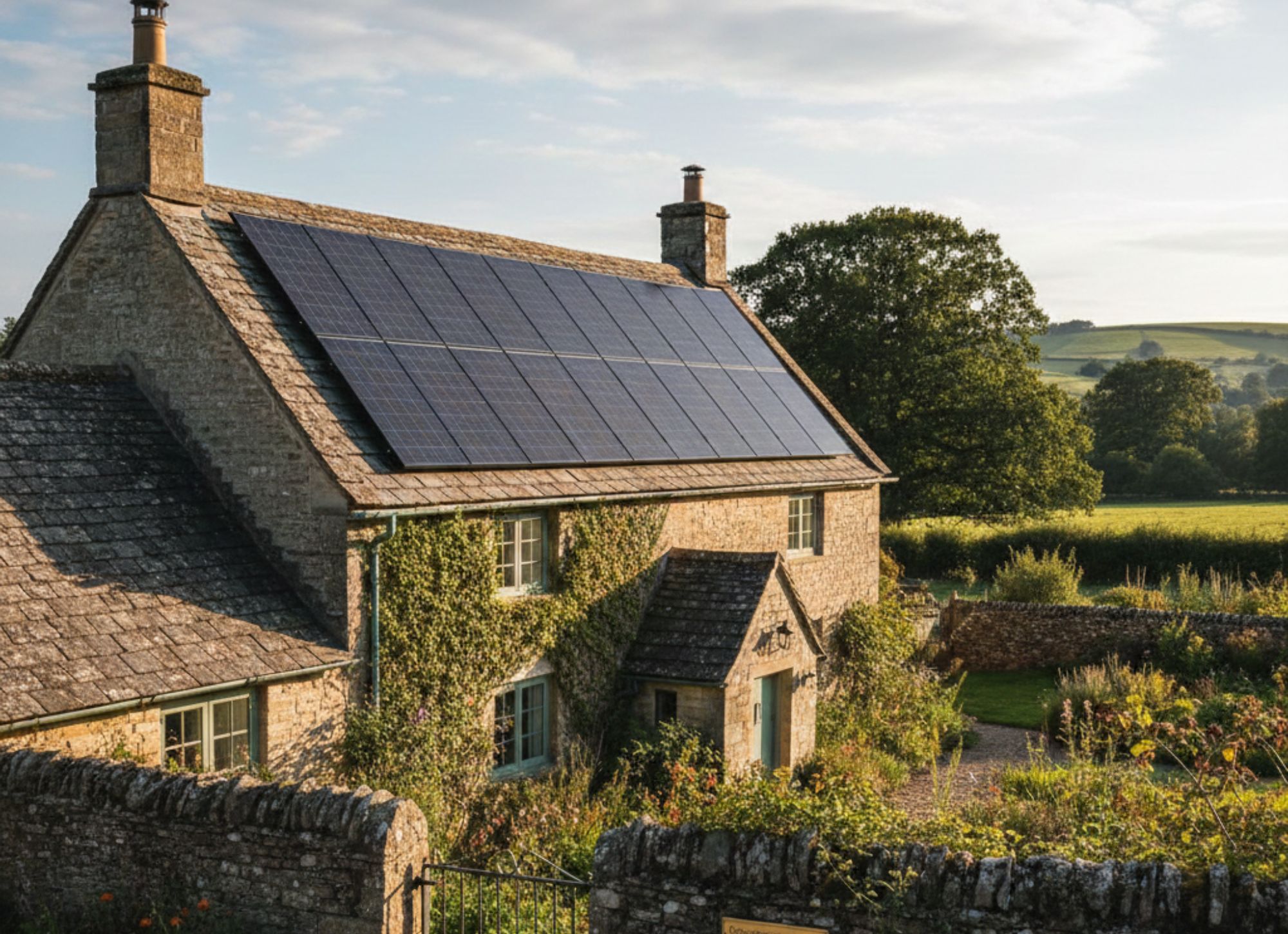
Solar Panels in Conservation Area: Key Rules
You can install solar panels in a conservation area to cut energy bills and embrace renewable power, but navigating the regulations can feel daunting.
In 2026, many installations qualify as permitted development, allowing you to proceed without full planning permission provided they meet specific criteria on visibility and impact.
This guide unpacks everything from local authority rules and Article 4 Directions to application processes, alternatives like ground-mounted systems, and how to ensure your photovoltaic setup enhances rather than detracts from heritage aesthetics in areas like Southern England or South Wales.
Can You Install Solar Panels in a Conservation Area?
Yes, you can install solar panels in a conservation area in the UK, as long as the setup complies with permitted development rights or secures necessary approvals. Most roof-mounted systems are allowed if they’re not visible from public roads or don’t alter the area’s character.
This applies to many properties in targeted regions like Greater London or Bristol, where heritage preservation balances with sustainable energy goals.
Understanding Conservation Areas
Conservation areas are designated zones protected for their special architectural or historic interest, covering about 10,000 spots across England and Wales, including picturesque neighbourhoods in Oxford or Cardiff.
Installations here must prioritise minimal visual impact to maintain the area’s charm.
For expert guidance on compliant installations in your conservation area, EE Renewables provides tailored solar panel and battery storage installation across Southern England, Greater London, South West England, and South Wales, including London, Brighton, Oxford, Southampton, Bristol, and Cardiff.
Contact us today for a free quote designed around local regulations.
What Are the Key Rules for Solar Panels in Conservation Areas?
The key rules for solar panels in conservation areas revolve around permitted development rights under the Town and Country Planning Order.
This allows for installations without planning permission if panels are roof-mounted, project no more than 0.2m from the slope (or 0.6m on flat roofs per 2024 relaxations), and aren’t on walls fronting highways.
Recent updates in 2026 continue to support this, emphasising low-profile designs to preserve heritage aesthetics.
Roof-Mounted vs. Wall-Mounted Restrictions
Roof-mounted solar PV systems are generally permitted if south-facing and discreet, but wall-mounted ones facing public paths require permission to avoid detracting from streetscapes in areas like Southampton.
Impact of Article 4 Directions
Article 4 Directions, applied in some conservation areas, remove automatic rights and mandate planning applications. Check your local council’s website or planning portal to see if your Brighton or Bristol property is affected.
Do You Need Planning Permission for Solar Panels in a Conservation Area?
You may not need planning permission for solar panels in a conservation area if they qualify as permitted development, such as non-prominent roof installations that don’t exceed height limits or face highways.
Higher approval or full consent is required in restrictive zones or near listed buildings. Always verify with your local authority, as rules vary by council in South West England or South Wales.
When Permission Is Required
Permission is typically needed for visible alterations, ground-mounted arrays over 9m², or if an Article 4 Direction is in force.
Listed buildings demand additional listed building consent to protect historical features.
Recent Regulatory Changes
As of 2024-2026, rules have eased for flat-roof panels in conservation areas, allowing up to 0.6m projection without permission if not exceeding the roof’s highest point, boosting accessibility for eco-upgrades in urban heritage spots like London.
How Do You Apply for Permission to Install Solar Panels in a Conservation Area?
You apply for permission to install solar panels in a conservation area by submitting a planning application via your local council’s online portal, including site plans, elevations showing minimal visual impact, and a heritage statement justifying the benefits like reduced carbon emissions.
Fees start at £258 for householder applications, with decisions usually within 8 weeks for properties in Oxford or Cardiff.
Preparing Your Application
Gather photos of the site, details on panel specifications (e.g., black-framed for blending), and evidence of energy savings to strengthen your case—consulting an MCS-certified installer early ensures compliance.
Appealing a Refusal
If denied, appeal to the Planning Inspectorate within 6 months, providing arguments on sustainability and low impact, as many appeals succeed when designs are sympathetic to the conservation area’s character.
What Alternatives Exist for Solar Panels in Restricted Conservation Areas?
Alternatives for solar panels in restricted conservation areas include ground-mounted systems in private gardens (permitted if under 4m high and not visible from roads), solar tiles that mimic traditional roofing, or community solar schemes for shared renewable energy without on-site alterations.
These options suit heritage-sensitive spots in Southern England, maintaining aesthetics while achieving green goals.
Solar Tiles and Integrated Solutions
Solar tiles integrate seamlessly into roofs, often bypassing strict rules as they resemble slates. They are ideal for listed-adjacent homes in Bristol, though costlier at £10,000-£15,000 for a 4kW setup.
Off-Site and Portable Options
Portable solar kits or subscriptions to local solar farms provide clean energy without physical changes, perfect for landlords in conservation-heavy areas like Southampton seeking hassle-free sustainability.
What Are the Benefits of Installing Solar Panels in a Conservation Area?
The benefits of installing solar panels in a conservation area include slashing electricity bills by £600-£900 annually through self-generated power, boosting property value by 3-5% in eco-conscious markets, and contributing to net-zero targets while preserving heritage via discreet designs. In regions like South Wales, this also enhances energy independence amid rising tariffs.
Environmental and Financial Perks
You can reduce your carbon footprint by 1-2 tonnes yearly per 4kW system, and take advantage of the Smart Export Guarantee payments.
Pairing with batteries maximises savings in shaded conservation zones.
Ready to Install Solar Panels in Your Conservation Area?
EE Renewables Ltd specialises in compliant installations and battery storage across Southern England, Greater London, South West England, and South Wales, covering areas like London, Brighton, Oxford, Southampton, Bristol, and Cardiff. With expert navigation of local rules, you can go green seamlessly.
Get in touch today for a free solar panel quote and transform your heritage home sustainably.
FAQs
How Do Solar Panel Designs Affect Approval Chances in Conservation Areas?
Solar panel designs impact approval chances by prioritising low-visibility options like all-black modules or recessed mounting, which councils favour for blending with historic roofs, offering a subtle aesthetic not covered in core rules.
What Role Do Neighbours Play in Conservation Area Installations?
Neighbours can influence installations through consultations during planning, where objections on visual impact might arise, but supportive community statements can strengthen applications in shared heritage settings.
How Does Climate Affect Solar Viability in UK Conservation Areas?
Climate in UK conservation areas, with variable sunlight, still yields 3,000-4,000 kWh annually from a 4kW system, thanks to efficient panels capturing diffuse light, a factor enhancing long-term feasibility beyond basic permissions.
Can Solar Installations Increase Insurance Premiums in Conservation Areas?
Solar installations might slightly raise premiums due to added roof value, but many insurers offer green discounts, potentially offsetting costs with no net increase for heritage properties.
What Maintenance Considerations Apply to Solar Panels in Conservation Areas?
Maintenance involves annual checks for debris while respecting access restrictions, using non-invasive cleaning methods to preserve surrounding architecture, ensuring longevity without compromising area integrity.
