


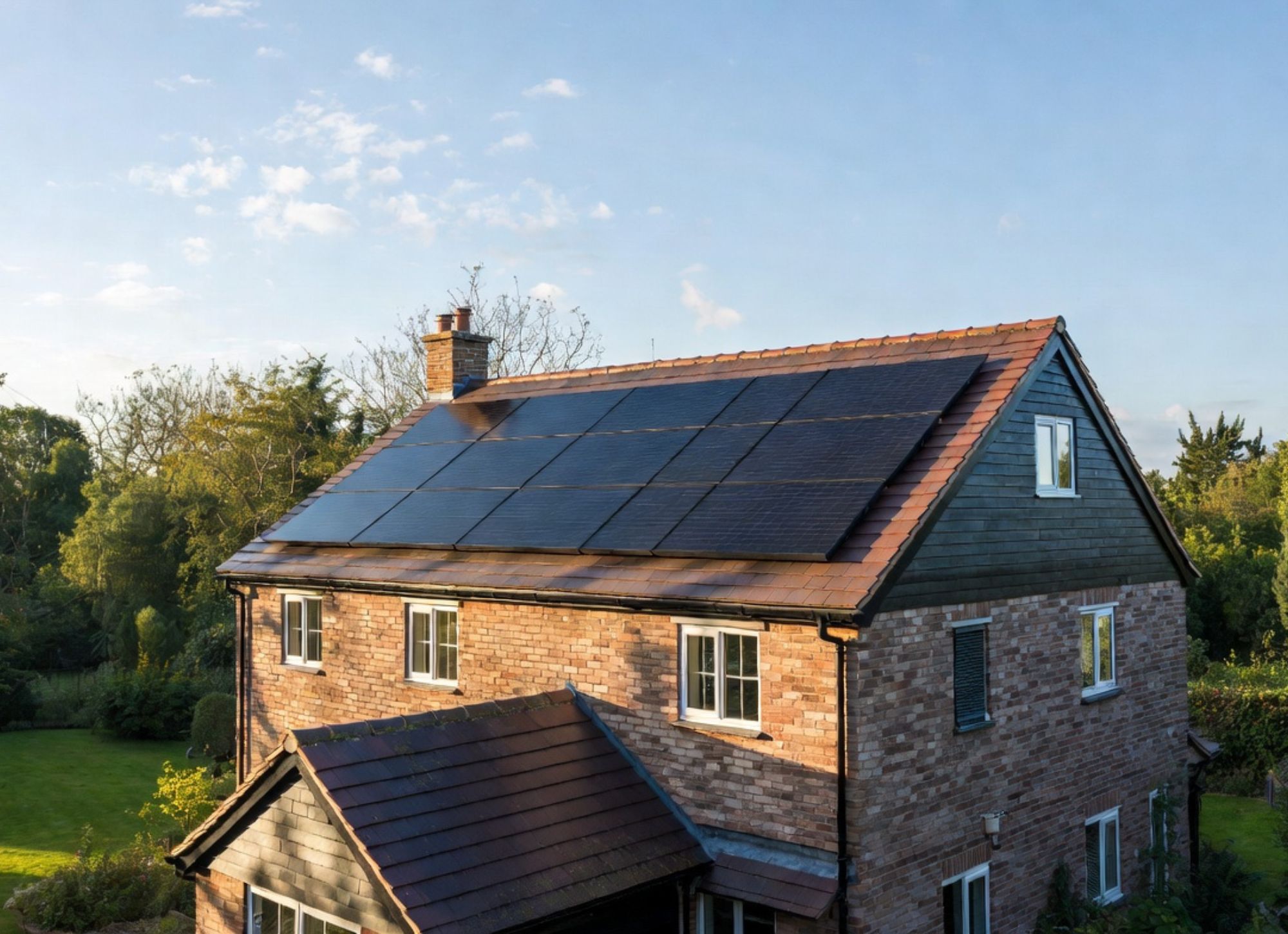
Solar Panels on New Builds: Everything You Need to Know

If you’re buying a new build home anywhere from Bristol to Brighton, there’s a good chance solar panels will already be part of the package, or will be very soon, thanks to sweeping new government rules. In short, solar panels on new builds are becoming the default rather than the exception across England and Wales, with most new homes required to include rooftop solar generation under the upcoming Future Homes Standard.
This guide breaks down exactly what that means for homeowners and landlords, how the rules work, what it costs, and how to get the most out of a solar system on a brand new property.
Are Solar Panels Required on New Builds in the UK?
Solar panels are becoming a legal requirement on the vast majority of new build homes in England, under building regulations tied to the Future Homes Standard. The government confirmed in 2026 that new-build domestic properties must feature onsite renewable generation, and in nearly all cases this will mean rooftop solar photovoltaic (PV) panels rather than any alternative technology.
The rules are designed to cut carbon emissions from new housing and lower energy bills for buyers from the moment they move in, with early estimates suggesting a well-positioned 3.5kW system could save a household around £530 a year on electricity.
The specific target being discussed is solar coverage equal to at least 40% of a new home’s ground floor area, though developers who genuinely cannot meet that figure due to roof shape, shading, or structural limits will still be expected to install as much solar as is reasonably possible rather than skipping it altogether.
Full legislation is expected to be laid before Parliament with a transitional period running into 2027, before mass scale building to the new standard from around 2028. If you’re a landlord or self-builder in South Wales or the South West planning ahead of these changes, it makes sense to get solar designed into your build now rather than retrofitting later.
When Do the New Solar Rules for New Homes Come Into Force?
The new solar requirements are expected to take legal effect from around December 2026, with a 12 month transitional arrangement period running through to late 2027.
During that transition, developers can choose to build under either the old or new standard, but from roughly 2028 onwards, all newly started homes in England will need to comply fully with the Future Homes Standard, which includes the solar requirement.
Wales operates its own building regulations timeline, though it has historically followed a similar direction on renewable energy in new housing, so landlords and buyers in Cardiff and the wider South Wales region should keep an eye on Welsh Government announcements too.
It’s worth noting that homes already under construction or with planning permission secured before the cut off dates may not be affected immediately, so the exact requirement can depend on when your specific development started.
This is one of the reasons working with a solar specialist who understands regional building timelines, rather than a generic national installer, can make a real difference to getting accurate advice for your property in places like Oxford or Southampton.
Do All New Build Homes Get Solar Panels Automatically?
Not every new build home will have solar panels fitted automatically, at least not until the Future Homes Standard is fully in force. Right now, whether solar comes as standard depends entirely on the individual developer and the planning permission granted for that specific site, meaning some new estates already include panels as part of the base specification while others only offer it as a costly upgrade.
Once the new rules are fully phased in, however, solar will effectively become the default rather than an optional extra, since builders will need a genuine exemption to leave it off.
Buyers should always ask the developer directly and in writing whether solar PV is included in the standard build price, what capacity it provides, and whether a battery storage system is bundled in or offered separately.
Many housebuilders quietly include only a minimal panel array to tick a compliance box, which is often far smaller than what the roof could actually support, so it’s worth checking the numbers rather than assuming bigger is automatically included.
How Much Do Solar Panels Cost on a New Build?
Solar panels on a new build typically cost less overall than retrofitting the same system onto an existing house, because the panels can be integrated into the roof design and wiring during construction rather than added afterwards.
For context, UK solar PV system costs have continued to fall as installation volumes have grown, with the UK now passing 22.3 GW of total installed solar capacity and over 2 million residential installations recorded by government data.
On a new build specifically, if solar is included by the developer as standard, the cost is usually folded into the overall purchase price of the home, which can make it harder to see the exact saving but often works out cheaper than a separate installation later.
If you’re buying a new build without solar already fitted, or want a larger system than the developer’s minimum specification, getting a dedicated quote is the best way to understand real costs for your specific roof size and energy needs.
- Developer-included systems: usually a smaller, compliance-focused array bundled into the purchase price
- Upgraded or self-installed systems: priced per kilowatt of capacity, varying by panel type, roof complexity, and battery storage add-ons
- Retrofitting after moving in: generally more expensive due to scaffolding, rewiring, and roof access costs compared with building it in from the start
Can You Add Battery Storage to a New Build Solar System?
Yes, battery storage can be added to a new build solar system, either at the point of construction or later once you’ve moved in. Pairing solar panels with a battery lets you store the electricity your panels generate during the day and use it in the evening, which is particularly useful given how many new build estates in Southern England and the South West have roofs that face away from ideal solar orientation on at least some plots.
Battery storage also helps homeowners get more value from a smaller developer-installed array, since it reduces reliance on drawing expensive electricity from the grid at peak times.
For landlords managing new build rental properties across Greater London or South Wales, battery storage can be a strong selling point for tenants worried about rising energy costs, and it also supports participation in schemes like the Smart Export Guarantee, which pays households for surplus electricity exported back to the grid.
What Is the Smart Export Guarantee and Does It Apply to New Builds?
The Smart Export Guarantee, known as SEG, is a government backed scheme that pays homeowners for any surplus solar electricity they export to the National Grid, and it applies equally to new build homes as it does to older properties. Once your new build solar system is registered and connected, you can shop around between energy suppliers offering SEG tariffs to find the best export rate, much like switching your regular energy tariff.
This means new build homeowners with solar panels aren’t just saving on their own bills, they can also earn a small ongoing income from the electricity they don’t use themselves.
To qualify, your installation generally needs to be certified by the Microgeneration Certification Scheme (MCS), which is standard practice for reputable solar installers working across the UK, including developer-appointed contractors on new build sites.
Do New Build Solar Panels Come With Any Government Incentives?
New build solar panels benefit indirectly from several UK government policies rather than a single direct cash grant, since the incentive largely comes from the fact solar is now being built into the cost of the home and its energy performance rating from day one. Households across England also benefit from 0% VAT on the installation of qualifying solar panels and battery storage systems, a relief that has been extended and applies whether you’re adding solar to a new build or an older property.
On top of this, the government’s plug-in solar initiative, announced in 2026, is set to bring simplified, lower cost plug-in panel kits to UK shops within months, offering another route for new build owners with smaller roofs or flats to add some solar generation without a full rooftop installation.
For landlords specifically, energy efficiency improvements like solar panels can also help meet minimum energy performance standards for rental properties, which continue to tighten across England and Wales.
What Should You Check Before Buying a New Build With Solar Panels?
Before buying a new build home advertised with solar panels, you should check the system size, the panel brand and warranty, whether battery storage is included, and who is responsible for maintenance once you move in. It’s easy to assume “solar panels included” means a generous, well-designed system, but developers sometimes fit the smallest array that technically satisfies planning conditions, which may leave you paying to upgrade later if you want meaningful bill savings.
Always ask for the technical specification sheet, the expected annual generation figure in kilowatt hours, and confirmation of MCS certification, since this affects your eligibility for the Smart Export Guarantee.
It’s also worth checking whether the roof orientation and any nearby trees or taller buildings could reduce how much sunlight your panels actually receive, particularly on tightly packed new build estates common in and around London and Bristol.
Solar Panels on New Builds vs Retrofitted Solar: Key Differences
| Factor | New build solar panels | Retrofitted solar panels |
|---|---|---|
| Installation timing | Fitted during construction, integrated into roof design | Added after the home is already built |
| Typical cost | Often included or discounted within build cost | Standalone cost, plus scaffolding and access |
| System size | Sometimes minimal to meet compliance only | Usually sized to homeowner’s actual needs |
| Warranty and support | Depends on developer’s chosen contractor | Homeowner chooses installer and warranty terms |
| Upgrade flexibility | May need extra work to expand later | Can be designed to full capacity from the start |
Get a Free Solar Panel Installation Quote From EE Renewables
Whether your new build already has solar panels that need upgrading, or you’ve moved into one that missed out entirely, EE Renewables can help you get the most out of your roof. We provide expert solar panel installation and battery storage solutions across Southern England, Greater London, South West England, and South Wales, covering areas including London, Brighton, Oxford, Southampton, Bristol, and Cardiff.
Our team assesses your specific property, roof orientation, and energy usage to design a system that actually delivers meaningful savings, not just the bare minimum.
Get in touch today for a free quote tailored to your location, and find out exactly how much you could save by adding or upgrading solar panels and battery storage on your new build home.
Frequently Asked Questions
Can landlords claim any tax relief for installing solar panels on rental new builds?
Landlords in England and Wales can potentially benefit from certain capital allowances and improved energy performance ratings when installing solar panels on rental properties, which can support compliance with minimum energy efficiency standards. Specific tax treatment depends on individual circumstances, so landlords should confirm current allowances with an accountant familiar with property income rules.
Will solar panels on a new build affect my home insurance?
Solar panels on a new build should generally be disclosed to your home insurer, as most standard buildings insurance policies do cover roof-mounted solar systems, but you should confirm this explicitly with your provider. Failing to declare solar panels could affect a claim later, so it’s a quick check worth doing as soon as you move in.
How long do solar panels on new build homes typically last?
Solar panels installed on new build homes typically come with manufacturer warranties covering 20 to 25 years of performance, and most panels continue generating electricity well beyond that period, just at a slightly reduced efficiency. Regular light maintenance, such as occasional cleaning, helps panels perform close to their rated output for the long term.
Can new build homeowners switch solar installers after moving in?
Yes, new build homeowners are free to switch to a different solar installer for any upgrades, repairs, or additional battery storage, even if the original panels were fitted by the developer’s chosen contractor. It’s sensible to check warranty terms first, since some developer-fitted systems tie ongoing support to the original installer for a set period.
Do solar panels on new builds increase the property’s resale value?
Solar panels on new builds can positively influence resale value, since homes with strong energy performance ratings and lower running costs tend to appeal more to buyers concerned about rising energy bills. The exact impact varies by location and system size, but energy efficient homes generally attract more buyer interest in competitive markets like London and the South East.
