


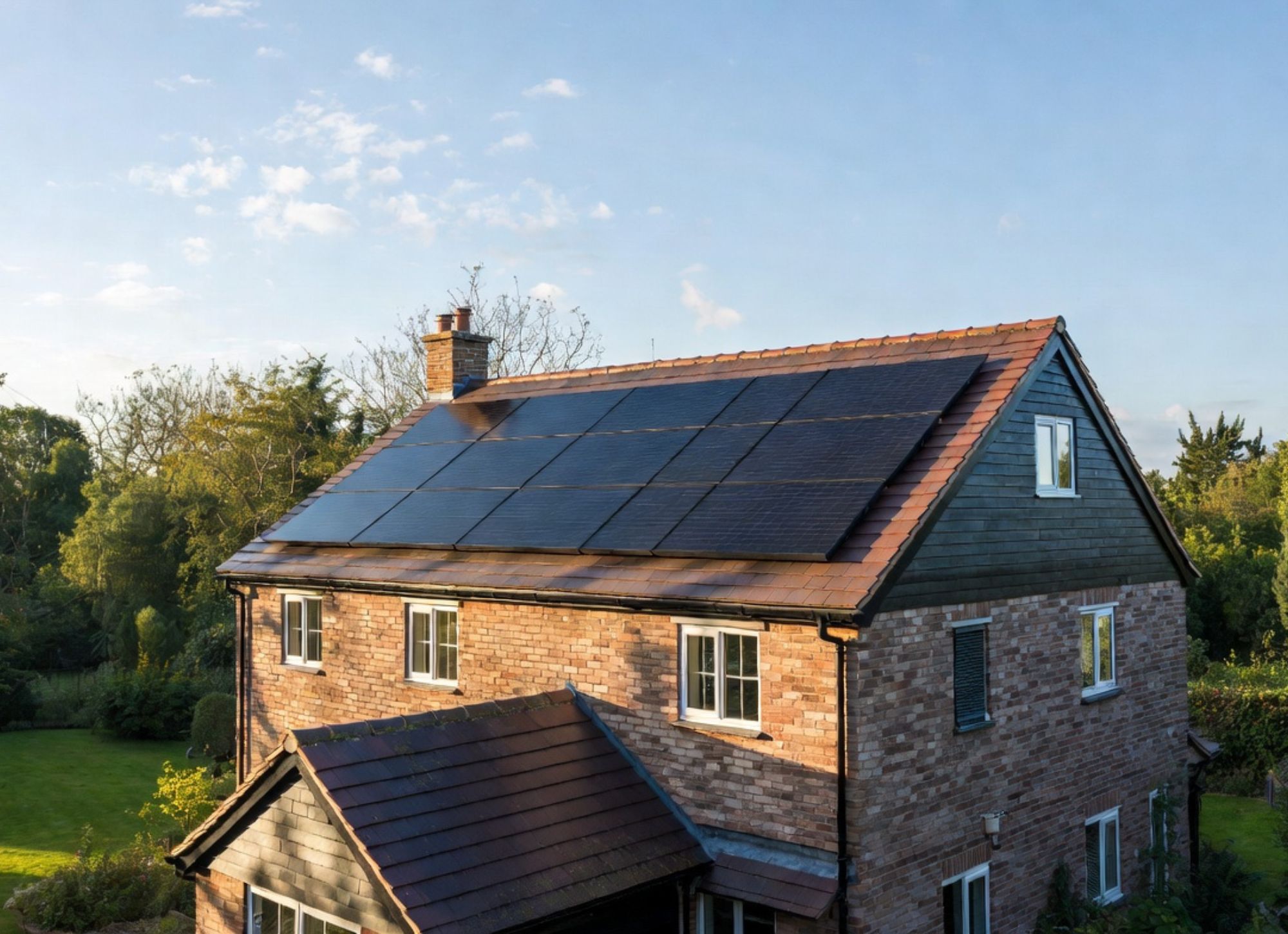
Can Solar Panels Improve My EPC Rating? Yes, Here’s How
Yes, solar panels can improve your EPC rating. Installing a solar panel system is one of the most effective ways to boost your property’s Energy Performance Certificate score, potentially moving you up one or even two bands and making your home more energy efficient, more valuable, and cheaper to run.
Can Solar Panels Improve Your EPC Rating?
Yes, solar panels can genuinely improve your EPC rating, and the impact can be more significant than most homeowners expect. Your EPC rating is calculated using something called the Standard Assessment Procedure (SAP), which measures how much energy your home uses and generates.
Because solar panels generate clean electricity on-site, they directly reduce the amount of energy your home needs to buy from the grid, which pushes your SAP score higher and, in turn, lifts your EPC band.
On average, a solar panel installation can add around 9 to 10 EPC points to your property’s score, and a well-sized system can push that figure even further. A standard 4kW solar panel system, which is one of the most popular system sizes for UK homes, can add up to 15 EPC points on its own.
That is enough to move many homes from an E rating into a D, or from a D into a C.
What Is an EPC Rating and How Is It Scored?
An EPC rating is a certificate that tells you how energy efficient your property is, rated on a scale from A (most efficient) to G (least efficient). The rating is underpinned by a SAP score that runs from 1 to 100, where a higher number means lower energy costs and fewer carbon emissions.
EPC Bands and SAP Score Ranges
| EPC Band | SAP Score Range |
|---|---|
| A | 92 to 100 |
| B | 81 to 91 |
| C | 69 to 80 |
| D | 55 to 68 |
| E | 39 to 54 |
| F | 21 to 38 |
| G | 1 to 20 |
The average EPC rating across UK homes is currently a D. A large portion of properties in Southern England, Greater London, and South Wales sit in the D and E bands, which means a solar installation could be the single upgrade that tips them into C territory.
When an energy assessor visits your home, they look at things like your insulation, heating system, windows, and whether you have any renewable energy technology installed. Solar panels fall squarely into that last category, and their contribution is factored directly into your SAP score calculation.
How Many EPC Points Can Solar Panels Add?
The number of EPC points solar panels add depends mainly on the size of your system and your home’s starting score. On average, solar installations add around 9 to 10 EPC points, though larger systems can push that figure higher.
A 4kW system, which is a common choice for a typical three or four-bedroom home, is generally credited with adding up to 15 EPC points under the SAP assessment methodology.
Points by System Size (Approximate)
| System Size | Estimated EPC Points Added |
| 2 to 3kW | 5 to 9 points |
| 4kW | Up to 15 points |
| 5kW+ | 15+ points (combined with battery storage) |
According to calculations based on government data, solar panels increase a home’s EPC rating by around 18 points on average when all variables are taken into account.
The SAP methodology assumes that approximately 50% of the solar energy generated is used within the home and 50% is exported back to the grid, both of which count towards your reduced energy cost figure.
One important thing to note: the higher your existing EPC score, the fewer points you need to move up a band. For example, band A only spans 8 SAP points (92 to 100), while band E covers 15 points (39 to 54). That means a 4kW solar system could, in some cases, push a high C-rated property all the way into band A.
Does Adding a Battery Storage System Help Your EPC Rating?
Adding a battery storage system alongside your solar panels can further boost your EPC score. When a battery is installed, more of the solar energy generated during daylight hours is stored and used within your home rather than exported.
The SAP methodology rewards self-consumption of renewable energy, so a higher proportion of usage within the home can translate into additional EPC points.
Why Battery Storage Makes Sense Alongside Solar
- More energy is used on-site, which lowers your calculated energy cost in the SAP assessment
- You reduce your reliance on grid electricity at peak times, further cutting your property’s modelled energy spend
- Energy bills drop further, which is a benefit beyond the EPC certificate itself
Beyond the EPC benefit, a battery system means you are not sending excess electricity to the grid needlessly. Many homeowners in London, Bristol, Southampton, and across South Wales are now pairing solar panels with battery storage as a combined package to get the most out of both technologies.
What Other Improvements Work Well Alongside Solar Panels?
Solar panels work best as part of a broader set of energy efficiency improvements. While solar can add significant EPC points on its own, combining it with other upgrades gives you the best chance of hitting the coveted C band or above.
Common Improvements to Pair with Solar Panels
- Loft insulation (270mm): Typically adds 5 to 10 EPC points and costs between £500 and £1,500
- Cavity wall insulation: Can add 10 to 15 points and costs £1,000 to £2,500
- Double or triple glazing: Contributes 5 to 10 points with a typical cost of £3,000 to £8,000
- Air source heat pump: One of the biggest single improvements, adding 10 to 20 points
- Smart thermostat and controls: Helps optimise energy use and reduce waste
For many homes in areas like Brighton, Oxford, Cardiff, and Southampton, a combination of solar panels and loft insulation alone is enough to move from a D to a C rating. Every property is different, so it is worth having your EPC assessed to see which measures will have the greatest impact on your specific home.
Why Does Your EPC Rating Matter?
Your EPC rating matters for several practical reasons that affect your finances and your options as a homeowner or landlord. A higher EPC rating means lower estimated energy costs, a more attractive property to buyers and tenants, and eligibility for certain green finance products.
For Homeowners
Research shows that homes with solar panels sell for between 5% and 14% more than comparable homes without them. A separate study found that solar panels can add up to 7% to a home’s value, representing as much as £16,000 in some cases. Part of that uplift is linked directly to the improved EPC rating, which signals to buyers that ongoing energy bills will be lower.
For Landlords: The 2030 Deadline Is Approaching
If you are a landlord, your EPC rating is no longer just a number to note in passing. The UK government has confirmed that all privately rented properties in England and Wales must achieve a minimum EPC rating of C by October 2030. Under the current timeline:
- From 2028: All new tenancy agreements must be for properties rated EPC C or above
- By 1 October 2030: All existing tenancies must comply with the EPC C standard
- Spending cap: Landlords are required to invest up to £10,000 per property on energy improvements
- Maximum fine for non-compliance: Up to £30,000 per property
Currently, around 52% of privately rented properties in England still fall below a C rating. Solar panels are explicitly listed as one of the most impactful routes to compliance for landlords. For landlords across London, Brighton, Oxford, Bristol, Cardiff, Southampton, and the wider South of England, now is the time to act rather than wait until the 2030 deadline brings a rush of demand and rising installation costs.
How Does an EPC Assessment Work After Solar Installation?
After your solar panels are installed, you will need a new EPC assessment to reflect the improvement in your property’s energy performance. An accredited domestic energy assessor visits your home and collects information about your property, including the size and specification of your solar system.
The assessor uses this data to calculate a new SAP score, which is then converted into your updated EPC band. An EPC certificate is valid for ten years, so once you have achieved a higher rating, it will hold for a decade. The typical cost of an EPC assessment in the UK ranges from £65 to £120 depending on your property size and location.
It is worth arranging your new EPC assessment as soon as your solar panels have been commissioned and signed off. The sooner your updated certificate reflects your improved rating, the sooner you benefit from a more attractive property listing if you are selling or renting.
Get a Free Solar Panel Installation Quote from EE Renewables
At EE Renewables, we help homeowners and landlords across Southern England, Greater London, South West England, and South Wales improve their EPC ratings with professional solar panel and battery storage installations.
Whether you are in London, Brighton, Oxford, Southampton, Bristol, Cardiff, or anywhere in between, our team is ready to help you understand exactly how much your EPC rating could improve and what the right system size looks like for your property.
Improving your EPC rating with solar panels is one of the smartest investments you can make in 2025 and 2026. You reduce your energy bills, increase your property’s value, meet incoming landlord legislation ahead of the deadline, and contribute to a cleaner energy future for the UK.
Request your free, no-obligation solar panel installation quote from EE Renewables today. Our expert team will assess your property, recommend the right system size, and give you a clear picture of the EPC benefits you can expect.
Frequently Asked Questions
Will solar panels automatically update my EPC rating?
No, your EPC rating does not update automatically after solar panels are installed. You will need to commission a new assessment from an accredited domestic energy assessor, who will visit your property and calculate your updated SAP score based on your new system. The assessment typically costs between £65 and £120.
Does the direction my roof faces affect how many EPC points solar panels add?
Yes, roof orientation plays a role. South-facing roofs receive the most sunlight throughout the day and generate the highest annual output, which translates into a larger SAP score improvement. East and west-facing roofs still generate good amounts of electricity and will improve your EPC rating, though typically by fewer points than a south-facing installation.
A shaded roof can also reduce the modelled output used in the SAP calculation.
Can solar panels help a property achieve an EPC C rating on their own?
They can, but it depends on your starting point. If your property is already at the upper end of EPC band D (close to 68 SAP points), a 4kW or larger solar system providing up to 15 points could push you into band C without any other changes.
However, properties sitting in band E or lower will usually need to combine solar panels with other improvements, such as insulation or upgraded glazing, to cross the band C threshold.
Do solar panels affect the EPC rating of a flat or apartment?
This depends on the setup. If you own a flat or leasehold property, installing solar panels on a shared roof typically requires the consent of the freeholder or management company. When consent is granted and panels are installed and attributed to your unit, they can be factored into your EPC assessment.
It is worth checking with your freeholder and an energy assessor before proceeding.
Is there financial support available to help cover the cost of solar panels for EPC improvements?
Certain grant schemes and incentives are available depending on your circumstances. Landlords with eligible low-income tenants may be able to access support through schemes such as the Warm Homes Local Grant or the Energy Company Obligation (ECO4). Homeowners can also benefit from 0% VAT on solar panel installations in the UK.
It is worth speaking to a qualified installer who can advise on what financial support may apply to your specific situation.
