


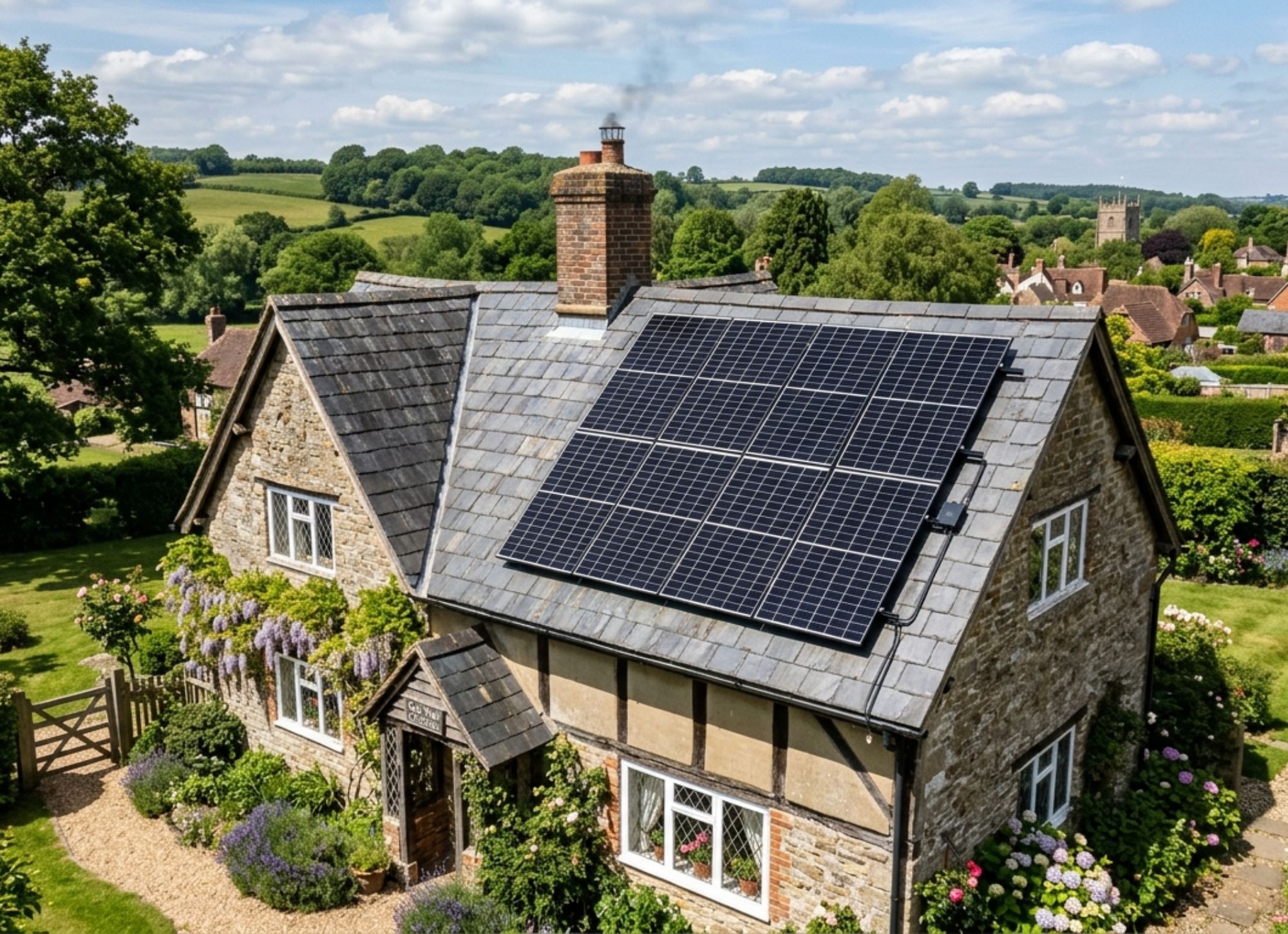
Solar Panels on Slate Roofs: Costs, Pros & Cons
You can install solar panels on a slate roof in the UK with proper techniques to avoid damage, though it requires specialist mounting to protect the fragile tiles and ensure longevity.
This guide covers installation methods, costs, pros and cons, key factors like weight and compatibility, maintenance tips, planning considerations, and regional advice to help you decide if it’s right for your property and how to proceed safely.
Can You Install Solar Panels On a Slate Roof?
Yes, you can install solar panels on a slate roof, but it demands careful planning and professional expertise to prevent cracking or leaks, using non-penetrative mounts that clip onto existing tiles rather than drilling through them.
This approach works well for natural or synthetic slate common in UK homes, preserving roof integrity while harnessing photovoltaic energy.
What Are the Pros and Cons of Solar Panels on Slate Roofs?
Pros:
- Enhanced longevity: Slate’s durability (50-100 years) pairs well with panels’ 25-year lifespan, reducing replacement needs.
- Aesthetic appeal: Black-framed panels blend seamlessly with dark slate for a modern look on heritage homes in London.
- Energy efficiency: Slate’s thermal properties help panels perform better in variable UK weather.
- Increased property value: Boosts home worth by 3-5% in eco-conscious areas like Brighton.
- Low maintenance: Once installed, requires little upkeep beyond occasional cleaning.
Cons:
- Higher installation costs: Special mounts add £500-£1,000 due to slate’s fragility.
- Potential damage risk: Poor installation can crack tiles, leading to leaks if not done by experts.
- Weight limitations: Older slates may need reinforcement (£500-£2,000) to bear panel load.
- Shading issues: Steep slate pitches can cause self-shading, reducing output by 10-20%.
- Planning hurdles: Conservation areas in Oxford often require permission, delaying projects.
How Are Solar Panels Installed on Slate Roofs?
Installing solar panels on a slate roof is done carefully by professional installers who know how to protect the tiles. Slate is more delicate than ordinary roof tiles, so the installers use special methods that don’t damage the roof or cause leaks.
The whole job is usually finished in 1–2 days for a standard home system.
Here’s what happens step by step when a proper team comes to your house:
1. They start with a proper roof check (site survey)
The installers come out first and climb up to look at your roof closely. They check every slate in the area where the panels will go. They look for cracks, thin spots, loose tiles, or any signs of wear.
They also measure the roof, check for shading from chimneys or trees, and make sure the structure underneath can take the extra weight.
This visit is free with most good companies, and they’ll tell you straight away if your slate roof is suitable or if it needs small repairs first.
2. They fit special slate hooks or brackets (non-penetrating mounts)
Proper installers don’t drill holes through the slates. That would risk leaks and damage. Instead, they use slate-specific hooks or clamps. These hooks slide carefully under the existing slate tiles and grip onto the wooden battens underneath.
The hooks are designed just for slate so they hold securely without cracking anything. This keeps your roof completely watertight and means the installation is reversible if you ever want to remove the panels later.
3. They fix strong rails across the roof
Once the hooks are in place, installers attach aluminium rails horizontally across them. These rails are lightweight but very strong. They run parallel to the roof slope and create a frame that the solar panels will sit on.
The rails are spaced so air can flow underneath the panels. This keeps them cool and working efficiently.
4. They mount the solar panels onto the rails
The installers clip or bolt the solar panels directly onto the rails using special clamps. They line everything up neatly so the panels sit flush and look tidy. They make sure there’s a small gap under the panels for ventilation and to stop any condensation issues.
5. They run the wiring safely to the inverter
The installer will route the cables from the panels down through the roof space (usually via a neat flashing or sealed entry point). The cables go to an inverter usually placed in your loft, garage, or a utility room.
The inverter turns the power from the panels into electricity your home can use. If you’re adding a solar battery, they connect that at the same time.
6. They test everything and hand over
The installer will test the whole system to make sure it’s producing power correctly. They connect it to the grid and get it registered with your energy supplier for the Smart Export Guarantee (if you’re exporting power).
They also register the installation with MCS (the quality scheme) so you get the official certification. They’ll show you the app or monitoring system so you can see how much power you’re making and saving.
That’s it, a clean, professional job that leaves your slate roof looking almost the same as before, just with panels on top.
Factors to Consider When Installing Solar Panels On a Slate Roof
Below are the main factors to consider if you’re thinking about installing solar panels on your slate roof:
Roof Condition and Age
The first and most important thing is the actual condition of your slate roof. Slate can last 100 years or more, but over time individual tiles can become thin, brittle, cracked, or loose.
If any tiles are thinner than about 5 mm or already damaged, they can crack when someone walks on the roof or when mounts are fitted. Before anything else happens, get a proper roof inspection.
A good installer will climb up (or use a drone) and check every tile in the areas where panels will go.
If the roof needs repairs or partial re-slating, that can add £500–£3,000 to the project, but it’s much cheaper than dealing with leaks later.
Structural Strength and Weight
Slate roofs are heavy already, so you need to know if your roof can safely take the extra weight of the solar panels. A typical solar panel weighs 18–25 kg. A 4 kW system (about 10 panels) adds roughly 200–250 kg spread across the roof.
Most sound slate roofs can handle this, but older Victorian or Edwardian houses sometimes have weaker timbers underneath.
Always ask for a structural assessment (usually £200–£500). The installer will calculate the extra load per square metre. You should not exceed about 20 kg/m² added load without reinforcement.
Type of Slate and Tile Fixing
Not all slate is the same. Natural Welsh slate is usually stronger and thicker than some imported or thinner reconstituted slate. The way the tiles are fixed matters too. Some older roofs use wooden pegs or nails that can rot or loosen over time.
Modern hook or clamp systems are designed specifically for slate and don’t require drilling through the tiles. They hook under the tile and grip the batten underneath. This is the safest method and the one most MCS-certified installers use on slate roofs today.
Non-Penetrative Mounting Systems
You must use mounting systems that do not penetrate the slate. Drilling holes through slate is a bad idea, it almost always leads to leaks and can void roof warranties.
Good slate-specific mounts use:
- Hooks that slide under the tile and clamp to the batten,
- Or special brackets that sit on top and are secured without breaking the waterproof layer. These systems keep the roof watertight and are fully reversible if you ever remove the panels.
Shading and Roof Pitch
Slate roofs are often quite steep (30–45 degrees or more). That’s actually good for solar production in the UK. Steeper angles work well in winter when the sun is lower. But steep pitches can create self-shading if rows of panels are too close together.
Your installer should design the layout so each row gets full sunlight. Also check for chimneys, dormers, or trees that cast shade. Even a little shade on one panel can reduce the whole system’s output unless you add power optimisers.
Planning Permission and Conservation Areas
Most domestic slate roof solar installations fall under permitted development rights, meaning no planning permission is needed.
However, if your home is in a conservation area, is listed, or in an Area of Outstanding Natural Beauty, you will almost certainly need planning permission.
Councils are usually supportive if the panels are:
- Not visible from the road,
- Use black frames and dark backing to blend with slate,
- Don’t stick out too far from the roof line. A good installer will know the local rules for places like Oxford, parts of London, or conservation zones in Cardiff and can handle the application for you.
Cost Implications of Slate Roofs
Installing solar panels on a slate roof usually costs £500–£1,500 more than on a tiled roof.
That extra money pays for:
- Special slate hooks/clamps (more expensive than standard tile hooks),
- Extra care during installation (takes longer to avoid breaking tiles),
- Possible roof inspection or minor repairs. The good news is the rest of the system (panels, inverter, wiring) costs the same as any other roof.
If you have a slate roof and you’re thinking about solar, the most important step is getting a proper site visit from an installer who has real experience with slate.
They’ll tell you honestly whether your roof is suitable, what extras (if any) you need, and what the realistic cost will be.
EE Renewables has a lot of experience installing solar panels on slate roofs across Southern England, Greater London, South West England, and South Wales.
We’ll come out, check your roof properly, and give you a free, no-obligation quote that shows exactly what’s possible for your home.
Get in touch today. It’s the best way to get clear answers without any pressure.
What Are the Costs of Solar Panels on Slate Roofs?
The costs of installing solar panels on slate roofs range £6,000-£9,000 for a 4kW system in 2026, slightly higher than tiled roofs due to specialised mounts (£500-£1,000 extra). These costs include the solar panels panels, installation, and an inverter. Solar batteries are not included.
Tip: Factor in 0% VAT savings (£1,000-£1,500) for eligible setups.
Breakdown of Installation Costs
Installation costs break down to £1,500-£3,000 for labour and mounts on slate, plus £2,000-£4,000 for panels (8-12 units at £200-£350 each), and £800-£1,500 for inverters, with potential £300-£600 for slate repairs if needed.
Tip: Check out our guide on solar battery prices if you’re considering investing in one.
Long-Term Cost Savings
Long-term cost savings average £600-£900 yearly through bill reductions and SEG exports (4-15p/kWh), with payback in 7-10 years for slate roof systems in sunny Southampton.
What Maintenance Is Required for Solar Panels on Slate Roofs?
Maintenance required for solar panels on slate roofs involves annual visual checks for debris or loose fixings (£100-£200 professionally), gentle cleaning with soft brushes to avoid scratching slates, and inverter servicing every 5 years (£300-£500).
What Planning Permission Is Needed for Solar Panels on Slate Roofs?
Planning permission is needed for solar panels on slate roofs only in conservation areas, listed buildings, or if exceeding permitted development limits (e.g., panels projecting >0.2m), but most qualify as allowed in non-restricted zones like modern Southampton homes. Check local councils for heritage rules in Cardiff.
What Are the Best Solar Panels for Slate Roofs?
The best solar panels for slate roofs are lightweight monocrystalline models (18-22kg each) with high efficiency (20-25%) like LONGi or REC. These minimise stress on slates while maximising output in partial shade common in urban Bristol.
Need a Solar Panel Installation Quote?
EE Renewables offers expert residential and commercial solar panel installation across Southern England, Greater London, South West England, and South Wales including London, Brighton, Oxford, Southampton, Bristol, and Cardiff
Contact us today for a free quote and seamless slate roof integration.
FAQs
How Does Slate Roof Age Affect Solar Compatibility?
Older slate roofs (50+ years) may need re-slating in sections (£500-£2,000) for safe mounting, as worn tiles risk slippage not covered in standard installations.
What Insurance Changes Occur with Solar on Slate?
Insurance premiums might rise £50-£100 annually for added roof value, but many policies include solar as standard—check for slate-specific clauses on weather damage.
Can Solar Panels Protect Slate from Weather?
Solar panels can shield slate from direct rain and UV, potentially extending tile life by 10-20 years in exposed areas, though proper ventilation prevents moisture buildup.
How Do Bird Guards Work on Slate Solar Setups?
Bird guards use mesh netting (£200-£500) fitted around panel edges to prevent nesting under slates, maintaining cleanliness without affecting photovoltaic performance.
What Role Do Warranties Play for Slate Installations?
Warranties for slate solar setups often extend to 25 years on panels but require certified installers to cover mounting-related slate damage, ensuring long-term reliability.
