


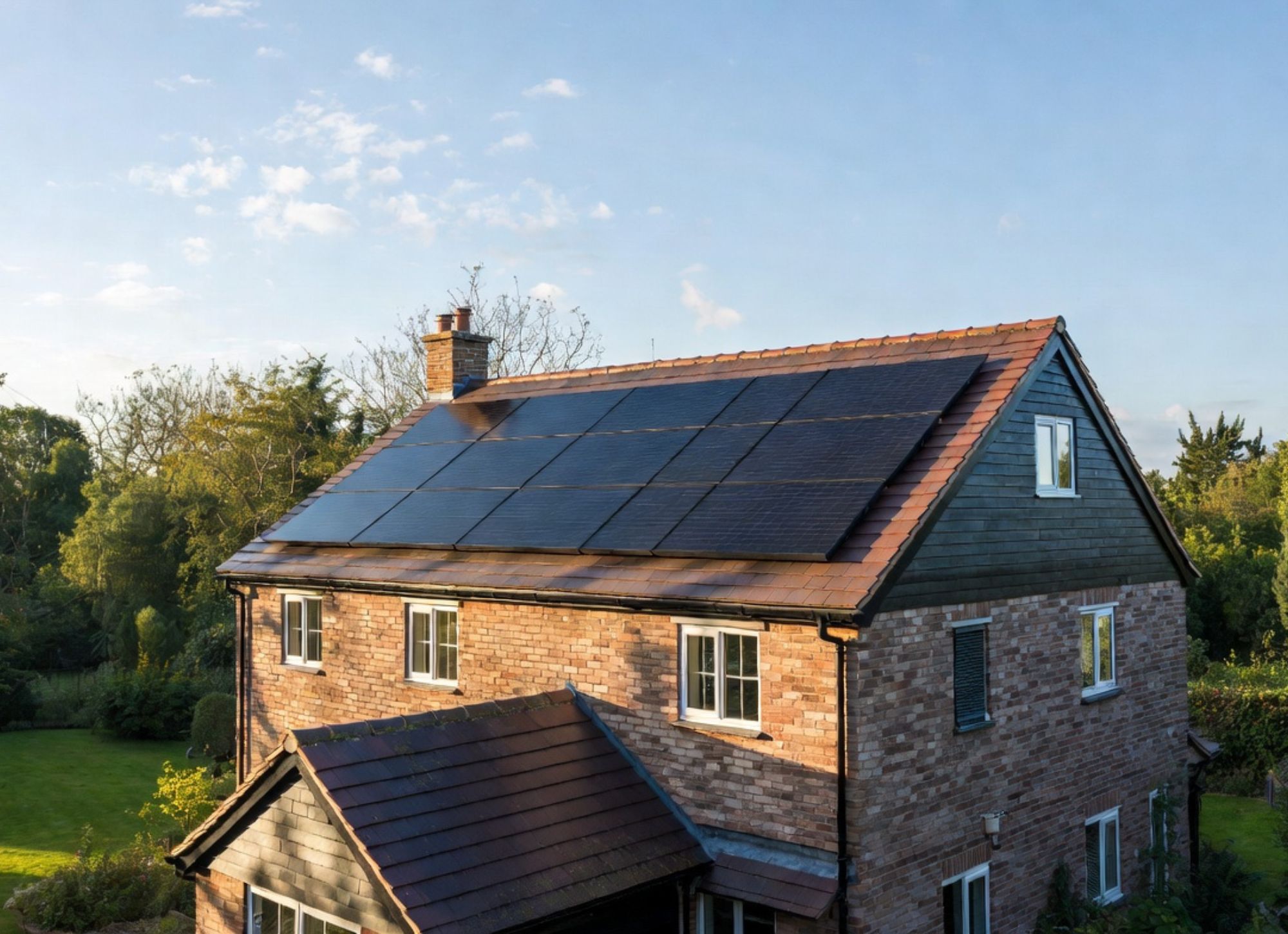
Can You Run a Hotel on Solar Power? Yes, Here’s How
Yes, you can run a hotel on solar power, and thousands of UK hospitality businesses are already doing exactly that. While solar energy alone may not cover 100% of a large hotel’s electricity demand around the clock, a well-designed commercial solar PV system combined with battery storage can power a substantial portion of daily operations, dramatically reduce energy bills, and position your property as a genuinely sustainable destination.
For hotel owners and operators across Southern England, Greater London, the South West, and South Wales, the case for solar has never been stronger.
Can a Hotel Really Be Powered by Solar Energy?
A hotel really can be powered by solar energy to a significant degree, and the numbers behind it are compelling. A typical UK hotel consumes between 100 and 300 kWh of electricity per bedroom per year, meaning a 100-room property may use between 200,000 and 400,000 kWh annually.
A correctly sized rooftop solar system can comfortably offset 25% to 50% of that consumption, and in some cases considerably more when battery storage is added to capture energy generated during peak daylight hours for use later in the day and evening.
The key distinction worth making early is this: running a hotel “on solar power” does not necessarily mean cutting the grid connection entirely. What it means in practice is that solar becomes your primary, lowest-cost source of electricity during the day, the grid acts as a reliable backup, and battery storage bridges the gap in the evenings.
The result is a hotel that is largely solar-powered in terms of the electricity it actually pays for, even if the panels do not cover every single unit consumed at midnight.
How Much of a Hotel’s Energy Needs Can Solar Panels Meet?
Solar panels can meet a substantial share of a hotel’s energy needs, with the exact percentage depending on roof size, system capacity, occupancy patterns, and whether battery storage is included.
A 100kWp rooftop solar installation can generate enough electricity to supply 25% to 30% of a 50-room hotel’s annual demand, saving approximately £35,000 to £50,000 per year at current UK electricity import prices.
What Are the Financial Benefits of Solar Panels for Hotels?
The financial benefits of solar panels for hotels are significant and span both immediate bill reductions and long-term returns that compound over decades.
How Much Can a Hotel Save With Solar Panels
A hotel can save a meaningful amount with solar panels, and the real-world figures from UK installations are impressive. The Gatwick White House Hotel saw its annual electricity bill fall from £62,800 to approximately £22,608 after a commercial solar installation, a saving of over £40,000 per year.
Cedar Court Hotel in Wakefield recorded first-year bill savings of £35,000, a 34% reduction in its electricity costs, with lifetime projected savings exceeding £1.3 million. A smaller hotel installation studied by Save Energy UK achieved annual savings of £6,778 and a full payback on investment within four years and three months.
Typical Payback Period for Hotel Solar Panels
The payback period for hotel solar panels in the UK typically falls between four and seven years, depending on system size, financing route, and the hotel’s consumption profile. Larger systems benefit from economies of scale: a 250kWp-plus installation can achieve a payback period of as little as three to five years, with an annual return on investment of 20% to 33% thereafter.
For most hotel properties in Southern England, the South West, and South Wales, a commercial solar investment starts delivering a positive return well within the first decade and continues generating free electricity for 25 years or more.
How Tax Allowances Improve the ROI of Hotel Solar
Tax allowances significantly improve the ROI of hotel solar, and this is a benefit that many hospitality operators overlook when they first consider the investment. The UK government’s Annual Investment Allowance (AIA) allows businesses to deduct the full cost of qualifying plant and machinery, including solar panels, from their taxable profits in the year of purchase.
For a hotel investing £200,000 in a commercial solar system, this could mean a corporation tax saving of up to £50,000 in year one, which effectively reduces the net cost of the system and compresses the payback period considerably. Combined with the zero-rate VAT on commercial solar installations, the financial case is even stronger in 2026 than it has been in previous years.
What Factors Affect How Much Solar a Hotel Can Generate?
Several factors shape how much solar a hotel can realistically generate:
- Roof orientation and pitch — South-facing roofs at around 30 to 40 degrees produce the most power
- Available roof space — Determines how large a system can be installed; a single commercial panel occupies around 2 square metres, so a 100kWp system requires roughly 500 to 600 square metres of usable roof area
- Daytime occupancy patterns — Hotels with high daytime activity, such as conference facilities, restaurants, spas, and leisure centres, are particularly well-suited to solar as they consume the most electricity during peak generation hours
- Self-consumption alignment — A direct match between generation and consumption maximises self-consumption and reduces electricity imported from the grid
Does Adding Battery Storage Make a Bigger Difference for Hotels?
Yes, adding battery storage makes a substantially bigger difference for hotels compared to many other commercial property types. Because hotels operate 24 hours a day, evening and night-time energy consumption is significant.
Without battery storage, any solar energy generated but not immediately consumed during the day is either exported to the grid (at a much lower rate than you pay to import electricity) or simply wasted.
A battery storage system captures that surplus generation and makes it available during peak evening hours, dramatically increasing self-consumption and boosting the financial return of the overall system.
Are There Real UK Hotels Already Running on Solar Power?
Yes, there are real UK hotels already running on solar power, and the case studies demonstrate a clear, repeatable business case that applies across different hotel types and sizes.
Gatwick White House Hotel
The Gatwick White House Hotel is one of the clearest examples of solar delivering transformational results in the UK hospitality sector. Following installation, their annual electricity costs fell from £62,800 to roughly £22,608, a reduction of approximately 64%. This is the kind of saving that directly impacts bottom-line profitability and frees up budget for reinvestment in the guest experience.
Wainstones Hotel
The Wainstones Hotel had a 32kW solar PV system installed by a UK commercial installer, generating 28.39 MWh of electricity annually and delivering savings of over £6,300 per year. For a smaller, independent hotel, savings at this level represent a significant improvement to operating margins.
Cedar Court Hotel, Wakefield
Cedar Court Hotel is another strong real-world reference point. Its solar installation cut the electricity bill by 34% in the first year, saving £35,000 from the outset and pointing towards projected lifetime savings of over £1.3 million. The scale of that lifetime figure underlines why solar is increasingly viewed not as a sustainability gesture but as a core infrastructure investment.
These are not isolated examples. Analysis of 287 commercial solar systems installed across the UK between 2023 and 2025 found an average payback period of just 3.8 years and a median annual return of 19.2% after payback.
What Size Solar System Does a Hotel Need?
The size of the solar system a hotel needs depends primarily on its annual electricity consumption, the available roof or ground space, and the proportion of demand the operator wants the system to meet.
Estimating Solar System Size by Hotel Type
Different hotel types draw very different levels of electricity, and the right system size varies accordingly. A boutique hotel or B&B with 10 to 20 rooms might be well served by a system in the 20 to 50kWp range, while a larger country house hotel or city-centre property with 50 to 100 rooms typically suits a 100 to 200kWp installation.
Conference hotels and larger resort properties with 200 or more rooms can draw between 480,000 and 820,000 kWh annually and may require systems of 300kWp or more to make a material impact on energy costs.
The most reliable way to size a system correctly is to share 12 months of energy bills and half-hourly consumption data with a qualified commercial solar installer. This allows the installer to model your exact usage profile, identify the hours of peak demand, and design a system that maximises self-consumption rather than simply maximising generation.
Does Planning Permission Affect Hotel Solar Installations?
Planning permission can be required for commercial solar installations, particularly for larger systems, listed buildings, or properties in conservation areas. In many cases, rooftop systems that do not protrude significantly beyond the roof line fall within permitted development rights, but it is always worth confirming this early in the planning process. A reputable commercial solar installer will guide you through any planning requirements as part of the pre-installation survey.
How Commercial Solar Can Support a Hotel’s Sustainability Goals
Commercial solar supports a hotel’s sustainability goals in a direct and measurable way that resonates with guests, corporate clients, and investors alike. The UK hospitality sector is under growing pressure to reduce its carbon footprint, with corporate travel buyers increasingly requiring hotels to demonstrate environmental credentials before approving bookings.
A 100kWp solar system generating 85,000 to 95,000 kWh of clean electricity annually typically offsets between 18 and 22 tonnes of CO2 emissions per year. Over a 25-year system life, that represents a reduction of 450 to 550 tonnes of carbon from a single hotel property.
These figures can be reported directly in sustainability disclosures, used in marketing materials, and referenced in tenders for corporate contracts with businesses that have their own net-zero commitments.
Beyond the environmental figures, there is a strong commercial argument. A growing number of guests actively choose hotels that demonstrate genuine sustainability commitment. A rooftop solar installation is visible proof of that commitment that no amount of marketing copy can replicate.
What Is the Smart Export Guarantee and Can Hotels Benefit?
The Smart Export Guarantee (SEG) is a UK government scheme that requires licensed electricity suppliers to pay businesses for any surplus renewable electricity they export to the national grid, and yes, hotels with MCS-certified solar installations are fully eligible to benefit.
For hotels with strong daytime solar generation but periods of lower demand, exporting surplus electricity provides an additional revenue stream on top of the bill savings. While export rates vary between energy suppliers and are lower than import rates, every unit exported contributes to the overall financial return of the system.
For a hotel generating 90,000 kWh annually and exporting 15% of that, SEG payments could add several hundred to over a thousand pounds in additional annual income depending on the agreed export tariff.
Get a Free Commercial Solar Quote for Your Hotel From EE Renewables
If you manage or own a hotel, guest house, or hospitality property anywhere across Southern England, Greater London, South West England, or South Wales, EE Renewables is ready to help you cut your energy costs and build a more profitable, sustainable business.
We provide expert commercial solar panel installation and solar battery storage installation for hotels and hospitality businesses in London, Brighton, Oxford, Southampton, Bristol, Cardiff, and throughout the surrounding regions. Every system we design is tailored to your property’s specific energy profile, roof structure, and commercial objectives.
Request your free, no-obligation commercial solar quote from EE Renewables today and find out exactly how much your hotel could save.
Every installation is MCS-certified, meaning you are fully eligible for Smart Export Guarantee payments and all relevant tax allowances from day one.
The hotels already running on solar power across the UK are not waiting for energy bills to come down on their own. They made a decision to take control of their energy costs and they are now reaping the rewards.
Frequently Asked Questions
Can a hotel go completely off-grid with solar power?
Going entirely off-grid is technically possible for a hotel but is rarely practical or cost-effective in the UK context. The volume of battery storage required to cover a full hotel’s overnight demand without any grid input would be enormous and prohibitively expensive.
Most hotel operators instead pursue a grid-tied solar strategy that eliminates a large proportion of electricity costs while retaining the grid as a reliable fallback. This approach delivers most of the financial benefits at a fraction of the capital cost of a fully off-grid setup.
How does solar affect a hotel’s Energy Performance Certificate rating?
A commercial solar installation can positively influence a hotel’s Energy Performance Certificate (EPC) or Display Energy Certificate (DEC) rating, which measures a building’s operational energy consumption. Generating clean electricity on-site reduces the amount of grid electricity the building consumes, which in turn improves the assessed energy intensity of the property.
For hotels pursuing BREEAM or similar sustainability accreditations, solar generation contributes directly to the relevant energy and carbon credits.
Can solar panels be installed on a flat hotel roof?
Yes, flat roofs are actually well-suited to commercial solar installations. Rather than being fixed flat to the roof surface, panels are mounted on angled ballast frames at the optimal tilt angle, typically between 10 and 20 degrees for flat roof applications. These frames do not require penetration into the roof structure in many cases, which reduces installation complexity and preserves roof waterproofing warranties.
Flat roofs also make for easier maintenance access once the system is in place.
Will solar panels work during a UK winter when hotel demand is highest?
Solar panels do generate electricity during UK winters, though output is lower than in spring and summer due to shorter daylight hours and lower sun angles. A well-designed hotel solar system accounts for this seasonal variation by ensuring that the system delivers strong financial returns across the full annual cycle rather than only during peak months.
Battery storage helps by capturing every unit of daylight generation for use in the evening hours. Many hotels also find that daytime demand from heating systems, kitchen operations, and indoor lighting during winter months still creates substantial opportunities to offset grid imports with solar generation.
Does a hotel need a new roof before installing solar panels?
A new roof is not always required, but the condition of the existing roof should be assessed before installation. It is generally advisable to address any known roofing issues before placing a solar system on top, since removing and reinstalling panels to carry out roof repairs later adds unnecessary cost.
A good commercial solar installer will conduct a structural survey as part of the pre-installation process and flag any concerns before the project begins. If the roof is in reasonable condition with 15 or more years of life remaining, installation can proceed without delay.
