


How do home EV chargers work?
Driving an electric car already helps cut running costs and reduce your impact on the environment. But charging it at home makes ownership even more convenient, especially if you can schedule charging for cheaper off-peak periods and bring your energy costs down further.
We supply home EV chargers from trusted brands such as Fox ESS, Zappi and Tesla, and can help you design an EV charging setup that suits your home. We can also combine your charger with solar panels and battery storage if you want a more complete energy solution. Here’s what you need to know.
How does an EV charger work?
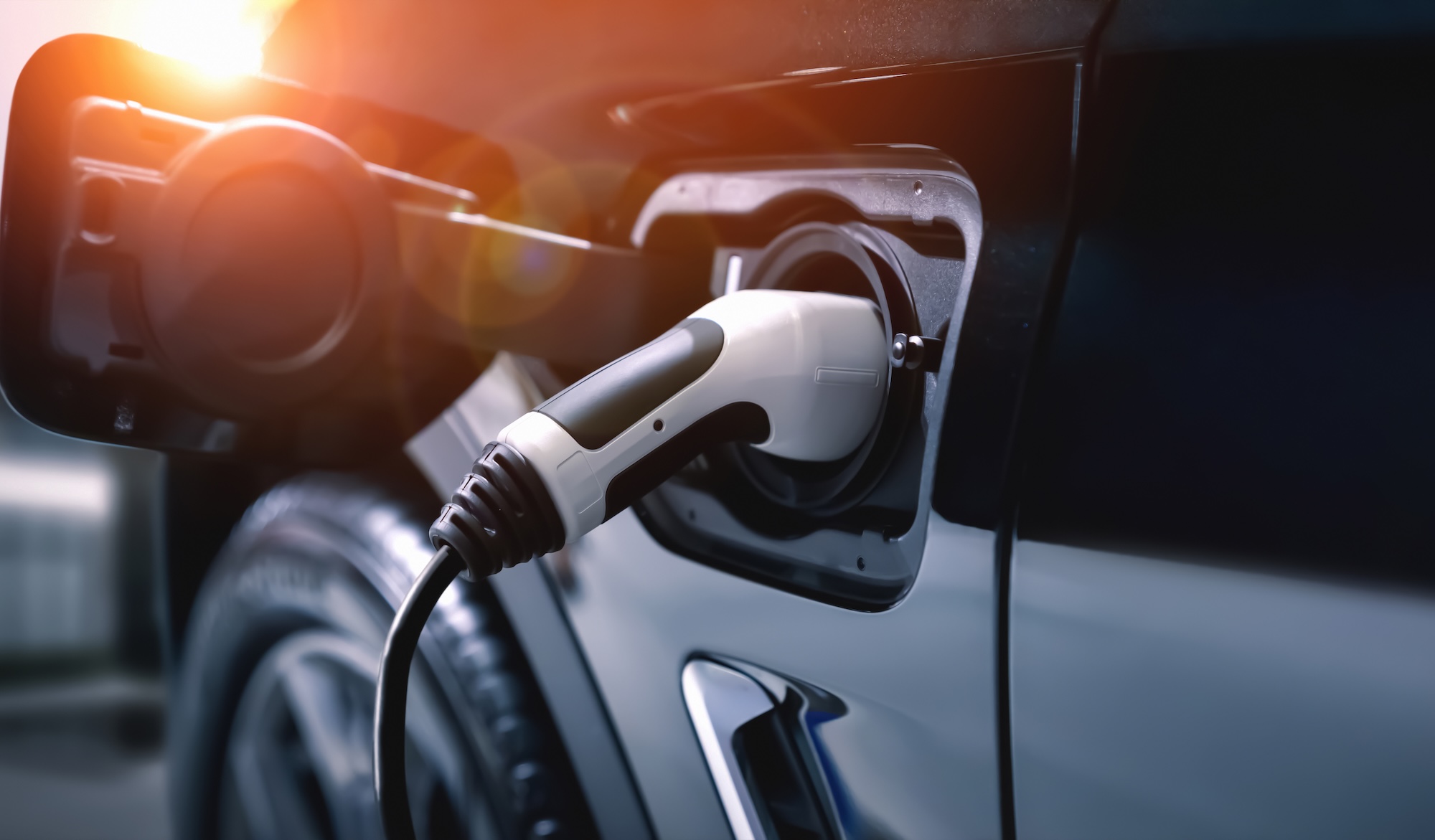
A home EV charger – also known as a wallbox or charge point – is fitted to a wall, usually outdoors, and connected directly to your home’s electricity supply. It offers a safer and much quicker way to charge your car than a standard three-pin plug, delivering power at a steadier rate and reducing the time your vehicle needs to stay plugged in.
Most home chargers provide between 3.6kW and 7kW, depending on both the charger itself and your home’s electrical setup. If your home has a three-phase supply, you may be able to install a 22kW unit for faster charging.
The way you plug in will depend on the type of charger you choose. A tethered unit has the cable permanently attached, while an untethered charger lets you use your own cable. In the UK, most electric vehicles and home chargers use a Type 2 connector, so charging is usually as simple as connecting the charger to the car and starting the session.
Many modern chargers come with smart features and app control. This allows you to monitor usage, lock or unlock charging, and set schedules that automatically charge your vehicle when electricity is cheapest. If you want to explore energy deals designed for EV owners, take a look at our guide to the best EV tariffs.
Can I have a home EV charger?
In many cases, the answer is yes. Most homes can support EV charging as long as there is a practical place to park – such as a driveway, garage or other off-street space – and the charger can reach the vehicle without cables crossing public walkways. To use smart charging features, you will also need a reliable WiFi connection. If you are renting or do not own the property, you will need permission from your landlord.
We can help you decide on the most suitable location for the charger, and our installers always aim to keep the finished setup neat, practical and as discreet as possible.
Which EV charger is right for me?
Most home EV chargers are designed to work with a wide range of vehicles. Although features and connector types can vary, you do not usually need to choose the same brand as your car – so owning a Tesla, for example, does not mean you must install a Tesla charger at home.
When choosing a charger, it is worth considering your car’s maximum AC charging speed, how quickly you want to recharge it in day-to-day use, whether you would prefer a tethered or untethered unit, and what kind of control features matter most to you, such as app access, charging schedules or solar compatibility.
One popular option is the myenergi Zappi, available as an untethered charger. It offers a standard fast-charging mode when you want the quickest possible charge, along with Eco settings that can adjust the charging speed automatically. This can be especially useful if you want to make better use of electricity generated on site and reduce how much power you import from the grid.
We also recommend the Fox ESS A Series. It is compact, easy to use and app-controlled, making it simple to check charging activity and make changes remotely. It can also be set up to work with solar PV, even if you do not have battery storage, allowing you to prioritise charging from the electricity your system generates.
With so many charger models and settings available, choosing the right one can feel overwhelming. If you tell us what you drive and how you use your vehicle, we can help you find the charger and setup that best suits your home.
Are there grants available to help with cost?
If you rent your home, live in a flat or depend on on-street parking, you may be eligible for a grant to help cover the cost of buying and installing a home charge point, with support available of up to £500. At the time of writing, this scheme is due to remain available until March 31 2027.
Businesses may also be able to claim up to £500 per socket, with support available for as many as 40 sockets across eligible premises.
The process is straightforward: you choose an approved installer, such as us, and we take care of the grant application. The approved amount is then deducted from your final invoice.
Do I need to have battery storage with an EV charger?
No – a home EV charger can operate perfectly well from your standard mains electricity supply, so battery storage is not essential.
However, adding a home battery can give you more flexibility and help lower your energy costs. You can store electricity when prices are low, often overnight, and then use it later to charge your car, run your home during the evening, or do both.
If you also have solar panels, you can store any surplus electricity generated during the day and use it later – including overnight – to charge your vehicle. When designed well, this kind of setup can significantly reduce how much electricity you need from the grid and, for some households, bring energy bills close to zero.
If you’re looking for a simple EV charger installation or a complete green home energy system that includes solar panels and battery storage, we can provide clear advice and a cost-effective recommendation.
Get in touch at sales@eerenewables.co.uk or try our instant quote tool.
