


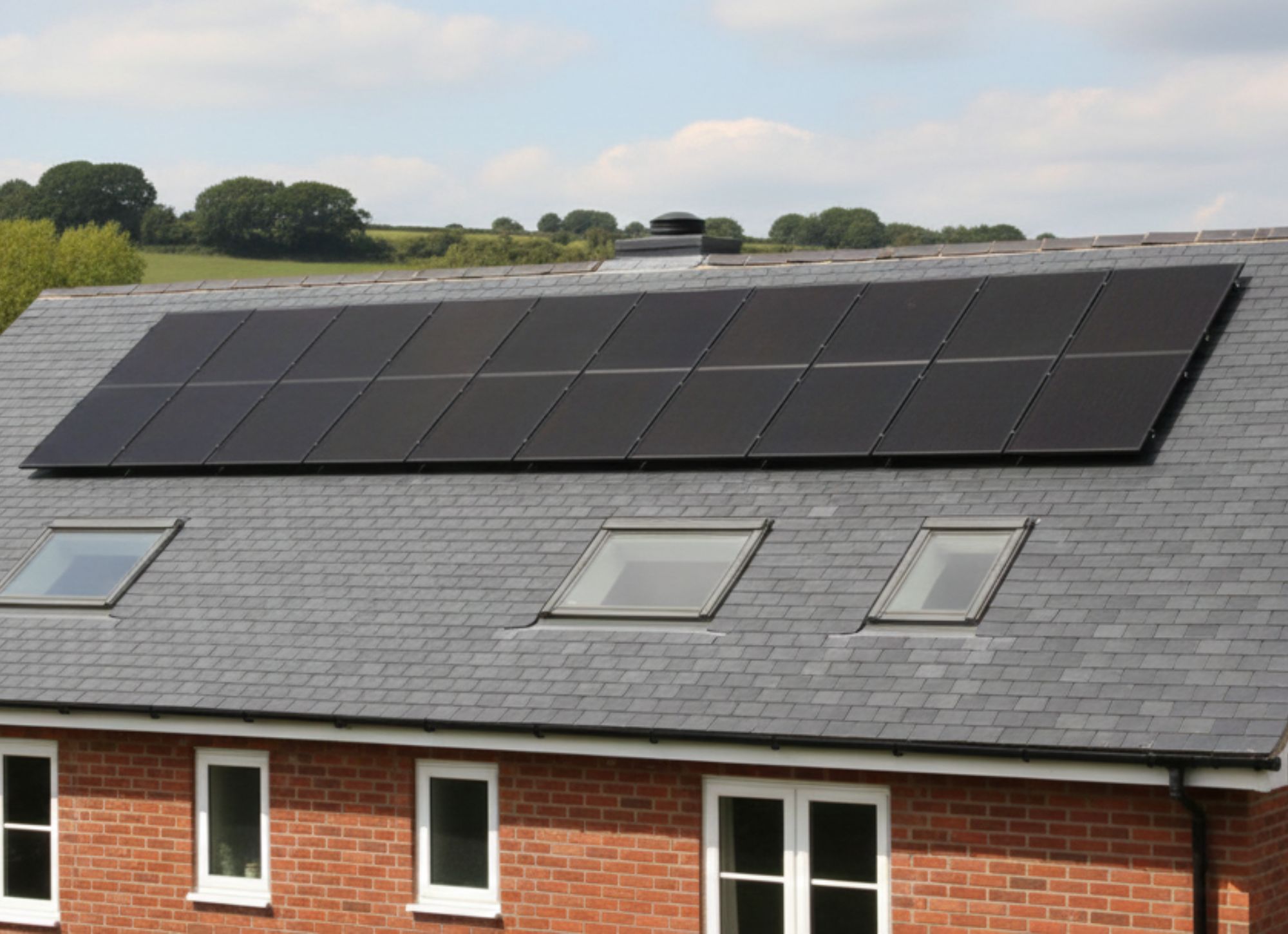
4kw Solar Panel System: Costs, Efficiency & Output
If you’re a UK homeowner or landlord considering a 4kW solar system to harness renewable energy and reduce dependence on the grid, this size is a popular choice for medium-sized properties.
It offers a balance of affordability and performance in 2026. With rising electricity prices, a 4kW photovoltaic setup can generate substantial output while fitting most roofs in areas like Southern England or South Wales.
This guide covers everything from installation costs and energy efficiency to daily power production, and potential savings on utility bills.
4kW Solar System: Overview
A 4kW solar system refers to a photovoltaic array with a peak capacity of 4 kilowatts, typically comprising 8-12 high-efficiency panels that convert sunlight into electricity for household use.
This size is ideal for average 3-4 bedroom homes in the UK, providing enough generation to cover a significant portion of daily energy needs while qualifying for incentives like the Smart Export Guarantee.
How Efficient Is a 4kW Solar System?
A 4kW solar system achieves efficiency ratings of 18-25% for modern monocrystalline panels, meaning it converts up to a quarter of captured sunlight into usable power, outperforming older polycrystalline options in low-light UK conditions.
System-wide efficiency, including inverter losses (typically 5-10%), hovers around 85-90%, making it a reliable choice for maximising output per square metre on rooftops in Greater London or South West England.
Factors Affecting Efficiency
Key elements like panel type (e.g., N-type TOPCon for better thermal performance), inverter quality (string vs. micro-inverters reducing shading impact), and maintenance influence overall efficiency, with regular cleaning boosting yields by 5-10% in dusty areas like Southampton.
What Is the Output of a 4kW Solar System in the UK?
The output of a 4kW solar system in the UK averages 3,400-4,000 kWh annually, depending on location and orientation, equating to about 9-11 kWh daily under typical irradiance levels in 2026.
In sunnier Southern England spots like Brighton, you might see closer to 4,000 kWh yearly, while cloudier South Wales regions like Cardiff yield around 3,400 kWh, sufficient to power essential appliances and offset grid usage.
Regional Output Variations
In London or Oxford, expect 3,600-3,800 kWh per year on a south-facing roof; Bristol or Southampton could hit 3,800-4,000 kWh with optimal tilt (30-40 degrees), enhancing photovoltaic energy production for home solar setups.
For tailored advice on maximising output in your area, EE Renewables offers expert solar panel installation across Southern England, Greater London, South West England, and South Wales.
Contact us today for a free solar panel installation quote customised to your property.
What Can a 4kW Solar Panel System Power in Your Home?
A 4kW solar panel system can power a wide range of everyday household appliances in a typical UK home, covering essentials like lighting, refrigeration, entertainment, and laundry for a 3-4 bedroom property, especially when generation peaks during daylight hours.
On an average day, it produces 9-11 kWh of electricity (higher in sunnier areas like Southampton or Brighton, lower in cloudier spots like Cardiff), which supports most low-to-medium load devices directly and leaves surplus for export or battery storage.
With daily output of around 9-11 kWh, a 4kW solar system comfortably handles:
- Fridge-freezer (0.5-1 kWh/day) — Runs continuously all day and night using stored or daytime power.
- LED lighting throughout the home (0.2-0.5 kWh/day) — Easily covered, even with multiple rooms lit for hours.
- TVs and entertainment devices (0.1-0.5 kWh per hour) — A family can watch 20-50 hours of TV or gaming without drawing from the grid.
- Laptops, computers, and phone charging (0.05-0.3 kWh per device) — Multiple devices charged daily with plenty left over.
- Kettle boils (0.1-0.2 kWh per use) — 40-50 boils possible on a good day.
Larger Appliances It Can Support
Higher-consumption items are feasible during peak solar production (midday) or with battery integration:
- Washing machine (1-2.1 kWh per cycle) — 4-5 full cycles on an average day, ideal for daytime laundry in homes in Oxford or Bristol.
- Dishwasher (1-1.5 kWh per cycle) — 2-3 cycles if run during sunlight hours.
- Oven or electric hob (1.5-3 kWh per use) — One full cooking session (e.g., 45-60 minutes) plus extras.
- Electric shower (short bursts, ~0.2-0.5 kWh per 10-15 minutes) — Multiple short showers on sunny days.
- Tumble dryer (2-2.5 kWh per cycle) — 1-2 cycles if timed for peak generation, though energy-intensive.
High-Demand or Optional Extras
- EV partial charging — Enough surplus to add 20-40 miles of range daily (3-5 kWh) if you have an electric vehicle in London or Southampton.
- Air conditioning (seasonal, 1-3 kWh/hour) — Short bursts possible in warmer South West England summers, but best with battery support.
- Heating elements (e.g., immersion heater) — Not ideal for full electric heating, as high loads like this exceed typical daily output.
Without a battery, self-consumption is around 30-50% (using power as it’s generated), but pairing with a 5-10 kWh storage system boosts this to 70-90%, allowing evening use of daytime generation for appliances like ovens or dryers.
In regions like Greater London with higher tariffs, this setup maximises savings by powering your home efficiently during daylight and reducing grid imports at peak rates.
This level of capability makes a 4kW solar system a practical, scalable choice for medium-sized UK homes.
How Much Does a 4kW Solar System Cost in the UK?
A 4kW solar system costs £5,500-£8,000 in the UK for 2026, including panels, inverter, and installation, with prices varying by panel efficiency (e.g., premium monocrystalline at the higher end) and location-specific labour.
Bundling with batteries adds £3,000-£5,000, but 0% VAT until 2027 saves £1,000-£2,000 overall for photovoltaic installations.
Below is a table of typical costs and estimated payback periods for a 4kW system, assuming average savings of £700/year without battery:
| Component | Cost Range | Notes | Est. Payback Period (Years) |
|---|---|---|---|
| Solar Panels (8-12 units) | £2,000-£3,500 | Monocrystalline for higher efficiency | 7-10 (based on £600-£900 annual savings) |
| Inverter | £800-£1,500 | Hybrid options for battery compatibility | Included in total system payback |
| Installation & Wiring | £1,500-£2,500 | Higher in urban areas like Greater London | Factors in regional variations |
| Total System (No Battery) | £5,500-£8,000 | Excludes incentives | 7-10 years |
| With 5kWh Battery | £8,500-£13,000 | Enhances self-consumption | 8-12 years (with £900-£1,600 savings) |
These figures reflect 2026 market trends, with payback shortening amid energy price rises.
What Is the Payback Period and ROI for a 4kW Solar System?
The payback period for a 4kW solar system averages 7-10 years in the UK, where initial costs of £5,500-£8,000 are recouped through bill savings and export earnings, leading to a ROI of 8-11% over 25 years.
With annual benefits of £600-£900 (rising to £900-£1,600 with batteries), ROI surpasses savings accounts, especially in sunny Southampton, where breakeven could hit 6-8 years factoring inflation.
Calculating Your ROI
Use tools like PVGIS for location-specific estimates; in Bristol, a £6,500 investment yields £15,000-£20,000 net over lifespan, equating to 9-10% IRR.
How Much Can You Save on Electricity Bills with a 4kW Solar System?
You can save £600-£900 annually on electricity bills with a 4kW solar system in the UK, based on self-consumption rates of 35-40% without batteries and current rates of 25p/kWh, plus Smart Export Guarantee earnings of £150-£200 for surplus energy.
With rising tariffs in 2026, households in Oxford or Southampton might see £700-£1,000 savings by reducing grid reliance, especially when paired with time-of-use plans.
Maximising Savings
Adding a 5kWh battery boosts self-use to 60-80%, potentially saving £900-£1,600 yearly in London, factoring in avoided import costs and optimised export.
Can a 4kW Solar System Be Installed on Your Property?
A 4kW solar system can be installed on most UK properties if you have 20-25m² of south-facing roof space at 30-40° tilt, minimal shading, and structural integrity to support 150-200kg weight, typically under permitted development rights without planning permission.
In conservation areas like parts of Oxford or listed buildings in Cardiff, check local councils; DNO approval (G99) is needed if the inverter exceeds 3.68kW, but standard setups qualify easily in Southern England.
Key Requirements
Roof assessment for asbestos-free slates/tiles, grid connection feasibility, and MCS-certified installers ensure compliance; ground-mounted options suit shaded roofs in Brighton.
Ready to Install a 4kW Solar System?
Ready to install a 4kW solar system? EE Renewables delivers professional solar panel and battery storage installations across Southern England, Greater London, South West England, and South Wales, serving locations like London, Brighton, Oxford, Southampton, Bristol, and Cardiff.
Secure your energy future with custom solutions that maximise savings—get in touch today for a free quote and start generating clean power.
FAQs
How Does Weather Impact a 4kW Solar System’s Performance Over Seasons?
Weather affects a 4kW solar system’s performance, with summer peaks reaching 15-20 kWh daily in sunny conditions, while winter drops to 3-5 kWh due to shorter days, yet modern panels maintain 70-80% efficiency in diffuse light for year-round viability.
What Maintenance Is Required for a 4kW Solar System?
Maintenance for a 4kW solar system involves annual visual checks for debris, professional inverter servicing every 5-10 years, and occasional cleaning in polluted areas, costing £100-£200 yearly to sustain optimal output.
How Can Smart Tech Integrate with a 4kW Solar System?
Smart tech integrates with a 4kW solar system through apps monitoring real-time generation, automating battery discharge during peaks, and linking with EVs for optimised charging, enhancing control beyond basic setups.
What Environmental Benefits Does a 4kW System Offer?
A 4kW system offers environmental benefits by offsetting 1.5-2 tonnes of CO2 annually, equivalent to planting 100 trees, supporting UK’s net-zero goals without overlapping cost or output discussions.
How Do Export Tariffs Vary for 4kW Systems?
Export tariffs for 4kW systems vary by supplier, with rates like 15p/kWh on intelligent plans versus 4-9p/kWh standard SEG, potentially adding £100-£300 yearly based on surplus, distinct from core savings.
