


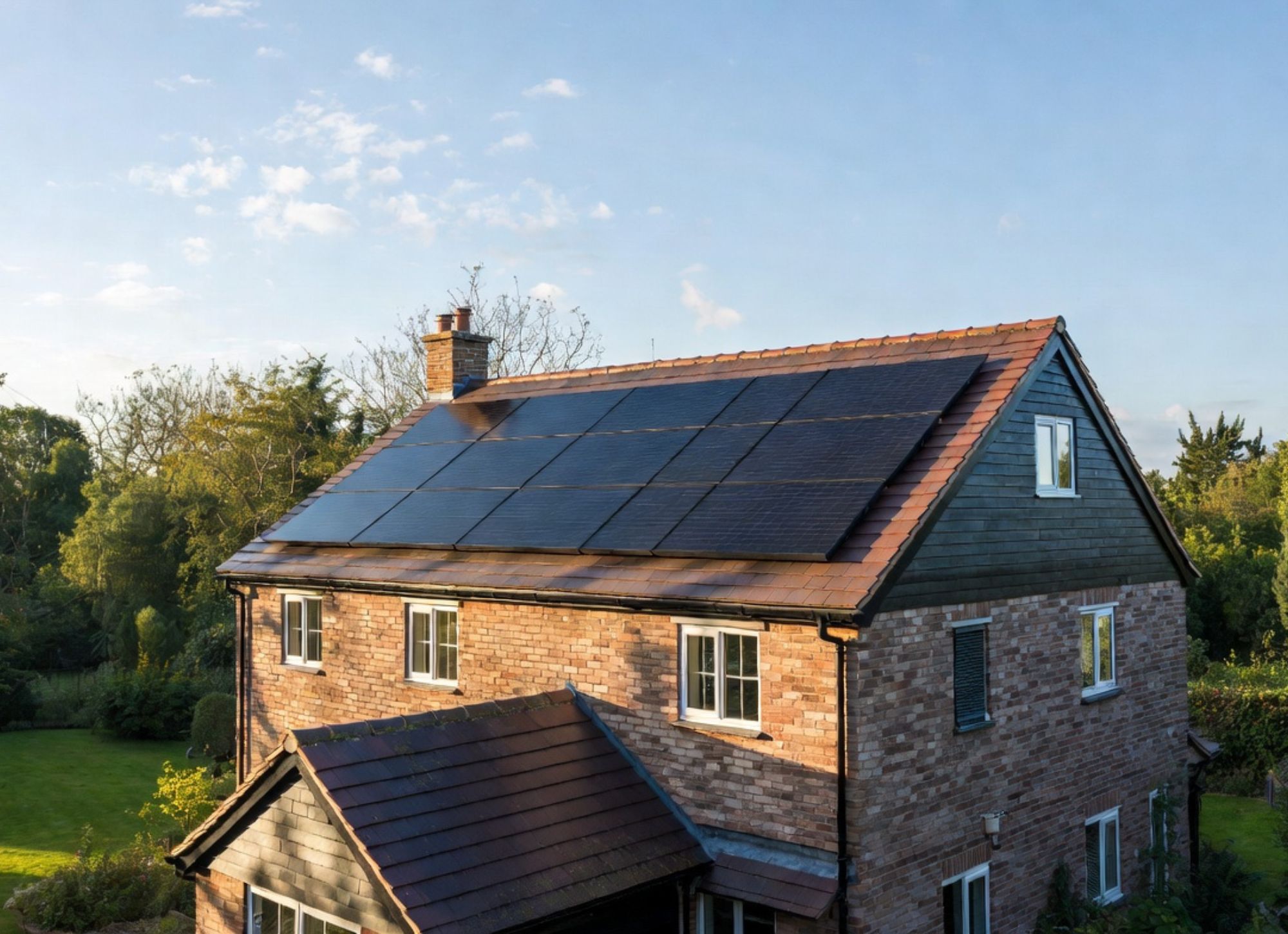
Can Solar Panels Be Installed on a Metal Roof? Yes, Here’s How
Yes, solar panels can be installed on a metal roof, and a metal roof is actually one of the most compatible and installer-friendly roof types for solar panel systems in the UK.
Whether your property has a standing seam metal roof, a corrugated steel roof, a trapezoidal profile roof, or a metal deck, there are purpose-built mounting solutions designed specifically for each profile.
For homeowners, landlords, and commercial property owners across London, Brighton, Oxford, Southampton, Bristol, Cardiff, and throughout Southern England, Greater London, the South West, and South Wales, a metal roof is a strong, long-lasting base for a solar installation that can deliver decades of clean, affordable electricity.
Can You Put Solar Panels on a Metal Roof?
You can put solar panels on a metal roof, and in many respects it is one of the cleanest and most straightforward installation scenarios a qualified solar installer can encounter. Metal roofs are structurally robust, dimensionally stable, and long-lasting, all of which work in favour of a solar installation designed to perform reliably for 25 years or more.
The mounting hardware used for metal roof solar installations is specifically engineered for different metal roof profiles, allowing panels to be secured firmly and safely without compromising the weathertight integrity of the roof beneath.
Standing seam metal roofs in particular are highly regarded in the solar industry because they allow for a completely non-penetrating installation. Specialist seam clamps grip the raised seam of the roof panel directly, meaning the roof surface is never drilled or punctured.
This preserves the roof’s weatherproofing and any manufacturer warranty that may still be in force. For corrugated and trapezoidal profiles, hook bolts or through-fix brackets pass through the roof at the crest of the profile, which is the driest and most structurally sound fixing point, and are sealed with EPDM gaskets to prevent water ingress.
Pros and Cons of Solar Panels on a Metal Roof
Here is a straightforward summary of what a metal roof means for your solar installation:
Pros:
- Metal roofs are structurally strong and well-suited to carrying the additional load of a solar panel array
- Standing seam roofs allow for fully non-penetrating installation using seam clamps, protecting the roof surface completely
- Metal is a dimensionally stable material, meaning the mounting system remains secure and aligned over many years
- Metal roofs are long-lasting, often 40 to 70 years, making them a reliable long-term base for a solar system
- The installation process is typically faster and less complex than a tile roof installation
- Metal roofs are common on agricultural buildings, industrial units, commercial properties, and modern residential extensions, all of which are excellent solar candidates
- No tile breakage risk during installation, making the process predictable and clean
Cons:
- Through-fix installations on corrugated or trapezoidal profiles involve roof penetrations that must be carefully sealed to prevent leaks
- Older metal roofs with signs of corrosion, surface rust, or structural fatigue may need assessment or repair before installation
- Metal roofs can expand and contract significantly with temperature changes, and the mounting system must be designed to accommodate this movement
- Some older agricultural or industrial metal roof profiles may not be compatible with standard mounting hardware, requiring bespoke solutions
- Electrical bonding and earthing of the metal roof structure must be carefully considered during the electrical design of the system
What Factors to Consider Before Installing Solar Panels on a Metal Roof?
There are several important factors to work through before committing to a solar installation on a metal roof. Taking the time to understand each of these properly at the planning stage will help ensure the project runs smoothly and the system performs reliably for its full service life.
Metal Roof Profile Type
The specific profile of your metal roof is one of the first things an installer will identify, because different profiles require different mounting solutions. Standing seam roofs use seam clamps that grip the raised joint between panels without any drilling.
Corrugated steel roofs use hook bolts or specialist corrugated roof brackets that fix at the crown of the corrugation. Trapezoidal or box profile roofs use T-bolt fixings or through-fix brackets designed for the specific profile dimensions. Knowing your roof profile type allows the installer to specify the correct hardware from the outset and confirm that a suitable mounting solution is available for your roof.
Roof Age and Condition
The age and physical condition of the metal roof matters considerably when planning a solar installation. A well-maintained metal roof in good condition with many years of serviceable life remaining is an excellent base for a solar system. However, a roof showing widespread surface corrosion, loose or missing fixings, deformed panels, or signs of structural weakness should be assessed and if necessary repaired or partially replaced before solar panels are installed.
A solar system sitting on a failing metal roof creates significant problems further down the line, and addressing the roof first is always the more cost-effective approach.
Thermal Expansion and Contraction
Metal roofs expand and contract with changes in temperature, sometimes by several millimetres across a large roof span. This thermal movement is a normal characteristic of metal roofing and is not a problem in itself, but it must be accounted for in the mounting system design.
Seam clamp systems for standing seam roofs are typically designed to allow a controlled degree of movement so that the solar array moves with the roof rather than resisting it. Through-fix systems on corrugated or trapezoidal profiles must use appropriate slot hole fixings or flexible mounting options to accommodate this movement without placing stress on the roof panels or the mounting hardware over time.
Roof Orientation and Pitch
Like any roof type, the pitch and compass orientation of a metal roof influence how much electricity the solar panels will generate. South-facing pitches at 30 to 45 degrees deliver the highest annual output in the UK. East and west-facing pitches generate meaningfully less but can still provide a very worthwhile return.
Flat or very low-pitch metal roofs, which are common on industrial units and agricultural buildings, can be treated in a similar way to flat roof installations, with angled mounting frames used to tilt the panels to the optimal angle. Your installer will model the expected annual generation for your specific roof configuration before the system is designed.
Electrical Earthing and Bonding
Metal roof structures require careful consideration of electrical earthing and bonding as part of the solar installation design. Because the roof itself is a conductive material, the solar mounting system and the DC electrical components must be properly earthed and bonded to ensure safety in normal operation and in the event of a fault.
A qualified electrician will address this as a standard part of the installation process, but it is worth being aware that a metal roof solar installation carries slightly more electrical design complexity than an equivalent tile roof project.
This is a routine consideration for experienced installers and should not deter anyone from proceeding, but it underlines the importance of choosing a properly accredited installer.
Planning Permission and Agricultural Buildings
Most residential metal roof solar installations in England and Wales fall within permitted development rights, as they do for tile and flat roofs. However, solar installations on agricultural buildings may be subject to different rules under agricultural permitted development provisions, depending on the system size and the nature of the agricultural operation.
For commercial metal-roofed buildings, the planning position depends on the system size and local planning authority policies. An experienced installer will advise you on the correct planning approach for your specific property and building type. EE Renewables provides expert commercial solar panel installations. Reach out for a free site survey.
How Are Solar Panels Installed on a Metal Roof?
Solar panels are installed on a metal roof using a precise, professional process that varies slightly depending on the roof profile. Here is what a typical installation looks like from start to finish.
Step 1: Pre-Installation Survey and System Design
The installation begins with a thorough site survey. The installer identifies the metal roof profile type, assesses its condition, measures the available roof area, checks the structural integrity, and uses solar modelling tools to determine the optimal panel layout and orientation.
The survey also covers the inverter location, cable routing, electrical supply, and earthing requirements. From this information, a full system design is produced, showing the panel layout, the mounting hardware specification, the expected annual generation, and all electrical components.
Step 2: Safe Access and Scaffolding Arrangement
Appropriate safe access to the metal roof is arranged before work begins. For lower-pitch industrial or agricultural metal roofs, this may involve a secured mobile elevating work platform or scaffolding along the eaves.
For steeper residential metal roofs, perimeter scaffolding is erected in the same way as for any other roof type. Safe access arrangements always comply with the Work at Height Regulations 2005, and the access plan is confirmed during the survey stage.
Step 3: Mounting Hardware Installation
For standing seam roofs, the installer slides seam clamps onto the raised seams at the pre-planned fixing locations and tightens them to the manufacturer’s specified torque. No drilling is required and the roof surface remains completely intact. For corrugated or trapezoidal roofs, the installer marks the fixing positions at the crown of the profile and drills through the roof sheet using a correctly sized drill bit.
A stainless steel hook bolt or through-fix bracket is inserted through the hole and tightened from below where accessible, or secured with a fixing nut and large backing plate above the roof surface. An EPDM rubber gasket beneath the fixing plate compresses to form a watertight seal around the penetration.
All fixings use stainless steel or marine-grade aluminium to prevent galvanic corrosion between dissimilar metals.
Step 4: Aluminium Mounting Rail Installation
With all the roof fixings in place, the installer attaches aluminium mounting rails across the fixing points. These rails run horizontally across the slope of the roof and form the structural backbone of the solar array.
The rails are levelled carefully and aligned to ensure the finished panel array sits straight and uniform. Expansion joints or slip connectors are incorporated into the rail layout where necessary to accommodate the thermal movement of the roof beneath.
Step 5: Solar Panel Fitting and DC Cabling
The solar panels are placed onto the mounting rails and secured with end and mid clamps at each fixing point. DC cables are connected between panels in the configuration specified by the system design and are routed neatly back to the cable entry point using UV-resistant cable management clips and trays.
On metal-roofed agricultural or commercial buildings, the cabling is often run through conduit along the internal purlin structure before entering the inverter location.
Step 6: Electrical Earthing, Bonding, and Inverter Connection
The metal roof structure and the solar mounting system are bonded and earthed in accordance with BS 7671 and the system’s electrical design. The DC cables from the roof are connected to the inverter, which converts the solar-generated electricity into AC power for use in the building.
The inverter is wall-mounted at an appropriate location and connected to the building’s consumer unit or distribution board by a qualified electrician. The generation meter is installed and all electrical circuits are tested and verified.
Step 7: Commissioning, MCS Certification, and Documentation
The completed system is powered up and tested in full. Output from each panel string is checked, the inverter is configured, and the overall system performance is verified against the modelled expectations.
The system is registered with the MCS database, making it eligible for Smart Export Guarantee payments. The property owner receives the MCS installation certificate, all product warranties, the electrical installation certificate, and any building control notification documents required.
How Much Does It Cost to Install Solar Panels on a Metal Roof?
Installing solar panels on a metal roof in the UK typically costs between £5,500 and £12,000 for a standard domestic or small commercial installation, depending on the system size, the roof profile type, the mounting hardware required, and the complexity of the cable routing and electrical work.
Metal roof installations are generally well priced because they tend to be structurally straightforward and require less preparatory work than some other roof types.
| System Size | No. of Panels | Output | Typical Cost | Annual Generation |
|---|---|---|---|---|
| Small | 6–10 panels | 2.5kWp–4kWp | £5,000–£6,500 | 2,200–3,500 kWh |
| Medium | 10–16 panels | 4kWp–6.4kWp | £6,500–£9,000 | 3,500–5,600 kWh |
| Large Commercial | 20–50+ panels | 8kWp–20kWp+ | £9,000–£25,000+ | Varies by capacity |
| With Battery Storage | — | — | +£2,500–£5,000 (domestic) | — |
Small System (6 to 10 Panels, 2.5kWp to 4kWp)
A small system for a residential metal-roofed extension, a garage, or a small agricultural outbuilding typically costs between £5,000 and £6,500. This size of system generates between 2,200 and 3,500 kWh annually on a well-oriented roof and is well suited to properties with moderate electricity consumption.
Medium System (10 to 16 Panels, 4kWp to 6.4kWp)
A medium system for a larger home or a small commercial property with a metal roof typically costs between £6,500 and £9,000. Annual generation of 3,500 to 5,600 kWh covers a substantial proportion of the electricity needs of a typical UK household or small business.
Larger Commercial System (20 to 50+ Panels, 8kWp to 20kWp+)
A larger system for an agricultural building, warehouse, or commercial property with a substantial metal roof typically costs between £9,000 and £25,000 or more depending on the system capacity.
These systems generate significant quantities of electricity and deliver excellent financial returns, particularly for properties with high daytime energy consumption such as farm businesses, workshops, and light industrial operations.
Adding Battery Storage
Adding a solar battery storage system to a metal roof solar installation costs an additional £2,500 to £5,000 for a domestic system, or significantly more for a large commercial system with a high-capacity battery bank.
Battery storage maximises the financial return of the solar system by storing surplus generation for use when the panels are not producing, reducing grid import costs in the evening and overnight.
What Types of Metal Roof Are Best for Solar Panels?
Different types of metal roof offer different advantages for solar installation, and understanding the distinctions helps set realistic expectations for your project.
Standing seam metal roofs
Standing seam metal roofs are widely considered the most solar-friendly roof type of all. The non-penetrating seam clamp system means installation is fast, clean, and completely weathertight, with no risk of leaks at the fixing points.
Many modern commercial and high-end residential metal roofs use a standing seam profile specifically because of its clean aesthetic and long-term performance, and these properties are exceptionally well-placed to benefit from solar.
Corrugated steel roofs
Corrugated steel roofs are the most common metal roof type found on agricultural buildings, farm sheds, and older industrial premises across Southern England, the South West, and South Wales. They are entirely compatible with solar installation using hook bolt fixing systems and are one of the most common scenarios for large commercial and agricultural solar projects in the UK.
Trapezoidal or box profile metal roofing
Trapezoidal or box profile metal roofing, which is widely used on modern warehouses, business units, and commercial buildings, is also fully compatible with solar mounting using through-fix brackets designed for the specific profile.
These properties often benefit from large available roof areas and high daytime electricity consumption, making them ideal candidates for substantial solar systems with short payback periods.
Are Metal Roof Solar Panels Suitable for Agricultural Buildings?
Metal roof solar panels are exceptionally suitable for agricultural buildings, and the farming and agricultural sector is one of the fastest-growing areas of commercial solar adoption in the UK.
Large corrugated steel barns, grain stores, machinery stores, and livestock buildings often have extensive south-facing roof areas that are ideal for solar, combined with substantial daytime electricity demand from equipment, ventilation systems, refrigeration, and lighting.
For farmers and rural landowners across Southern England, the South West, and South Wales, a large agricultural metal roof solar system can generate significant quantities of electricity, reduce operating costs considerably, and earn Smart Export Guarantee payments on any surplus generation exported to the grid.
The financial case for agricultural solar is particularly compelling given the scale of roof areas typically available and the high electricity prices that agricultural businesses face.
Does Installing Solar on a Metal Roof Void the Roof Warranty?
Whether installing solar panels affects your metal roof warranty depends on the roof manufacturer’s specific warranty terms and the installation method used.
For standing seam roofs where seam clamp mounting is used, no penetrations are made in the roof surface, which means the waterproofing integrity is completely preserved and most roof manufacturers will confirm that a non-penetrating installation does not affect their warranty.
For corrugated or trapezoidal roofs where through-fix installations are used, some roof manufacturers specify requirements around the type of sealant and fixing hardware that must be used at penetration points. Following these specifications ensures the roof warranty remains valid.
A qualified installer will be familiar with these requirements and will use compliant hardware and sealing methods as a matter of course. If your metal roof is still under a manufacturer’s warranty, it is worth sharing the warranty documentation with your installer before work begins so that the installation method can be confirmed to be fully compatible.
Get a Free Solar Panel Installation Quote From EE Renewables
If your home, rental property, or commercial building has a metal roof and you are ready to explore what solar could do for your energy costs, EE Renewables is here to help you every step of the way.
We provide expert solar panel installation and solar battery storage solutions across Southern England, Greater London, South West England, and South Wales, including London, Brighton, Oxford, Southampton, Bristol, Cardiff, and all surrounding areas.
Get your free, no-obligation solar installation quote from EE Renewables today and find out exactly how much your property could save.
Our experienced installation teams work with all metal roof profiles, from standing seam residential roofs to large corrugated agricultural buildings, and we bring the same high standards of quality and professionalism to every project regardless of size.
Every system we install is fully MCS-certified, giving you complete access to Smart Export Guarantee payments, full manufacturer warranty protection, and the assurance that your installation meets every relevant UK safety and quality standard.
A metal roof is one of the best starting points for a solar installation in the UK. It is strong, stable, and long-lasting, and the right mounting system means your panels can be fitted cleanly, securely, and without compromising your roof in any way.
Frequently Asked Questions
Can solar panels on a metal roof cause galvanic corrosion?
Galvanic corrosion can occur when two dissimilar metals are in direct contact in the presence of moisture, and it is a legitimate consideration for metal roof solar installations. A professional installer prevents this by using mounting hardware made from compatible metals, typically marine-grade aluminium rails with stainless steel fixings, and by using neoprene or EPDM isolation pads between the mounting hardware and the roof surface where required.
Specifying the correct materials for your specific roof type is a routine part of a competent installer’s design process and is not something that should cause concern provided you choose a qualified and experienced MCS-accredited installer.
Do solar panels on a metal roof affect lightning protection systems?
If your metal-roofed building has an existing lightning protection system, you should make your solar installer aware of this before installation begins. The solar mounting system must be integrated with the existing earthing and bonding arrangement in a way that does not compromise the lightning protection system’s performance.
In most cases, this simply means confirming that the solar array and its earthing are connected to the building’s overall earthing network in accordance with BS EN 62305, which covers lightning protection for structures. A qualified electrician will address this as part of the installation design.
Are there specific solar panels that perform better on metal roofs?
There are no solar panel types that are exclusive to metal roofs, but certain panel characteristics are worth considering for agricultural and commercial metal roof installations. Higher wattage panels, typically 400W to 550W per panel, allow larger systems to be installed within a given roof area and reduce the number of mounting fixings required.
For agricultural buildings where heat buildup beneath the roof can be significant in summer, panels with a lower temperature coefficient perform slightly better in high ambient temperature conditions. Your installer will recommend appropriate panel specifications for your specific roof type and location as part of the system design process.
Can a metal roof solar installation qualify for commercial finance or tax relief?
Yes, businesses investing in commercial solar panel installations on metal-roofed properties can take advantage of the UK government’s Annual Investment Allowance (AIA), which allows the full cost of the solar system to be deducted from taxable profits in the year of purchase.
This can substantially reduce the effective net cost of the installation and compress the payback period. For agricultural businesses, specific rural and enterprise funding streams have historically offered grants or subsidised loans for renewable energy projects, and it is worth speaking to a specialist energy finance adviser or your local agricultural college business support team to identify current opportunities.
The 0% VAT rate on solar installations also applies to commercial projects, further improving the financial case.
How do you clean solar panels installed on a metal roof?
Cleaning solar panels on a metal roof follows the same principles as for any other roof type: use clean water and a soft brush or a purpose-designed solar panel cleaning tool to remove surface dust, bird droppings, and debris. Avoid abrasive materials or harsh chemical cleaners, as these can damage the panel surface coating.
For large agricultural or commercial metal roof installations where manual cleaning is not practical, professional solar panel cleaning services using water-fed poles or automated cleaning systems are available.
Rainfall in the UK generally provides a reasonable degree of natural cleaning for well-tilted panels, but properties in areas with significant dust, agricultural emissions, or heavy bird activity may benefit from a professional clean once or twice a year to maintain optimal output.
