


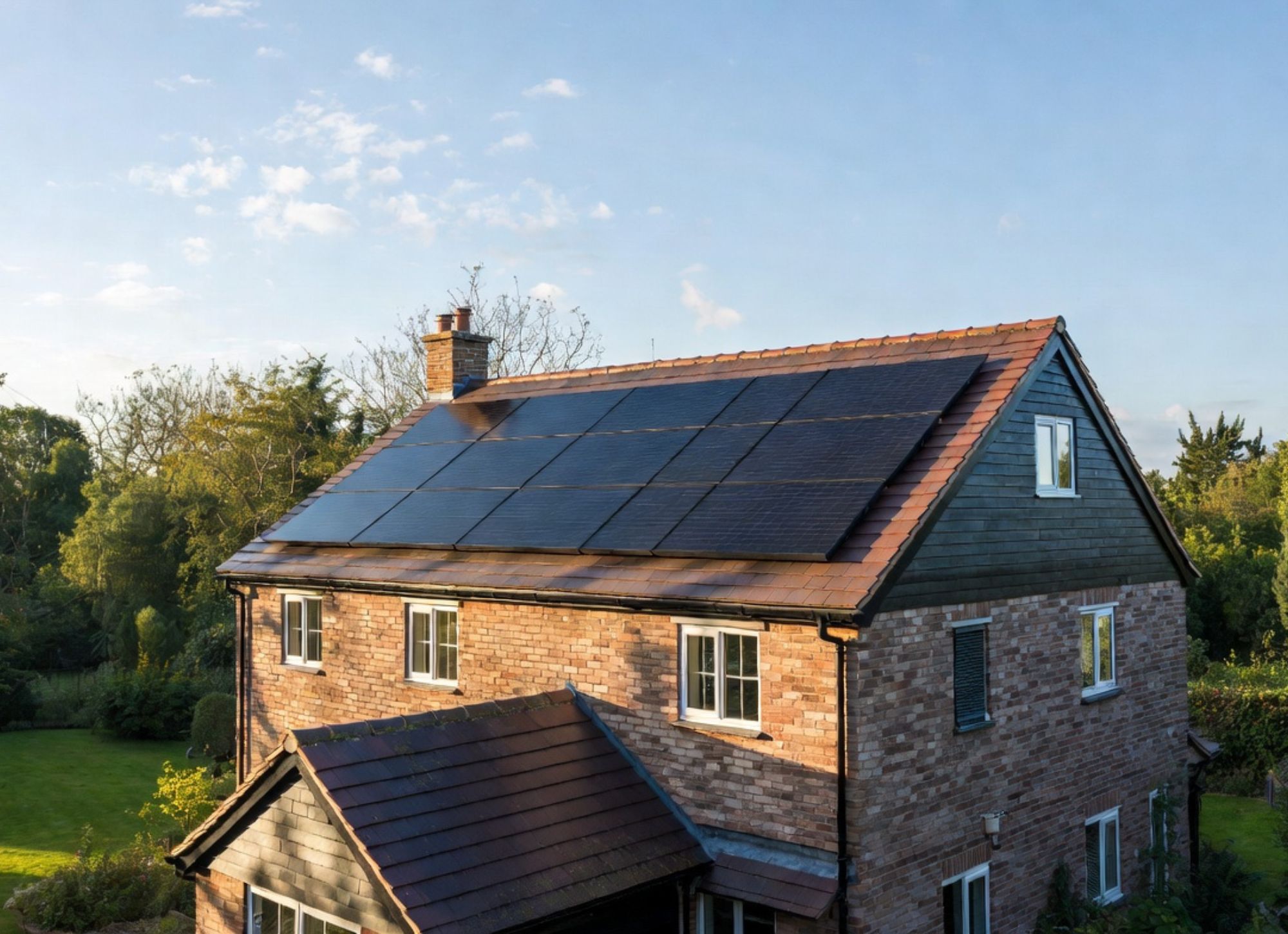
Can Solar Panels Be Installed On A Concrete Roof? Yes, Here’s How
Yes, solar panels can be installed on a concrete roof, and concrete is actually one of the most structurally robust and installer-friendly roof types available. Whether your property has a flat concrete roof, a concrete tile pitched roof, or a large concrete deck typical of commercial and residential blocks across London, Brighton, Southampton, and Cardiff, there is a well-established mounting solution that works.
For homeowners and landlords across Southern England, Greater London, South West England, and South Wales, a concrete roof is a solid and dependable foundation for a solar panel system that can generate clean electricity and reduce energy bills for 25 years or more.
Can You Put Solar Panels on a Concrete Roof?
Solar panels can absolutely be installed on a concrete roof, and in many respects a concrete surface offers some distinct advantages over other roof types. Concrete is heavy, strong, and dimensionally stable.
A flat concrete roof provides an excellent platform for an angled ballast-mounted solar system, where the weight of the concrete itself can sometimes be used to supplement the ballast required to hold the frames securely. A concrete tile pitched roof uses the same hook-and-rail mounting system as any other tiled roof and provides reliable fixing points into the batten and rafter structure beneath.
The key distinction with concrete roofs is between flat concrete decks and pitched concrete tile roofs, as each calls for a different mounting approach. Flat concrete roofs are treated in a very similar way to other flat roof types, using angled ballast frames or direct fixing systems to angle the panels at the optimal tilt.
Pitched concrete tile roofs use stainless steel roof hooks fitted beneath the tiles and secured to the roof battens, in exactly the same way as an installation on clay or slate tiles. Both scenarios are well-understood by MCS-accredited installers and produce reliable, high-performing solar systems.
Pros and Cons of Solar Panels on a Concrete Roof
Here is a balanced and honest summary of what a concrete roof means for your solar installation:
Pros:
- Concrete roofs are structurally strong and well-suited to carrying the load of a solar panel system
- Flat concrete roofs allow panels to be positioned and angled in any direction for optimal solar output
- The mass of a concrete flat roof can contribute to ballast requirements, potentially reducing the additional ballast weight needed
- Concrete tile pitched roofs use standard hook-and-rail mounting systems, making the installation straightforward for experienced installers
- Concrete is a long-lasting material, providing a stable base for a 25-year solar system
- Flat concrete roofs are common on blocks of flats, commercial buildings, and residential extensions across London and Southern England, many of which are excellent solar candidates
- Direct fixing into a concrete deck using specialist anchor bolts is a reliable and secure alternative to ballast-only systems on exposed or high-rise rooftops
Cons:
- Older concrete flat roofs with failing waterproofing membranes need to be assessed and potentially repaired before installation
- Concrete flat roofs that are already carrying significant plant equipment, water tanks, or other loads may have limited remaining structural capacity for solar panels
- Direct fixing into concrete requires specialist drill bits and anchor fixings, adding a small amount of complexity compared to a ballast-only installation
- Some older prefabricated concrete panel construction methods used in post-war residential blocks may present structural challenges that require specialist assessment
- Access to a concrete flat roof, particularly on a multi-storey building, may require more complex scaffolding or elevated access equipment
What Factors to Consider Before Installing Solar Panels on a Concrete Roof?
Before committing to a solar installation on a concrete roof, there are several important factors to work through carefully. A thorough assessment at the planning stage protects both the integrity of the roof and the long-term performance of the solar system.
Concrete Roof Type: Flat Deck or Pitched Tile
The first distinction to establish is whether you have a flat concrete deck or a pitched roof covered with concrete tiles. This determines the entire mounting approach. A flat concrete deck installation uses ballast frames or direct-fix anchor systems to angle the panels at the optimal tilt. A pitched concrete tile roof uses roof hooks fitted beneath the tiles in exactly the same way as a standard tiled house roof installation.
Knowing which type you have allows your installer to specify the correct hardware and design from the outset, so it is worth confirming this during your initial conversation with any installer you speak to.
Waterproofing Membrane Condition on Flat Concrete Roofs
For flat concrete roofs, the condition of the waterproofing membrane applied over the concrete surface is one of the most important pre-installation considerations. Concrete is porous and requires a continuous waterproofing layer to prevent moisture ingress into the structure below.
Common membrane types found on UK concrete flat roofs include modified bitumen felt, liquid applied membranes, EPDM rubber, and GRP fibreglass. If the membrane is cracking, blistering, pooling water, or showing signs of significant age-related deterioration, it should be repaired or replaced before the panels go on.
A leaking concrete roof beneath a solar system is a far more costly and disruptive problem to fix once the installation is in place.
Structural Load Capacity
Concrete roofs are generally very capable of carrying the additional load of a solar installation, but this should never be assumed without an assessment, particularly for older buildings. A standard ballast-mounted solar system on a flat concrete roof adds between 20 and 30 kilograms per square metre including the ballast weight.
Most solid concrete roof decks are built to carry far more than this, but for buildings showing any signs of structural movement, concrete deterioration, or carbonation, a structural engineer’s assessment is advisable before installation proceeds.
Post-war prefabricated concrete construction, which is found on a number of residential blocks across London and other urban areas of Southern England, may require specialist advice.
Roof Drainage and Panel Layout
Flat concrete roofs rely entirely on engineered drainage channels and outlets to remove rainwater, and the solar panel layout must be designed to keep all drainage points clear and unobstructed. Standing water on a flat concrete roof is not only a nuisance but can accelerate concrete and membrane deterioration over time.
A well-designed installation plan shows the panel layout in relation to the existing drainage arrangement and confirms that no outlets or channels are blocked by frames or cabling. Your installer should provide this layout plan as part of the pre-installation design documentation.
Inter-Row Shading on Flat Concrete Roofs
On flat or low-pitch concrete roofs, panels are arranged in rows on angled frames, and each row casts a shadow onto the row behind it when the sun is at a low angle. Row spacing must be calculated correctly to avoid this shading reducing system output, particularly during the lower sun angles of autumn and winter.
The required spacing depends on the tilt angle of the frames, the height of the panels, and the latitude of the installation. Your installer will calculate the correct row spacing as part of the system design and balance maximising the number of panels with minimising inter-row shading losses.
Planning Permission and Building Regulations
Most solar installations on concrete roofs at residential properties in England and Wales fall within permitted development rights, meaning no formal planning application is needed. For flat concrete roofs on blocks of flats, the planning position may be more complex, as permitted development rights for flats differ from those for houses.
For commercial properties with large concrete roofs, the system size and local planning authority policies will determine whether a formal application is required. Buildings in conservation areas, listed buildings, and certain designated zones may face additional restrictions. An experienced installer will confirm the planning position for your property as a matter of course during the survey stage.
EE Renewables provides expert commercial solar panel installations. Get in touch for a free site survey today.
How Are Solar Panels Installed on a Concrete Roof?
Solar panels are installed on a concrete roof using a clear, professional process that varies depending on whether the roof is a flat concrete deck or a pitched concrete tile surface. Here is what each stage looks like in practice.
Step 1: Pre-Installation Survey and System Design
Every installation begins with a thorough site survey. For a flat concrete roof, the installer assesses the membrane condition, the roof area, drainage layout, structural capacity, and any existing roof plant or obstacles.
For a pitched concrete tile roof, the installer assesses the tile condition, pitch, orientation, and structural integrity of the roof.
Solar modelling software is used to calculate the expected annual generation for the specific roof configuration, and a detailed system design is produced showing the panel layout, mounting arrangement, inverter location, and cable routing.
Step 2: Access and Scaffolding
Safe working access is arranged in accordance with the Work at Height Regulations 2005. For single-storey flat concrete roofs, edge protection barriers and a secured ladder are typically sufficient.
For higher or more complex rooftops, scaffolding or a mobile elevating work platform is arranged. The access plan is confirmed during the survey stage so that the right equipment is on site from day one.
Step 3: Waterproofing Check and Membrane Protection
Before any equipment is placed on a flat concrete roof, the installer carries out a final check of the membrane condition at the planned frame and fixing locations.
Protective matting or load-spreading pads are laid beneath each frame position to distribute the load evenly and prevent the frame feet from causing localised wear to the membrane surface over time.
Step 4: Mounting System Installation
For flat concrete roofs, angled ballast frames are positioned on the roof in accordance with the approved layout plan. Each frame is loaded with the calculated ballast weight, typically concrete paving slabs or purpose-designed ballast trays, to resist wind uplift.
On exposed or high-rise rooftops where ballast alone is insufficient, specialist concrete anchor bolts are drilled into the roof deck at pre-planned locations and fitted with appropriate anchor inserts. A waterproof sealant is applied around each drill penetration before the mounting foot is bolted down.
For pitched concrete tile roofs, the installer carefully lifts individual tiles at the pre-planned fixing locations, slides stainless steel roof hooks beneath the tiles and secures each hook to the roof batten below, then replaces the tiles neatly around the protruding hook. This process is repeated for each fixing location across the array footprint.
Step 5: Mounting Rail Installation
Aluminium mounting rails are attached across the ballast frames or roof hooks and carefully levelled and aligned. These rails form the structural spine of the array and provide the surface onto which the panels attach.
Expansion connectors are incorporated into the rail layout where required to accommodate thermal movement over the system’s long service life.
Step 6: Solar Panel Fitting and DC Cabling
The solar panels are placed onto the mounting rails and secured with end and mid clamps. DC cables are connected between panels in the string configuration specified by the system design and are routed neatly back to the cable entry point using UV-resistant cable management throughout.
On flat concrete roofs, cabling is typically run in surface conduit or trunking back to the roof penetration point to keep it organised and protected.
Step 7: Inverter Installation and Electrical Connection
Inside the building, the DC cables from the roof connect to the inverter, which converts the solar electricity into AC power. The inverter is wall-mounted at an appropriate internal location and connected to the consumer unit by a qualified electrician in accordance with BS 7671.
A generation meter is installed to record system output, and the complete electrical installation is tested and verified before the system is powered up.
Step 8: System Commissioning and MCS Registration
The system is tested in full operation with the installer verifying that each panel is generating correctly and that the inverter is performing within its specification. The installation is registered with the MCS database, formally certifying the system and making it eligible for Smart Export Guarantee payments.
The property owner receives the MCS installation certificate, all product warranties, and the electrical installation certificate.
How Much Does It Cost to Install Solar Panels on a Concrete Roof?
Installing solar panels on a concrete roof in the UK typically costs between £5,500 and £11,000 for a standard domestic or small commercial installation, depending on the system size, whether the roof is flat or pitched, and the complexity of the access and cable routing required.
Flat concrete roof installations are generally well priced because the mounting process is straightforward and scaffolding requirements are often minimal.
| System Size | No. of Panels | Output | Typical Cost | Annual Generation |
|---|---|---|---|---|
| Small | 6–10 panels | 2.4kWp–4kWp | £5,000–£7,000 | 2,100–3,500 kWh |
| Medium | 10–16 panels | 4kWp–6.4kWp | £7,000–£9,500 | 3,500–5,600 kWh |
| Large | 16–30+ panels | 6.4kWp–12kWp+ | £9,500–£18,000+ | Varies by capacity |
| With Battery Storage | — | — | +£2,500–£5,000 (domestic) | — |
Small System (6 to 10 Panels, 2.4kWp to 4kWp) for Concrete Roof
A smaller system for a flat-roofed residential extension, a bungalow with a concrete flat roof, or a single-storey commercial outbuilding typically costs between £5,000 and £7,000. Annual generation for this system size on a well-oriented south-facing installation in Southern England typically falls between 2,100 and 3,500 kWh.
Medium System (10 to 16 Panels, 4kWp to 6.4kWp) for Concrete Roof
A medium system for a larger property or a flat-roofed residential or commercial building with more available roof space typically costs between £7,000 and £9,500. This system size generates between 3,500 and 5,600 kWh annually and delivers a strong financial return for most UK households and small businesses.
Larger System (16 to 30+ Panels, 6.4kWp to 12kWp+) for Concrete Roof
A larger system for a commercial property, a block of flats, or a property with a substantial flat concrete roof area typically costs between £9,500 and £18,000 or more depending on system capacity. These systems deliver the highest absolute savings on electricity bills and the strongest overall financial returns.
Including Battery Storage
Battery storage added alongside a concrete roof solar installation typically costs an additional £2,500 to £5,000 for a domestic system. Battery storage captures surplus daytime generation for use in the evenings, significantly increasing self-consumption and maximising the financial return of the system throughout its lifetime.
Are Concrete Tile Roofs and Flat Concrete Roofs Treated Differently for Solar?
Concrete tile roofs and flat concrete roofs are treated quite differently for solar installation purposes, and understanding the distinction helps clarify what to expect from your installation.
A pitched concrete tile roof is approached in almost exactly the same way as a clay or natural slate tile roof. The tiles provide a familiar working surface for the installer, the hook-and-rail mounting system is standard across the industry, and the structural requirements are well-understood.
The main difference between concrete tiles and other tile types is that concrete tiles are heavier than clay or slate, which means the roof structure is typically even more robust and well-suited to carrying the additional solar load.
A flat concrete deck is approached more like a flat EPDM or felt roof, with ballast frames or direct-fix anchor systems used to create the angled mounting structure.
The key advantages of a concrete deck over a felt or rubber membrane flat roof are its structural mass, which aids ballast retention, and its inherent strength and stability, which provides a confident base for direct-fix anchor bolts on exposed rooftops.
Both roof types produce excellent solar installations when properly assessed and installed by a qualified professional, and both are fully eligible for MCS certification and Smart Export Guarantee payments.
Can Solar Panels Be Installed on a Flat Concrete Roof of a Block of Flats?
Solar panels can be installed on the flat concrete roof of a block of flats, and this is an increasingly common application across London and other urban areas of Southern England and South Wales where large flat-roofed residential buildings are widespread.
However, a block of flats solar installation involves several additional considerations that do not apply to a standard single-dwelling project. The freeholder or building management company must approve the installation, and in leasehold buildings, the terms of individual leases may affect who has the right to authorise work on the shared roof structure. The electricity generated by a rooftop solar system on a block of flats can be shared among residents through a landlord supply arrangement or a shared ownership model, which requires careful legal and electrical planning.
Permitted development rights for blocks of flats differ from those for houses, and a planning application may be required depending on the system size and local planning policy. The structural assessment requirements are also more involved for a multi-storey concrete building than for a single-storey residential property.
For landlords and property management companies in London, Brighton, Oxford, Southampton, Bristol, and Cardiff who are exploring rooftop solar for their residential buildings, EE Renewables can advise on the specific requirements and options for your building.
How Long Do Solar Panels Last on a Concrete Roof?
Solar panels installed on a concrete roof last just as long as those on any other roof type, with most modern panels carrying a manufacturer’s performance warranty guaranteeing at least 80% to 90% of rated output after 25 years.
The mounting hardware used for concrete roof installations, including aluminium rails, stainless steel fixings, and quality ballast frames, is designed for a 25-year-plus service life in a UK outdoor environment.
The concrete roof itself is a key long-term variable. A well-maintained concrete flat roof with a sound waterproofing membrane can last 30 to 40 years or more, meaning a solar installation placed on a concrete roof in good condition today should be able to complete its full service life without requiring the panels to be removed for roof works.
The pre-installation survey and membrane assessment are therefore not just a formality but a genuinely important investment in the long-term success of the project.
Get a Free Solar Panel Installation Quote From EE Renewables
If your home, rental property, or commercial building has a concrete roof and you want to find out exactly what a solar panel system could save you, EE Renewables is ready to help.
We provide expert solar panel installation and solar battery storage solutions across Southern England, Greater London, South West England, and South Wales, including London, Brighton, Oxford, Southampton, Bristol, Cardiff, and all surrounding areas.
Get your free, no-obligation solar installation quote from EE Renewables today and start making your concrete roof work harder for your home or business.
Our experienced installation teams work with all concrete roof types, from pitched concrete tile roofs to large flat commercial concrete decks, and we bring the same high standards of quality and professionalism to every project.
Every system we install is fully MCS-certified, ensuring you receive complete warranty protection, full access to Smart Export Guarantee payments, and the confidence of a professionally installed system that meets every relevant UK standard.
A concrete roof is a strong, stable, and long-lasting foundation for a solar installation. If yours is in good condition and broadly south-facing, the chances are very good that a well-designed solar system will serve you and your property exceptionally well for decades.
Frequently Asked Questions
Can solar panels be installed on a concrete roof that has existing plant equipment such as air conditioning units?
Yes, solar panels can be installed on a concrete roof that already has plant equipment, but the layout must be carefully designed to work around the existing equipment without creating shading on the panels and without obstructing safe access to the plant for maintenance purposes.
A pre-installation survey will identify all existing equipment on the roof and incorporate it into the system design. In some cases, relocating minor items of plant equipment to create a better solar layout is worth considering as part of the project planning, and your installer will advise on the best approach for your specific roof.
Does the colour of a concrete tile roof affect solar panel performance?
The colour of your concrete tiles does not directly affect how much electricity the solar panels generate. Panel output is determined by the amount of sunlight falling on the panel surface, the panel’s efficiency rating, and the tilt and orientation of the array. The tile colour beneath the panels has no meaningful influence on any of these factors.
Where tile colour can have an indirect effect is on roof surface temperature. Darker tiles absorb more heat, which slightly raises the ambient temperature beneath the panels. Since solar panels generate marginally less electricity at very high temperatures, lighter-coloured tiles are in theory very slightly better for panel performance, but the practical difference is negligible.
Can I install solar panels on a concrete roof myself without a professional installer?
It is strongly advised not to install solar panels yourself, regardless of the roof type. Solar panel installation involves working with high-voltage DC electricity, structural roof fixings, and grid connection points that all carry serious safety risks if not handled correctly.
In the UK, a DIY solar installation is also unlikely to be eligible for MCS certification, which means you would not qualify for Smart Export Guarantee payments. Your home insurance may also not cover a self-installed system, and the work would not be registered with the relevant authorities. The potential savings from a DIY approach are far outweighed by the safety, financial, and legal risks involved.
Will installing solar panels on a concrete roof affect my building’s EPC rating?
A properly installed and documented solar panel system can positively influence a property’s Energy Performance Certificate rating. Generating clean electricity on-site reduces the property’s dependence on grid electricity, which in turn improves the assessed energy intensity of the building.
For landlords in London, Brighton, Oxford, Southampton, Bristol, Cardiff, and across the EE Renewables service area, improving EPC ratings is increasingly important in light of government policy on minimum energy efficiency standards for rental properties.
An MCS-certified solar installation is formally recognised in an EPC assessment, whereas an uncertified installation may not contribute to the rating in the same way.
How do I find out if my concrete roof is strong enough for solar panels before booking a survey?
The most reliable way to confirm whether your concrete roof can safely carry a solar installation is to have a qualified solar installer carry out a pre-installation survey. For most standard concrete roofs in good condition, no additional structural assessment is needed beyond the installer’s visual inspection.
If the installer has any concerns about structural capacity, they will recommend a structural engineer’s assessment before proceeding. As a general rule, if your concrete flat roof or pitched concrete tile roof has no visible signs of structural movement, cracking, or deterioration, and the property was built using conventional construction methods, the roof is very likely to be suitable for a solar installation. The pre-installation survey will give you a definitive answer at no obligation.
