


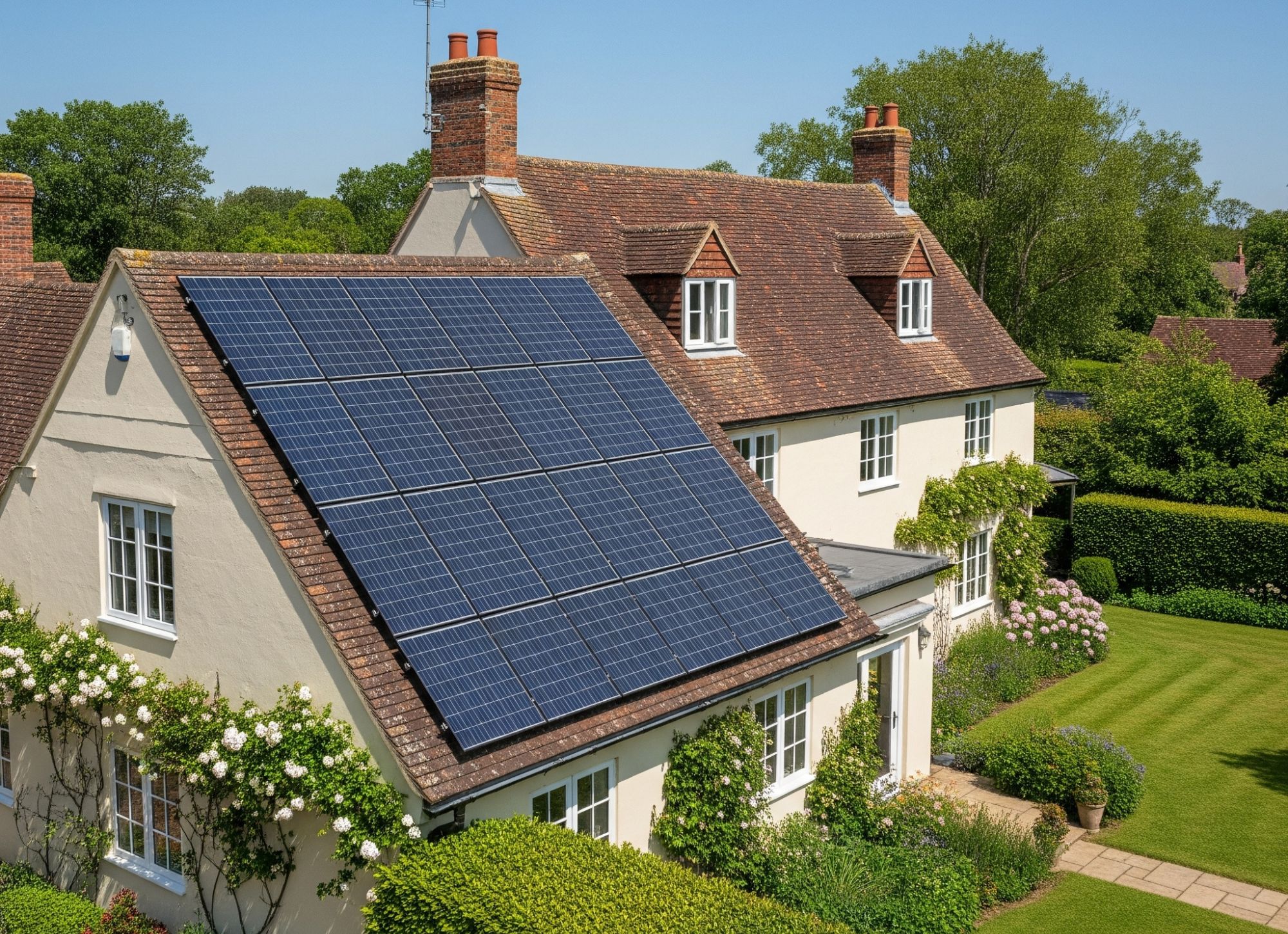
What Can I Power with a 100-Watt Solar Panel?
If you’re a homeowner or landlord in the UK wondering, “What can I power with a 100-watt solar panel?” you’re likely exploring solar energy to reduce energy costs and embrace sustainable living.
A 100-watt solar panel is a compact, cost-effective solution for small-scale energy needs, but its capabilities are limited compared to larger systems.
This guide will clarify what a 100-watt solar panel can power, helping you make an informed decision for your home or property in Southern England, such as Portsmouth, Southampton, or Brighton.
For tailored solutions, consider requesting a solar panel quote from EE Renewables, a trusted provider serving Southern England.
What Can a 100-Watt Solar Panel Power?
A 100-watt solar panel can power small, low-energy devices typically used in homes, gardens, or small commercial properties. Under optimal UK conditions, it generates around 300–500 watt-hours (Wh) of electricity daily, depending on sunlight availability.
This is enough to run devices like LED lights, small fans, phone chargers, laptops, or low-power appliances. However, it’s insufficient for high-energy appliances like refrigerators or washing machines.
Which Small Appliances Can Be Powered By a 100-Watt Panel?
A 100-watt solar panel can reliably power devices with low wattage requirements. Here’s a breakdown of common appliances it can support:
| Device | Typical Wattage | Hours of Use (per 400 Wh daily output) |
|---|---|---|
| LED Light (10W) | 10W | 40 hours |
| Smartphone Charger | 5–10W | 40–80 hours |
| Laptop (50W) | 50W | 8 hours |
| Small Fan (20W) | 20W | 20 hours |
| Wi-Fi Router (10W) | 10W | 40 hours |
| Small TV (50W) | 50W | 8 hours |
Note: These estimates assume 4–5 peak sun hours daily, typical in Southern England, according to the Energy Saving Trust.
For a precise assessment of your energy needs, request a custom solar quote from EE Renewables.
Can a 100-Watt Panel Power Larger Appliances?
No, a 100-watt solar panel cannot power larger appliances like refrigerators (150–400W), microwaves (600–1200W), or electric kettles (1200–3000W). These require significantly more energy, often exceeding the panel’s daily output even with battery storage.
For such appliances, a larger system (e.g., 3.5 kWp) is recommended, as noted by the Energy Saving Trust.
How Does Location in the UK Affect the Output of a 100-Watt Solar Panel?
The UK’s solar irradiance varies by region, impacting a 100-watt solar panel’s performance. Southern England, including cities like Portsmouth and Brighton, receives higher solar radiation (900–1100 kWh/m² annually) compared to northern regions (750–900 kWh/m²), per the Met Office.
This means in-roof or on roof-solar panels in Southern England produce more electricity, making them ideal for homeowners and landlords in these areas.
Why Does Southern England Perform Better?
Southern England benefits from longer daylight hours and higher solar intensity. For instance, a 100-watt panel in Southampton might generate 400–500 Wh daily in summer, compared to 300–400 Wh in northern regions like Scotland.
Optimal panel placement (south-facing, 30–40° tilt) maximises output, according to Solar Energy UK.
How Much Does a 100-Watt Solar Panel Cost?
The cost of a 100-watt solar panel in the UK typically ranges from £50 to £150, depending on the brand, quality, and whether you purchase it as a standalone unit or part of a kit with accessories like a charge controller or inverter.
According to the Energy Saving Trust, additional costs for installation and components can increase the total investment.
What Factors Influence the Cost?
Several factors affect the price of a 100-watt solar panel system:
- Panel Quality: Monocrystalline panels, which are more efficient, cost more than polycrystalline ones.
- Accessories: A complete system may include a battery (£100–£300 for 50–100Ah), charge controller (£20–£50), and inverter (£50–£150), per Solar Energy UK.
- Installation: Professional installation costs £100–£200 for small systems, ensuring compliance with MCS standards.
- Brand: Reputable brands like Renogy or Victron Energy may charge a premium for durability and warranties.
The table below outlines typical costs for a 100-watt solar panel setup:
| Component | Cost Range | Notes |
|---|---|---|
| 100-Watt Solar Panel | £50–£150 | Monocrystalline panels are pricier but more efficient. |
| Charge Controller | £20–£50 | Essential for battery charging and system safety. |
| Battery (50–100Ah) | £100–£300 | Stores energy for nighttime or cloudy days. |
| Inverter (150–300W) | £50–£150 | Converts DC to AC for household appliances. |
| Professional Installation | £100–£200 | Recommended for safety and MCS compliance, per UK Government guidelines. |
Do I Need a Battery for a 100-Watt Solar Panel?
Yes, a solar battery is essential to store energy for use when sunlight is unavailable, such as at night or on cloudy days. Without a battery, you can only use power in real-time, limiting practicality.
A typical 100Ah, 12V battery can store around 1200 Wh, enough to cover evening use of small devices.
Tip: Our guide on solar battery storage explains how to choose the right battery size.
What Battery Size Is Best?
For a 100-watt panel, a 50–100Ah battery is sufficient. According to Ofgem, pairing a battery with a small solar system ensures energy availability, especially during the UK’s variable weather.
If you’re unsure about what solar panel size works best with your battery, read our detailed guides on choosing the right panel to charge a 100Ah battery efficiently and matching solar panels with larger battery capacities like 200Ah to help you get an idea of the balance right.
Can a 100-Watt Solar Panel Save Money?
Yes, but savings are modest due to the panel’s limited output. A 100-watt panel can save £30–£50 annually on electricity bills, based on Ofgem’s 2025 price cap rate of 25.8p/kWh. For comparison, a 3.5 kWp system could save £300–£500 yearly, per the Energy Saving Trust. This is why solar panels are a smart investment for your home.
How Does It Compare to Larger Systems?
Larger systems (3–4 kWp) are more cost-effective for significant savings. A 100-watt panel is better suited for supplementary power, such as garden lighting or off-grid applications.
What Are the Installation Considerations for a 100-Watt Solar Panel?
Installing a 100-watt solar panel is straightforward but requires careful planning. A 100-watt panel is compact (approximately 1m²) and can be mounted on roofs, gardens, or outbuildings. Key considerations include:
- Orientation: South-facing for maximum sunlight.
- Shading: Avoid trees or buildings blocking sunlight.
- Structural Integrity: Ensure the mounting surface is robust, per MCS standards.
- Permissions: Planning permission may be needed in Conservation Areas or for Listed Buildings, according to the UK Government.
Insight: Read our guide to learn more about in-roof and on-roof solar panel installation.
Do I Need Professional Installation?
While DIY installation is possible, professional installation ensures safety and compliance with Microgeneration Certification Scheme (MCS) standards.
FAQs
Can a 100-watt solar panel charge an electric vehicle?
No, a 100-watt solar panel cannot charge an electric vehicle (EV) effectively. EVs require 7–22 kW chargers, far exceeding the panel’s 0.1 kW output. A larger system (e.g., 4 kWp) is needed for EV charging.
How long does a 100-watt solar panel last?
A 100-watt solar panel typically lasts 25–30 years, with a gradual decline in efficiency (0.5–1% annually), according to Solar Energy UK.
Can I use a 100-watt solar panel off-grid?
Yes, a 100-watt panel is ideal for off-grid applications like camping or garden sheds, powering small devices when paired with a battery.
Do I need planning permission for a 100-watt solar panel?
In most cases, no, under Permitted Development rights, but permission is required for Listed Buildings or Conservation Areas, per the UK Government.
How much maintenance does a 100-watt solar panel require?
Minimal maintenance is needed, clean panels every 6–12 months to remove dirt. Professional cleaning costs around £10 per panel. EE Renewables offer solar panel maintenance and cleaning and to keep your system efficient and hassle-free.
Our Verdict
A 100-watt solar panel is a practical choice for UK homeowners and landlords seeking to power small devices like LED lights, phone chargers, or laptops, particularly in sunny
Southern England locations like Portsmouth, Southampton, and Brighton. While it offers modest savings of £30–£50 annually, its limitations make it unsuitable for larger appliances or significant energy needs.
Pairing it with a battery enhances usability, but for substantial savings or Smart Export Guarantee benefits, larger systems are recommended.
For tailored solar solutions, request a quote from EE Renewables.
