


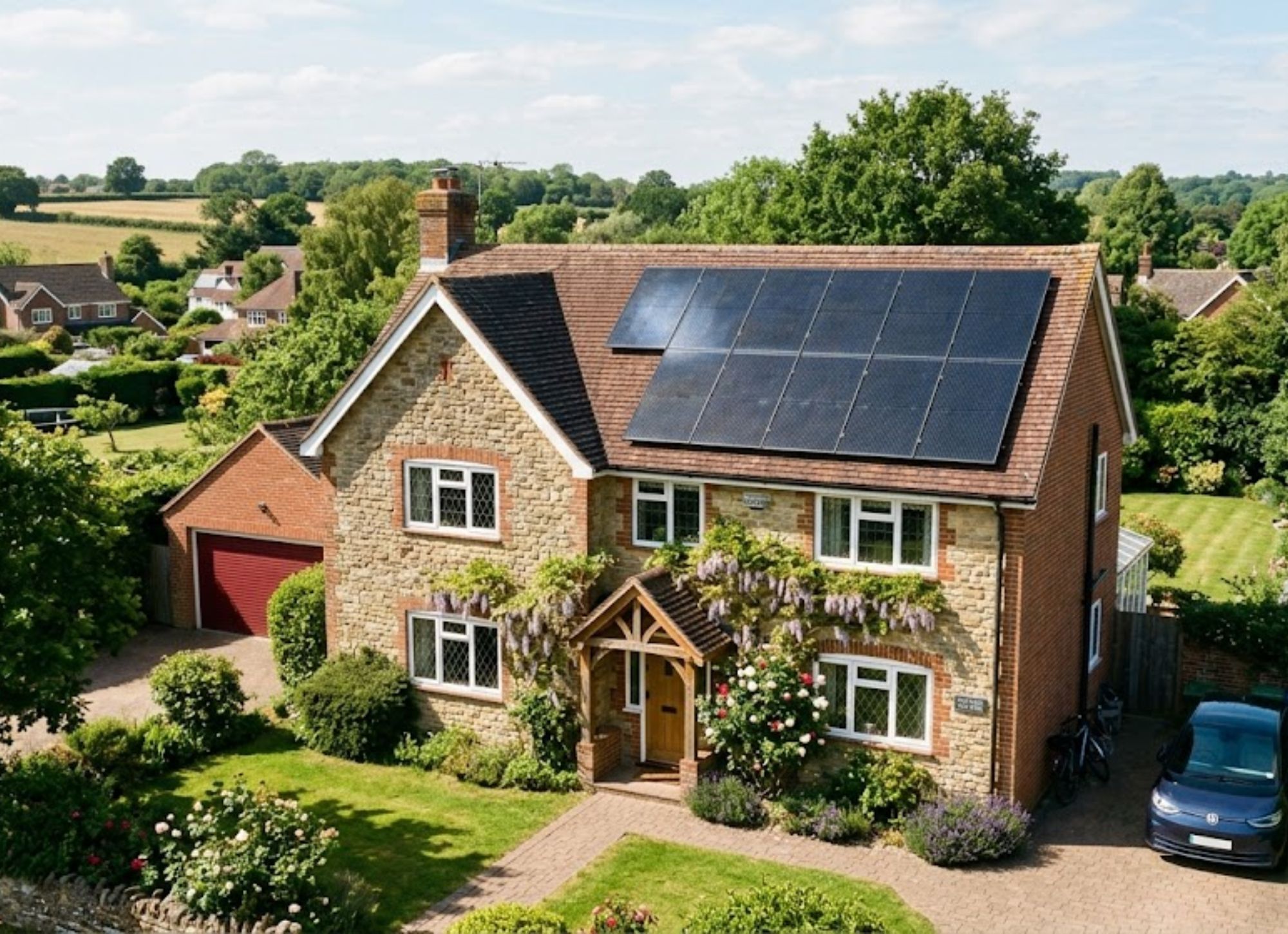
Can I Add a Battery to My Existing Solar System?
Yes, in most cases you can add a battery to your existing solar system, and doing so could significantly reduce your energy bills and your reliance on the grid. This guide will walk you through everything you need to know, from how it works and what it costs to which batteries are compatible with your setup.
Can you add a battery to an existing solar panel system?
Yes, you can add a battery to an existing solar panel system, and it is one of the most popular home energy upgrades in the UK right now. The process is known as a solar battery retrofit, and it involves connecting a battery storage unit to your current solar setup so that surplus electricity generated during the day is stored rather than exported back to the grid.
How retrofitting a solar battery works
When your solar panels produce more electricity than your home is using, that excess energy typically gets sent back to the National Grid. With a battery installed, that surplus power is captured and stored instead, ready for you to use in the evening, overnight, or on cloudy days. Think of it as a rechargeable energy buffer sitting between your panels and the grid.
What types of solar panel systems are compatible
The good news is that most solar PV systems installed in the UK over the past decade are compatible with battery storage. Whether you have a string inverter system, a microinverter setup, or a hybrid inverter already in place, there is usually a battery option that can work with your existing installation. The key variable is how the battery connects to your system, which we cover in detail further below.
Is adding a battery to your existing solar system worth it?
Adding a battery to your existing solar system is absolutely worth it for most UK homeowners, particularly those who are out during the day and use the bulk of their electricity in the evenings. Without storage, your solar panels are largely working for the grid during peak generation hours rather than for you.
- Maximise self-consumption: Instead of exporting cheap solar energy and buying expensive grid electricity later, you use your own stored power
- Lower electricity bills: Households with solar and battery storage can significantly cut their reliance on grid energy, which matters a great deal given the ongoing volatility in UK energy prices
- Energy independence: You are less exposed to price hikes from energy suppliers
- Reduced carbon footprint: Using more of your own renewable energy means drawing less from fossil fuel-heavy grid sources
- Smart tariff compatibility: Many modern batteries work with time-of-use tariffs like Octopus Agile or Go, letting you charge cheaply overnight and discharge during peak-rate hours
When a Battery Might Not Be the Right Fit
Honest advice matters here. If your solar panels are very old and underperforming, or if your daily energy consumption is very low, the payback period on a battery may stretch out longer than you would like. It is worth having a proper assessment of your current generation data before committing.
What types of solar batteries can be added to an existing system?
The types of solar batteries that can be added to an existing system fall into two main categories: AC-coupled and DC-coupled. Understanding the difference helps you make an informed decision and ensures you do not end up with an incompatible product.
AC-Coupled Batteries
AC-coupled batteries connect to your home’s AC electrical circuit rather than directly to your solar panels. This makes them highly versatile because they work with virtually any existing solar inverter, including older models. Popular examples include the Tesla Powerwall 2, GivEnergy batteries, and the SolarEdge Home Battery.
The slight downside is that energy conversion happens twice (DC to AC, then AC back to DC for storage), which introduces a small efficiency loss. That said, for most retrofit situations in the UK, AC-coupled batteries are the most practical and widely recommended solution.
DC-Coupled Batteries
DC-coupled batteries connect directly into the DC side of your solar array, which means the energy only converts once before being stored. This is marginally more efficient, but it typically requires you to replace your existing inverter with a compatible hybrid inverter.
If your current inverter is aging and due for replacement anyway, this can be a cost-effective approach. If your inverter is relatively new, replacing it just to accommodate a DC battery may not make financial sense.
How much does it cost to add a battery to an existing solar system?
The cost to add a battery to an existing solar system in the UK typically ranges from around £2,500 to £6,000, depending on the battery brand, capacity, and the complexity of the installation. This figure includes both the hardware and the labour.
Factors that affect the price
- Battery capacity (kWh): A 5 kWh battery will cost less than a 10 kWh or 15 kWh unit. Most UK households find that somewhere between 5 kWh and 10 kWh suits their needs
- Battery brand and warranty: Premium brands like Tesla, Givenergy, SolarEdge, and Sunsynk carry different price points and warranty lengths (typically 10 years)
- Inverter compatibility: If you need a new hybrid inverter to make the battery work, this adds to the overall cost
- Installation complexity: Properties with complicated wiring, consumer unit upgrades needed, or difficult access may incur higher labour costs
Estimated savings over time
Based on current UK energy prices, a typical household that adds battery storage to their solar system can save an additional £300 to £600 per year on top of their existing solar savings. Over a 10-year period, that represents a meaningful return on investment, particularly as grid electricity prices remain high.
How to choose the right battery type for your setup
The best choice depends on the age of your inverter, its brand and model, your budget, and how much storage capacity you want. A qualified installer will assess your existing system and advise which coupling method suits you best. This is not a decision to make based on a quick internet search alone as the specifics of your setup matter enormously.
Are there any grants or incentives for adding a battery?
There are a couple of important incentives worth knowing about when it comes to adding a battery to your existing solar setup, and they can genuinely reduce the overall cost.
The Smart Export Guarantee (SEG)
The Smart Export Guarantee is a UK government scheme that requires energy suppliers with 150,000 or more customers to pay homeowners for surplus solar electricity exported to the grid. While a battery reduces how much you export (because you are storing more), you will still export some energy at times, and you will be paid for it. Adding a battery does not disqualify you from the SEG.
VAT relief on battery storage
As of February 2024, standalone battery storage installations in the UK are now eligible for 0% VAT, regardless of whether they are installed alongside new solar panels or retrofitted to an existing system. This is a significant saving, equivalent to 20% off the cost of the battery and installation. This policy change has made battery retrofits considerably more attractive for UK homeowners.
What to check before adding a battery to your solar system?
Before adding a battery to your solar system, there are several practical things worth checking to avoid surprises and ensure the installation goes smoothly.
Your existing inverter model and age
Your inverter is the heart of your solar setup. Knowing the make, model, and age of your inverter helps an installer determine which battery products are compatible and whether any additional components are needed.
Inverters typically last 10 to 15 years, so if yours is getting on, it might make sense to upgrade to a hybrid inverter at the same time as adding a battery.
Your current energy usage patterns
Understanding when you use the most electricity in your home helps determine the right battery size. If you run high-consumption appliances in the evening (dishwasher, washing machine, electric shower, EV charger), you will benefit from a larger battery capacity than a household with low evening usage.
Available space for the battery unit
Most modern home solar batteries are wall-mounted and roughly the size of a large suitcase. They need to be installed in a garage, utility room, or similar sheltered location with adequate ventilation. Your installer will survey your home to confirm the best placement.
How long does it take to add a solar battery to an existing system?
Adding a solar battery to an existing system is generally a one-day job for a qualified installer. In most cases, a retrofitted battery installation takes between four and eight hours, depending on the complexity of the work involved. There is minimal disruption to your household, and your solar panels continue functioning normally before and after the installation.
You will typically need a brief power interruption of around 30 to 60 minutes while connections are made at the consumer unit.
Get a Free Solar Battery Storage Quote from EE Renewables
At EE Renewables, we specialise in solar battery storage retrofits for homeowners across Southern England, Greater London, South West England, and South Wales. Whether you are in London, Brighton, Oxford, Southampton, Bristol, or Cardiff, our team can assess your existing solar system and recommend the right battery solution for your home.
Frequently Asked Questions
Will adding a battery void my existing solar panel warranty?
Adding a battery should not void the warranty on your solar panels themselves, as the panels are separate components from the battery system. However, if a battery is added incorrectly or using incompatible components, it could affect your inverter warranty. Always use a qualified MCS-accredited installer to protect all your existing warranties.
Can I add a battery to my solar system if I am still on the old Feed-in Tariff (FiT)?
Yes, you can still add a battery to your solar system if you receive Feed-in Tariff payments. Adding a battery will reduce how much you export, which means your export payments may decrease slightly, but your generation tariff (paid on all electricity your panels produce, regardless of whether you use or store it) is unaffected. The net result is almost always financially positive.
Do solar batteries work during a power cut?
Not all solar batteries automatically provide power during a grid outage. Standard grid-tied battery systems shut down during a power cut for safety reasons. However, some batteries, including certain GivEnergy and Tesla Powerwall models, offer islanding or blackout protection modes that allow them to keep supplying power to your home during an outage.
Check this feature specifically if backup power is important to you.
How many years will a solar battery last before needing replacement?
Most quality solar batteries are designed to last between 10 and 15 years, with manufacturers typically offering 10-year warranties. Battery capacity degrades gradually over time, similar to a smartphone battery, with most units retaining around 70 to 80% of their original capacity by the end of their warranty period.
Can I add more than one battery to my existing solar system?
Yes, many battery systems are modular, meaning you can stack multiple units together to increase your total storage capacity. This is a popular option for larger households or homeowners who also run an electric vehicle and want to maximise overnight charging from stored solar energy.
Your installer will advise on the maximum capacity your inverter and setup can support.
