


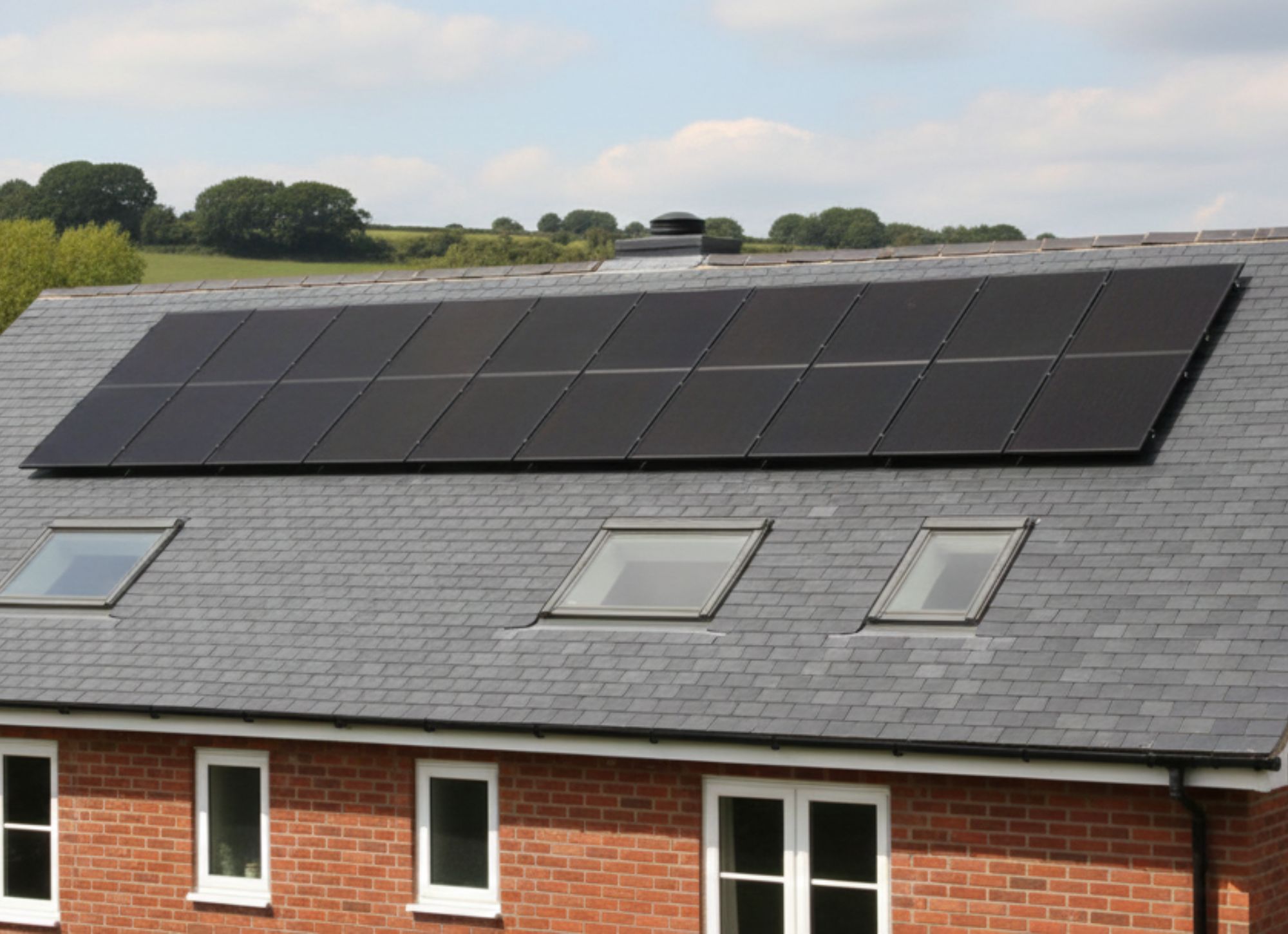
4kW Solar Panel System In The UK: Costs, Output, Pros and Cons
A 4kW solar panel system costs around £5,500 to £7,500 in the UK, fully installed with 0% VAT, and most homes pay about £6,000 to £7,000. It uses 8 to 10 panels and, in Southern England and South Wales, typically produces 3,500 to 4,400 kWh of electricity a year. That can save roughly £450 to £800 a year, or more with a battery.
If you’re weighing up solar, there’s a good chance you’ve landed on 4kW solar panel systems as a starting point. They’re one of the most popular sizes in the UK, and for good reason. A 4kW system fits on most three-bed roofs, produces a big chunk of a typical home’s electricity and doesn’t need complicated grid approval.
But the numbers online vary wildly, and some are frankly optimistic. In this guide we’ll give you honest figures based on the homes we work on across Southern England, Greater London, South West England and South Wales. You’ll find real installed costs, what your roof will actually produce, realistic savings, the pros and cons, and whether a 4kW system is the right size for you.
What should you expect from a 4kW solar panel system in the UK?
From a 4kW solar panel system in the UK, you should expect a system of 8 to 10 panels that produces around 3,500 to 4,400 kWh a year in our region, for an installed cost of £5,500 to £7,500. It suits most two to three bedroom homes with average electricity use.
| What you need to know | A typical 4kW system |
|---|---|
| Installed cost (0% VAT) | £5,500 to £7,500 |
| Cost with a 5 kWh battery | £8,500 to £10,500 |
| Number of panels | 8 to 10 |
| Roof space | About 20 to 25 m² of usable roof |
| Yearly output (South and South Wales) | 3,500 to 4,400 kWh |
| Average daily output | About 10 kWh (around 17 kWh in June, 3 to 4 kWh in December) |
| Typical yearly savings | £450 to £800 without a battery |
| Typical payback | 8 to 14 years |
| Panel lifespan | 25 to 30 years or more |
| Carbon saved | Roughly 0.6 to 0.9 tonnes of CO2 a year |
What “4kW” actually means
The 4kW figure is the system’s peak power, meaning the most it can produce at any one moment in perfect test conditions. You’ll sometimes see it written as 4kWp, for kilowatt peak, which means the same thing. It isn’t a measure of how much electricity you’ll get over a year. That depends on where you live, which way your roof faces and how much shade you get.
For context, the average new home solar system in the UK is now close to 5kW, as panels have become more powerful and affordable. A 4kW system is still a very sensible size for many homes, especially where roof space is limited.
Want to know what a 4kW system could do for your home? EE Renewables provides expert solar panel installation across Southern England, Greater London, South West England, and South Wales, including areas like London, Brighton, Oxford, Southampton, Bristol, and Cardiff. Use our online tool to get a free solar panel installation quote today.
How much does a 4kW solar panel system cost?
A 4kW solar panel system costs around £5,500 to £7,500 to buy and install in the UK in 2026, with most homes paying £6,000 to £7,000. Government installation data puts the average at roughly £1,600 per kW for systems of this size, which lines up neatly with that range.
| System | Typical installed price (0% VAT) |
|---|---|
| 4kW solar panels only | £5,500 to £7,500 |
| 4kW solar plus a 5 kWh battery | £8,500 to £10,500 |
| 4kW solar plus a 10 kWh battery | £9,000 to £12,500 |
| 4kW solar plus a Tesla Powerwall 3 | £12,000 to £16,000 |
These are approximate prices based on typical quotes in our region. Your own price depends on your roof, and we’ll confirm it after a survey.
Where your money goes
Here’s a rough idea of how a typical 4kW quote breaks down:
| Part of the job | Rough cost |
|---|---|
| Solar panels (8 to 10) | £1,800 to £2,500 |
| Inverter | £700 to £1,200 |
| Roof mounting and fixings | £400 to £600 |
| Electrical work, cabling and generation meter | £600 to £900 |
| Scaffolding | £400 to £1,000 |
| Design, labour, MCS registration and grid paperwork | £1,000 to £1,600 |
What pushes the price up or down
A few things make a noticeable difference to your quote:
- Roof type: slate roofs take longer to work on than concrete tiles, and flat roofs need angled frames.
- Access and scaffolding: tall houses, tight terraces and London streets that need a pavement licence all add cost.
- Panel and inverter choice: premium all-black panels and optimisers cost more but can pay off on shaded roofs.
- Bird protection: mesh to stop pigeons nesting under panels is common in towns and cities, typically adding a few hundred pounds.
- Your electrics: an older fuse board may need upgrading before panels can be connected.
Why quotes vary so much
Online prices for a 4kW system range from under £5,000 to over £8,000. Very cheap quotes sometimes skip optimisers, use lower quality kit or leave out scaffolding. Always compare quotes line by line, and check each one includes MCS certification, because you need it for export payments.
How much electricity does a 4kW solar panel system produce?
A 4kW solar panel system produces around 3,500 to 4,400 kWh of electricity a year across Southern England and South Wales, depending on your location, roof direction and shading. The UK-wide average is a little lower, at roughly 3,400 to 3,600 kWh, because northern areas get less sun.
4kW solar panel system output in our regions
Approximate yearly output from a south-facing 4kW system with no shading:
| Area | Approximate yearly output (4kW system) |
|---|---|
| Greater London | 3,600 to 4,000 kWh |
| Brighton, Southampton and the South Coast | 3,900 to 4,300 kWh |
| Oxford and the Thames Valley | 3,600 to 4,000 kWh |
| Bristol, Somerset, Devon and Cornwall | 3,800 to 4,400 kWh |
| Cardiff and South Wales | 3,500 to 4,000 kWh |
Your installer must give you an MCS estimate of yearly output. These estimates are deliberately cautious, so many homes produce a little more in practice.
4kW solar panel system output month by month
Solar output follows the seasons. Here’s roughly what a south-facing 4kW system in the South of England produces through the year:
| Month | Approximate monthly output | Average per day |
|---|---|---|
| January | 130 kWh | 4 kWh |
| February | 190 kWh | 7 kWh |
| March | 320 kWh | 10 kWh |
| April | 430 kWh | 14 kWh |
| May | 500 kWh | 16 kWh |
| June | 510 kWh | 17 kWh |
| July | 510 kWh | 16 kWh |
| August | 440 kWh | 14 kWh |
| September | 340 kWh | 11 kWh |
| October | 240 kWh | 8 kWh |
| November | 150 kWh | 5 kWh |
| December | 110 kWh | 3.5 kWh |
| Year | About 3,870 kWh | About 10.6 kWh |
Around 70% of your yearly output arrives between April and September. That’s why a 4kW system can cover most of a home’s daytime use in summer but only a fraction in winter.
How roof direction affects the output of 4kW solar panel systems
| Roof direction | Share of best possible output | Approximate yearly output (4kW) |
|---|---|---|
| South | 100% | 3,900 kWh |
| South-east or south-west | About 95% | 3,700 kWh |
| East or west | About 80 to 85% | 3,100 to 3,300 kWh |
| North-east or north-west | About 65 to 70% | 2,500 to 2,700 kWh |
East and west roofs still work well, and splitting panels across both sides spreads generation through the morning and evening. North-facing roofs are rarely worth it. The ideal pitch is around 30° to 40°, although most UK roofs fall close enough to that for it not to matter much.
Shading
Even a little shade from a chimney, tree or neighbouring building can cut output more than you’d expect. If part of your roof is shaded, panel optimisers or microinverters limit the damage by letting each panel work independently.
How many panels and how much roof space does a 4kW system need?
A 4kW system needs 8 to 10 modern solar panels, which cover roughly 16 to 19 m² of roof. Once you allow for the gaps installers leave around the edges, you’ll want about 20 to 25 m² of usable, unshaded roof.
| Panel size | Panels needed | System size | Panel area |
|---|---|---|---|
| 400W | 10 | 4.0 kW | About 19 m² |
| 430W | 10 | 4.3 kW | About 19 m² |
| 450W | 9 | 4.05 kW | About 17 m² |
| 500W | 8 | 4.0 kW | About 16 to 18 m² |
Most panels we fit today are monocrystalline, rated around 430W to 470W with efficiencies of 21% to 23%. Older polycrystalline and thin film panels are now rarely used on UK homes.
Why the roof space figures online differ
You’ll see figures from 14 m² to nearly 30 m². The smaller numbers count only the panels. The larger ones add generous margins around the edges and between rows. In practice, installers keep panels a short distance back from roof edges and ridges for wind safety, which is why the usable area you need is bigger than the panels themselves.
Chimneys, windows and awkward roofs
Chimneys, vent pipes and roof windows take up space and can cast shade. On smaller terraced roofs in London, Brighton and Bristol, fitting 4kW sometimes means splitting panels between the front and back, or using fewer, higher wattage panels.
Roof strength and condition
Most UK roofs can easily carry solar panels. Each one weighs around 20 to 25 kg, spread across the roof on a mounting frame. Your installer will check the condition of your roof and timbers during the survey. If your roof needs work in the next few years, it’s cheaper to do it before the panels go on.
Read: Is your roof suitable for solar panels?
What can a 4kW solar panel system run?
A 4kW solar panel system can run most everyday household appliances on a sunny day, producing around 10 kWh on an average day and 15 to 17 kWh on a good summer day. Across a year, that’s more than the roughly 2,700 kWh a typical UK home uses, but timing matters.
A typical sunny day’s use
Here’s what 10 kWh of solar could power in a single day:
| Appliance | Typical use | Approximate electricity used |
|---|---|---|
| Washing machine | One 40°C wash | 0.8 kWh |
| Dishwasher | One eco cycle | 1 kWh |
| Tumble dryer | One load | 2.5 kWh |
| Electric oven | One hour | 1.5 kWh |
| Fridge freezer | Running all day | 0.8 kWh |
| Kettle | Six boils | 0.6 kWh |
| TV | Four hours | 0.4 kWh |
| Laptop and broadband | All day | 0.6 kWh |
| LED lighting | Evening | 0.4 kWh |
| Total | About 8.6 kWh |
The catch: solar and your usage don’t always line up
Your panels produce most between about 10am and 4pm, and most in summer. Many homes use most electricity in the evening and in winter. Without a battery, you’ll typically use 30% to 50% of your solar directly and export the rest. Running the washing machine and dishwasher during the day makes a real difference.
Electric cars
An electric car covering around 7,500 miles a year uses roughly 2,000 to 2,500 kWh. If it’s parked at home during the day, a 4kW system can cover a useful share of that from spring to autumn. If you mostly charge overnight, a battery and a cheap overnight tariff will usually do more for you.
Heat pumps
A heat pump in a typical home uses 3,000 to 4,500 kWh a year, most of it in winter when solar output is lowest. A 4kW system will help, but it won’t cover much of your heating. If you have or are planning a heat pump, a larger system plus a battery is usually worth considering.
How much can a 4kW solar panel system save you?
A 4kW solar panel system can save you around £450 to £800 a year without a battery, once you add bill savings to export payments. With a battery and a smart tariff, that typically rises to £850 to £1,100 a year.
How the savings add up
Your savings come from two places. First, every unit of solar you use at home is one you don’t buy at around 25p to 27p per kWh. Second, the units you don’t use are exported to the grid and paid for under the Smart Export Guarantee.
Here’s a realistic example for a south-facing 4kW system in the South producing 3,900 kWh a year, in a home using 2,700 kWh:
- Solar used at home: about 1,560 kWh (40%), saving roughly £400 on your bill.
- Solar exported: about 2,340 kWh. At 12p per kWh that’s about £280, or around £120 at a basic 5p rate.
- Total: roughly £520 to £680 a year.
If you’re home during the day or work from home, you’ll use more of your solar directly and save more. If the house is empty all day, you’ll export more and save less.
Export payments
Under the Smart Export Guarantee, larger energy suppliers must offer you a tariff for the electricity you export. Rates range from a few pence to around 15p per kWh for fixed export tariffs, and time-of-use export tariffs pay more at peak times. It’s worth shopping around, because your export supplier doesn’t have to be the same as your import supplier.
4kW solar panel system payback period
| Scenario | Typical cost | Yearly savings | Rough payback |
|---|---|---|---|
| Solar only, little daytime use, basic export rate | £6,500 | £450 to £550 | 12 to 14 years |
| Solar only, home in the day, good export rate | £6,500 | £650 to £800 | 8 to 10 years |
| Solar plus a 5 kWh battery on a smart tariff | £9,500 | £850 to £1,100 | 9 to 11 years |
Over 25 years, a 4kW system could save you roughly £10,000 to £19,000 at today’s prices, even after allowing for a replacement inverter. If electricity prices rise, you’ll save more.
Should you add a battery to a 4kW solar panel system?
Adding a battery to a 4kW solar panel system is worth it for most homes that use a lot of electricity in the evening, or that can get a cheap overnight tariff. It typically lifts the share of solar you use yourself from 30% to 50% up to 60% to 80%.
Choosing a battery size
For most homes, a battery of around 5 to 10 kWh is the sweet spot. Size it to your evening and overnight use rather than your panels, because a modern battery can also charge from the grid overnight at cheap rates. That means it keeps saving you money in winter, when your panels produce much less. Read our guide on how to choose the right size solar battery.
What it costs
Fitted at the same time as your panels, a battery typically adds £3,000 to £5,000 for 5 to 10 kWh. Installing both together is cheaper than adding a battery later, because one hybrid inverter can run both your panels and battery, and you only pay for one visit. Popular choices include Fox ESS, Sigenergy and the Tesla Powerwall 3.
When a battery might not be worth it
A battery is harder to justify if you’re home all day and already use most of your solar, if your evening use is low, or if you can’t switch to a smart tariff. In those cases, starting with panels only and adding a battery later can make more sense.
Is 4kW the right solar panel system size for your home?
A 4kW system is the right size for your home if you use roughly 2,500 to 4,000 kWh of electricity a year and have space for 8 to 10 panels. That covers many two to three bedroom homes. If you use more, or plan to get an EV or heat pump, a bigger system may pay back better.
| System size | Panels | Yearly output (South and South Wales) | Typical installed cost | Usually suits |
|---|---|---|---|---|
| 3kW | 7 | 2,700 to 3,300 kWh | £4,800 to £6,000 | One to two bed homes, lower usage |
| 4kW | 8 to 10 | 3,500 to 4,400 kWh | £5,500 to £7,500 | Two to three bed homes, average usage |
| 5kW | 11 to 12 | 4,500 to 5,500 kWh | £6,500 to £8,500 | Three to four bed homes, higher usage |
| 6kW | 13 to 14 | 5,400 to 6,600 kWh | £7,500 to £9,500 | Larger homes, EVs and heat pumps |
Go bigger if you:
- Use more than about 4,000 kWh a year
- Have, or are planning, an electric car or heat pump
- Work from home and run appliances through the day
- Have room for 12 or more panels, since each extra panel costs less once the scaffolding is up
A smaller system may do if you:
- Use less than about 2,500 kWh a year
- Have a small roof or lots of shading
- Live in a one or two bed home and are out most days
Read our guide on 3kW solar panel systems.
Check your bills first
The easiest way to size a system is to look at your yearly usage in kWh, which is shown on your annual energy statement or supplier app. Bring that figure to your survey, and your installer can design a system around how you actually use electricity.
What are the pros and cons of a 4kW solar panel system?
The pros and cons of a 4kW solar panel system balance lower bills, protection from price rises and a manageable upfront cost against limited winter output and a size that some growing households will outgrow.
| Pros | Cons |
|---|---|
| Fits on most two to three bed roofs | Upfront cost of £5,500 to £7,500 |
| Saves around £450 to £800 a year, or more with a battery | Output drops to just 3 to 4 kWh a day in midwinter |
| Usually needs only simple G98 grid notification | Without a battery, you’ll export much of your solar at lower rates |
| Earns export payments under the Smart Export Guarantee | May be too small for homes with an EV or heat pump |
| Panels last 25 to 30 years or more with little maintenance | The inverter usually needs replacing once in the system’s life |
| Protects you from future electricity price rises | Adding panels later can mean a new inverter and scaffolding again |
| Cuts your carbon footprint by roughly 0.6 to 0.9 tonnes a year | Planning consent may be needed on listed buildings and in some conservation areas |
| Pairs easily with a battery now or later | Shaded or north-facing roofs produce noticeably less |
For most average-use homes with a decent south, east or west-facing roof, the pros comfortably outweigh the cons.
Are there any grants or schemes for a 4kW solar panel system?
There are no universal grants for a 4kW solar panel system, but 0% VAT, the Smart Export Guarantee and the Warm Homes Plan can all cut what you pay or boost what you earn.
0% VAT until March 2027
Solar panels and batteries installed on homes in Great Britain currently carry 0% VAT. This relief is due to run until 31 March 2027, after which the rate is set to rise to 5%. On a £6,500 system, that would add about £325, so there’s a small advantage to installing sooner.
The Smart Export Guarantee
The Smart Export Guarantee (SEG) replaced the Feed-in Tariff, which closed to new applicants in 2019. Energy suppliers with at least 150,000 domestic customers must offer an export tariff. To qualify, your system needs an MCS certificate from a certified installer and a smart meter that can record exports.
The Warm Homes Plan
The government’s Warm Homes Plan is rolling out support for home energy upgrades, including solar panels. It combines grants for lower income households with low or zero interest loans for others. The previous ECO4 scheme closed in March 2026. In Wales, the Warm Homes Nest scheme supports eligible lower income households, mostly with heating and insulation. Rules and eligibility can change, so ask us what applies to you.
Council group buying schemes
Some councils across London and the South East run group buying schemes, such as Solar Together, which can offer competitive prices on solar panels and batteries. They open and close through the year, so check your council’s website.
Do you need permission to install a 4kW solar panel system?
You don’t usually need planning permission to install a 4kW solar panel system on a house, but your installer must notify your local electricity network operator. Listed buildings, some conservation areas, flats and ground-mounted systems are the main exceptions.
Planning permission
Roof-mounted solar on most homes counts as permitted development, so you don’t need to apply. The main situations where you may need planning consent or other permission are:
- Listed buildings: listed building consent is almost always needed.
- Conservation areas: rules are stricter for panels visible from the road, which is common in parts of Bath, Brighton, Oxford and central London.
- Flats: you’ll usually need the freeholder’s permission, and sometimes planning consent.
- Ground-mounted systems: these have their own size and position limits.
Planning rules in Wales are broadly similar to England but not identical, so we check the local position for every job.
Grid notification: G98 or G99
Most 4kW systems use an inverter rated at up to 3.68 kW. That means your installer can fit the system and simply notify your network operator within 28 days under a process called G98. If you choose a larger inverter, or add a battery that pushes the total above that limit, a G99 application is needed before installation, which can take several weeks.
A 3.6 kW inverter on 4kW of panels is standard practice. Panels rarely hit their full rating in UK conditions, so you lose very little output.
Building regulations and certificates
Your installer should register the work under building regulations and give you an electrical installation certificate. You should also get an MCS certificate, which you’ll need for export payments and when you sell your home.
How long does a 4kW solar panel system last?
A 4kW solar panel system lasts 25 to 30 years or more, although the inverter usually needs replacing once along the way. Panels slowly lose a little output each year rather than failing suddenly.
Panel lifespan and warranties
Most quality panels lose around 0.4% to 0.5% of their output each year. Many come with 25 to 30 year performance warranties guaranteeing they’ll still produce around 85% to 90% of their original output at the end. Product warranties covering manufacturing faults usually run 12 to 25 years, depending on the brand.
Read: how long do solar panels last?
The inverter
Inverters typically last 10 to 15 years, and warranties usually run 5 to 12 years. Budget around £800 to £1,500 for a replacement during the life of your system. If you add a battery later, it can be a good moment to switch to a hybrid inverter.
Maintenance
Solar panels need very little looking after. UK rain keeps most panels clean enough, although homes near busy roads, farmland or the coast may benefit from an occasional professional clean. The most useful habit is checking your monitoring app every so often, so you spot any drop in output early.
Is a 4kW solar panel system worth it?
A 4kW solar panel system is worth it for most UK homes with average electricity use and a reasonably sunny, unshaded roof. In the South of England and South Wales, where output is higher than the UK average, it typically pays for itself in 8 to 14 years and keeps saving for many years after.
It’s a great fit if you:
- Use around 2,500 to 4,000 kWh of electricity a year
- Have a south, east or west-facing roof with space for 8 to 10 panels
- Plan to stay in your home for at least eight to ten years
- Can use some of your solar during the day, or are open to adding a battery
Think carefully if you:
- Have a heavily shaded or north-facing roof
- Already use a lot of electricity, or plan to buy an EV or heat pump soon, as a larger system may suit you better
- Expect to move within a few years
Is a 4kW solar panel system worth it for landlords?
A 4kW solar panel system can be well worth it for landlords, mainly because solar is one of the most effective ways to improve a property’s EPC rating. The bill savings usually go to your tenants, but the upgrade can make your rental easier to let and better prepared for tighter rules.
EPC ratings
Under government plans, privately rented homes in England will need to reach EPC band C by 2030. Solar panels typically give a noticeable boost to an EPC score, often more than many other single upgrades. Rules in Wales can differ, so check the latest position for Welsh properties.
Who benefits
If tenants pay the bills, they enjoy the lower running costs. Your return comes through a more attractive property, potentially longer tenancies and a modest rent premium. A 4kW system is also a practical size for many terraced and semi-detached rentals.
Practical points
- Export payments: agree in writing who registers for and receives Smart Export Guarantee payments.
- Tenant guidance: a simple note explaining when to run appliances helps tenants get the most from the panels.
- Flats and HMOs: check freeholder consent and planning rules before committing.
- Insurance and paperwork: tell your landlord insurer, and keep the MCS certificate with your property records.
Ready to get a free survey for solar panel installation?
EE Renewables provides expert solar panel installation across Southern England, Greater London, South West England, and South Wales, including areas like London, Brighton, Oxford, Southampton, Bristol, and Cardiff. Our online tool makes it easy to get a solar panel installation quote within minutes.
Frequently Asked Questions
Can you install a 4kW solar panel system yourself?
You can technically install a 4kW solar panel system yourself, but it’s rarely worth it. A DIY system won’t be MCS certified, so you won’t qualify for Smart Export Guarantee payments. The electrical connection must still meet building regulations, and working on a roof carries real safety risks. Insurers and future buyers may also have concerns.
How long does it take to install a 4kW solar panel system?
Installing a 4kW solar panel system usually takes one to two days on site. Scaffolding typically goes up a day or two before and comes down shortly after. From your first survey to switching on, the whole process usually takes two to six weeks, depending on scaffolding availability and any permissions needed.
Do solar panels work on cloudy days?
Yes, solar panels work on cloudy days, just at a lower level. Panels respond to daylight rather than direct sunshine, so they still generate on overcast days, typically producing 10% to 25% of what they would in full sun. That’s why UK systems produce electricity all year round.
Do solar panels work during a power cut?
Standard solar panels switch off during a power cut. This is a safety feature to protect engineers repairing the grid. If you want power during an outage, you’ll need a battery with a backup function, which can keep chosen circuits or your whole home running.
Will solar panels affect your home insurance or mortgage?
Solar panels rarely cause problems with home insurance or mortgages, but you should tell both your insurer and your lender. Most insurers cover panels as part of the building at little or no extra cost. If you own the panels outright, mortgage lenders are generally happy, but they may ask for your MCS certificate.
